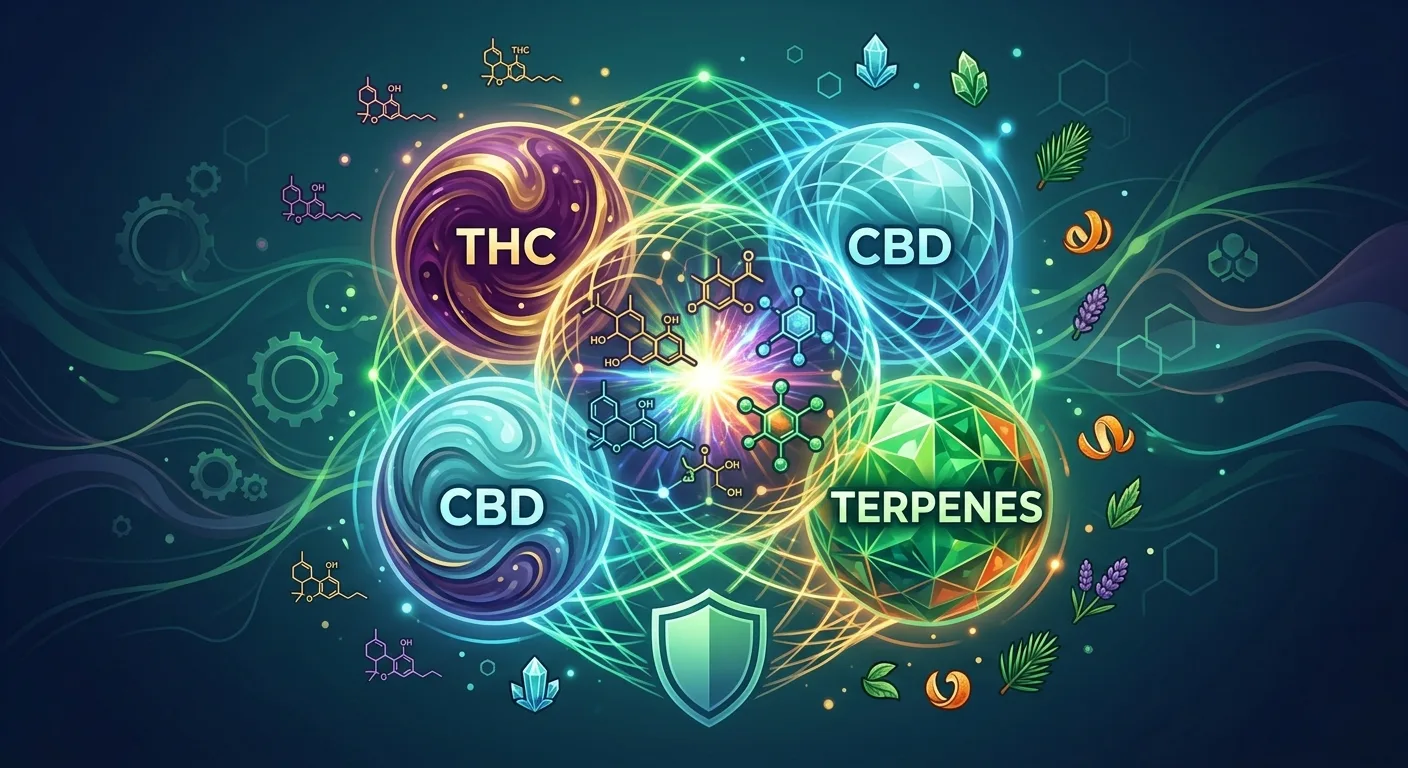
If you've spent any time reading cannabis product labels or talking to budtenders, you've probably heard the term "entourage effect" tossed around like it's common knowledge. But what does it actually mean? Why does a strain with 20% THC sometimes feel less potent than one with 15%? The answer lies in one of cannabis's most fascinating phenomena: the entourage effect, where cannabinoids, terpenes, and other compounds work together to create effects that are greater than the sum of their parts.
Understanding the entourage effect isn't just academic trivia for cannabis nerds. It's practical knowledge that will change how you shop for weed, helping you choose products that deliver the specific experience you're looking for rather than just chasing the highest THC percentage on the shelf.
What Is the Entourage Effect? The Simple Science
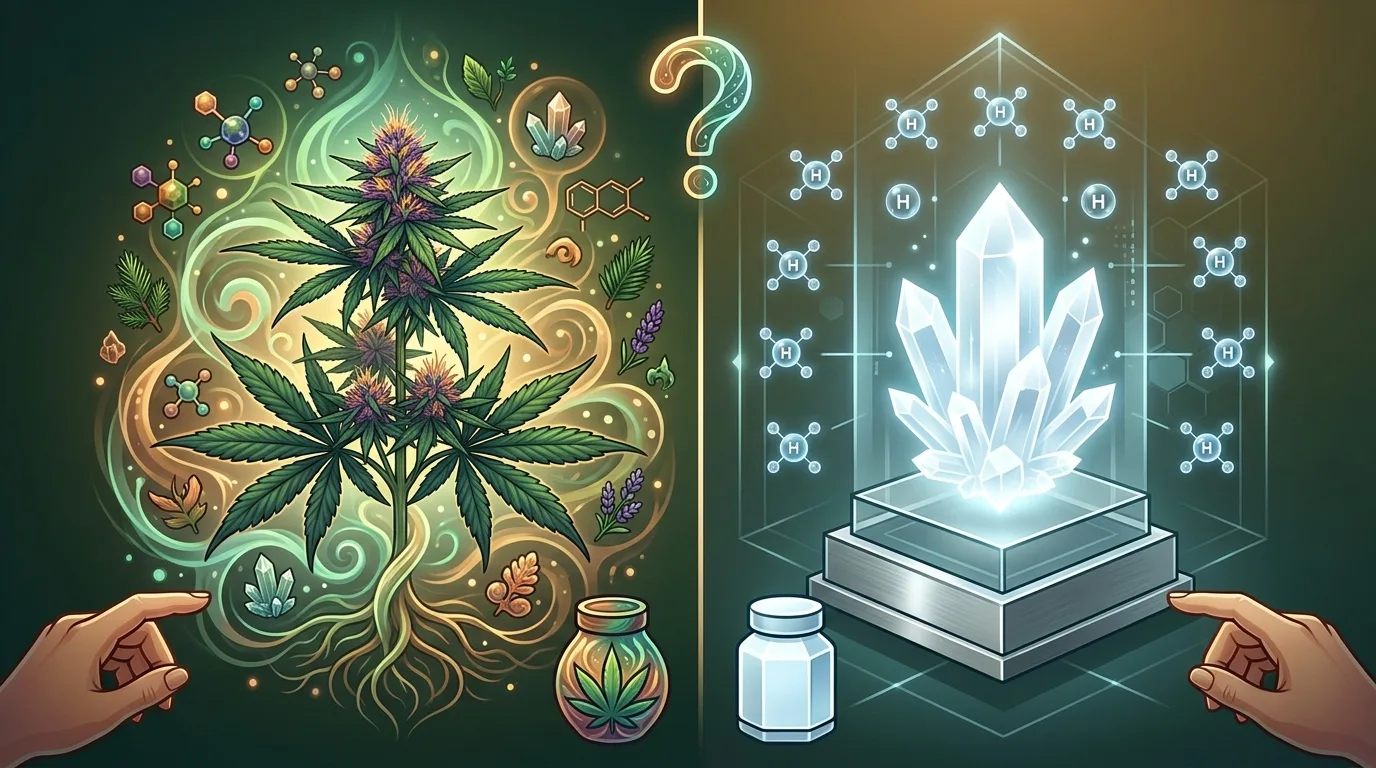
The entourage effect is the theory that cannabis compounds work better together than in isolation. Think of it like a symphony orchestra: a single violin sounds beautiful, but when you add cellos, flutes, drums, and brass instruments, you get something far more complex and powerful. In cannabis, THC is that first violin, but it performs much better when accompanied by CBD, minor cannabinoids like CBG and CBN, and aromatic terpenes like myrcene and limonene.
The term was first coined by Israeli scientists Raphael Mechoulam and Shimon Ben-Shabat in 1998 during their research on how cannabinoids interact with the human endocannabinoid system. They discovered that whole-plant cannabis extracts were more therapeutically effective than isolated THC, even when the extracts contained less total THC. This finding challenged the prevailing "THC is everything" mentality and opened up an entirely new way of understanding cannabis chemistry.
At its core, the entourage effect happens because our endocannabinoid system contains multiple types of receptors (primarily CB1 and CB2) that respond to different compounds in different ways. When multiple cannabis compounds hit these receptors simultaneously, they can amplify each other's effects, moderate harsh side effects, or create entirely new sensations that wouldn't occur with any single compound alone.
Why This Matters for Your Cannabis Experience
Here's where theory becomes practice: the entourage effect explains why two strains with identical THC percentages can produce wildly different highs. A 20% THC indica rich in the sedating terpene myrcene will feel completely different from a 20% THC sativa loaded with energizing limonene and pinene. The THC percentage tells you about potency, but the full cannabinoid and terpene profile tells you about the actual experience.
This is also why many experienced consumers prefer traditional flower over isolated THC products like some distillate vapes. Flower preserves the full spectrum of compounds that evolved together in the plant, maintaining that natural entourage effect. When you vape pure THC distillate, you're getting power without complexity, like listening to that violin solo without the rest of the orchestra.
The Main Players: THC, CBD, and How They Balance Each Other
THC (tetrahydrocannabinol) and CBD (cannabidiol) are cannabis's power couple, and understanding their relationship is essential to grasping the entourage effect. THC is the primary psychoactive compound, responsible for the euphoric "high" that cannabis is known for. It binds directly to CB1 receptors in your brain and nervous system, producing effects that range from relaxation and creativity to increased appetite and altered time perception.
CBD, on the other hand, doesn't get you high in the traditional sense. It has minimal binding affinity for CB1 receptors, instead working through dozens of other pathways in the body. CBD modulates inflammation, influences serotonin receptors, and even changes how THC interacts with your endocannabinoid system. This last point is crucial: CBD can actually reduce some of THC's more uncomfortable side effects, like anxiety, paranoia, and racing thoughts.
The THC-CBD Ratio Sweet Spot
The ratio of THC to CBD in a cannabis product dramatically affects the experience. A 1:1 ratio (equal parts THC and CBD) tends to produce a clear-headed, functional effect with minimal anxiety, making it popular among medical users and cannabis newcomers. A 20:1 ratio (high THC, minimal CBD) delivers a much more intense psychoactive experience, which recreational users often prefer but which can be overwhelming for some people.
This is why many consumers are moving beyond single-minded THC-chasing and starting to pay attention to CBD content. A strain with 18% THC and 2% CBD might actually feel more balanced and enjoyable than one with 25% THC and 0% CBD, especially if you're prone to cannabis-induced anxiety. The CBD acts as a buffer, smoothing out THC's sharper edges while preserving its therapeutic and recreational benefits.
Research published in the British Journal of Pharmacology has shown that CBD can reduce THC-related memory impairment and anxiety when the two compounds are consumed together. CBD doesn't eliminate the high, it just makes it more manageable and less likely to veer into uncomfortable territory. For consumers interested in balanced cannabinoid profiles, exploring different quality grades of cannabis can help you find products with the terpene and cannabinoid complexity that makes the entourage effect shine.
Terpenes: The Unsung Heroes of the Entourage Effect
If cannabinoids are the engine of your cannabis experience, terpenes are the steering wheel. These aromatic compounds give each strain its distinctive smell and flavour, from the citrusy punch of Super Lemon Haze to the earthy, diesel notes of strains like gas strains that smell like fuel. But terpenes do far more than just make your weed smell good. They have direct pharmacological effects and significantly influence how cannabinoids affect your body.
Cannabis contains over 200 different terpenes, though most strains are dominated by a handful of major players. Myrcene, the most common terpene in modern cannabis, has sedating, muscle-relaxing properties and is partly responsible for the "couch-lock" effect of heavy indicas. Limonene delivers an uplifting, mood-boosting effect and may help with anxiety and depression. Pinene can increase alertness and may actually counteract some of THC's short-term memory effects.
How Terpenes Modify Your High
The way terpenes interact with cannabinoids is complex and still being researched, but we know they influence cannabinoid absorption, modify receptor binding, and have their own independent effects on neurotransmitter systems. When you consume cannabis rich in the terpene linalool (also found in lavender), you're not just getting a floral aroma,you're getting compounds that enhance GABA activity in your brain, producing calming, anti-anxiety effects that complement and shape the THC experience.
Beta-caryophyllene is particularly interesting because it's the only terpene known to directly activate cannabinoid receptors, specifically CB2 receptors involved in inflammation and pain. This means it functions as both a terpene and a dietary cannabinoid, bridging the gap between these two categories of compounds. Strains high in caryophyllene often have more pronounced pain-relieving effects, even if their THC content is moderate.
This is why strain selection based on terpene profiles is becoming more sophisticated. Instead of just choosing "indica or sativa," informed consumers look for specific terpene combinations that match their desired effects. Want energized creativity? Look for strains with limonene and pinene. Need deep relaxation and pain relief? Myrcene and caryophyllene are your friends. Premium strains often showcase complex terpene profiles that create uniquely nuanced effects.
The "Mango Trick" and Myrcene Synergy
One of the most famous examples of the entourage effect in action is the "mango trick",eating ripe mango before consuming cannabis to intensify and extend the high. Mangoes are rich in myrcene, the same terpene abundant in many indica strains. The theory is that consuming myrcene from an external source increases the concentration in your bloodstream, potentially allowing more THC to cross the blood-brain barrier and enhancing cannabinoid absorption.
While the science here is still preliminary and the effect may be subtle, it perfectly illustrates how terpenes can modulate the cannabis experience. The same principle applies whether the myrcene comes from a mango or from the cannabis flower itself,higher myrcene concentrations tend to produce more sedating, physically relaxing effects.
Minor Cannabinoids: The Supporting Cast That Steals the Show
While THC and CBD get most of the attention, cannabis produces over 100 different cannabinoids, many of which play crucial roles in the entourage effect. These minor cannabinoids are typically present in small amounts (often less than 1%), but emerging research suggests they punch well above their weight when it comes to shaping the overall experience.
CBG (cannabigerol) is often called the "mother cannabinoid" because it's the precursor from which THC, CBD, and other cannabinoids are synthesized in the plant. CBG has its own therapeutic potential, showing promise for inflammation, glaucoma, and inflammatory bowel disease. When present alongside THC, it may contribute to the clear-headed, focused effects that some sativa-dominant strains are known for.
CBN (cannabinol) forms when THC degrades through oxidation and exposure to light and heat. It's mildly psychoactive and is particularly associated with sedating effects, though recent research suggests its reputation as a sleep aid may have more to do with how it interacts with other aged cannabinoids and terpenes rather than CBN alone. Older, properly cured cannabis often contains more CBN, which may contribute to the smooth, mellow high that connoisseurs appreciate in well-aged flower.
THCV, CBC, and Emerging Cannabinoids
THCV (tetrahydrocannabivarin) is a fascinating minor cannabinoid that can actually reduce appetite and produce a clear, stimulating high that's distinctly different from regular THC. It's found in higher concentrations in certain African landrace strains and is increasingly being bred into modern hybrids. When THCV is present alongside THC, it can create an energetic, focused effect profile that many consumers find productive and motivating.
CBC (cannabichromene) is another minor cannabinoid that doesn't get you high but appears to enhance the effects of THC while contributing its own anti-inflammatory and antidepressant properties. Studies suggest CBC works synergistically with THC and CBD to produce more robust therapeutic effects than any single cannabinoid could achieve alone,a textbook example of the entourage effect in action.
The presence of these minor cannabinoids is one reason why AAAA-grade cannabis commands premium prices. Top-shelf flower isn't just about THC percentage,it's about preserving the full spectrum of cannabinoids and terpenes through careful cultivation, harvesting, and curing practices that maintain chemical complexity.
Full Spectrum vs. Isolate: Why Whole Plant Matters
The entourage effect debate isn't just theoretical,it has major practical implications for how cannabis products are made and consumed. This is where the distinction between full-spectrum, broad-spectrum, and isolate products becomes crucial. Full-spectrum products contain all the naturally occurring cannabinoids, terpenes, and other compounds from the cannabis plant. Broad-spectrum products contain most of these compounds but with THC removed. Isolates are single, purified compounds like pure CBD or pure THC with everything else stripped away.
The cannabis industry's early fascination with isolates made sense from a business perspective. Isolates are consistent, easy to dose, and allow manufacturers to create products with precise cannabinoid content. Pure THC distillates can reach 90-95% THC, compared to even the strongest flower at around 30%. But many consumers report that these ultra-pure products produce a one-dimensional high that lacks the depth and character of whole-plant experiences.
The Science Supporting Whole Plant Synergy
Clinical research increasingly supports what many longtime cannabis consumers have known intuitively: whole plant preparations work better than isolated compounds for many applications. A 2015 study published in the journal Pharmacology & Pharmacy found that whole-plant cannabis extracts were more effective for pain relief than pure THC, even when adjusted for equivalent THC doses. The additional compounds in the full-spectrum extract enhanced THC's pain-relieving effects while reducing side effects.
Similar findings have emerged in CBD research. A 2018 study from the Lautenberg Centre for Immunology and Cancer Research in Israel showed that full-spectrum CBD extracts produced superior anti-inflammatory effects compared to pure CBD isolate, with a bell-curve dose-response relationship that suggested the entourage effect allowed for more efficient dosing.
This doesn't mean isolates don't have their place. They're valuable for consumers who need to avoid THC entirely, who require extremely precise dosing, or who have sensitivities to certain terpenes. But for most recreational and many medical users, full-spectrum products that preserve the entourage effect deliver a more complete, satisfying, and therapeutically robust experience. This is one reason traditional flower remains popular even in an era of high-tech extracts and concentrates.
How Processing Affects the Entourage Effect
Different consumption methods preserve or destroy the entourage effect to varying degrees. Smoking and vaping whole flower keeps the full spectrum of compounds intact, though high heat can degrade some terpenes. Quality concentrates like live resin and full-spectrum extracts preserve most cannabinoids and terpenes through careful extraction processes. Products like premium shatter and concentrates can maintain robust entourage effects when properly processed.
Distillation, by contrast, strips away everything except the target cannabinoid, which is why many distillate products have terpenes reintroduced afterward. These reintroduced terpenes (often called "botanical terpenes" when sourced from non-cannabis plants) can help recreate some of the entourage effect, but they may not perfectly replicate the complex synergy of naturally occurring cannabis compounds.
Practical Applications: Using the Entourage Effect to Choose Better Cannabis
Understanding the entourage effect transforms you from a passive consumer into an informed buyer who can select products based on chemistry rather than marketing. Instead of asking "what's the strongest strain you have?" you can ask "what's the terpene profile on this batch?" or "do you have any balanced THC:CBD options?" This shift in approach leads to more consistent, satisfying experiences.
Start by identifying your goals. Are you looking for pain relief? Anxiety reduction? Creative energy? Sleep support? Each of these applications benefits from different cannabinoid and terpene combinations. For pain, look for strains with significant CBD content (even just 2-4%) plus terpenes like myrcene and caryophellene. For anxiety, balanced THC:CBD ratios with linalool and limonene work well for many people. For energy and focus, sativa-dominant strains with pinene, limonene, and possibly THCV deliver without sedation.
Reading Lab Reports and Product Labels
Quality cannabis retailers increasingly provide detailed lab reports showing not just THC percentage but full cannabinoid and terpene profiles. Learn to read these reports. A strain showing 15% THC, 3% CBD, 1.2% myrcene, 0.8% caryophyllene, and 0.5% limonene tells you far more about the likely effects than just knowing it's 15% THC.
When shopping for cannabis delivery in Ottawa, look for suppliers who provide this information transparently. The presence of detailed lab data and terpene information signals a retailer who understands that cannabis quality goes deeper than THC numbers. Products that list full terpene profiles give you the information you need to predict effects and find strains that consistently work for you.
Experimentation and Personal Chemistry
The entourage effect is real, but it also interacts with your unique endocannabinoid system, which means effects can vary between individuals. What works perfectly for your friend might not work the same way for you. This makes personal experimentation essential. Keep notes on strains you try, including not just the name but the cannabinoid and terpene profile if available. Over time, you'll identify patterns,maybe you consistently enjoy strains high in limonene, or maybe high-CBD ratios work better for your particular needs.
Start low and go slow, especially when trying strains with unfamiliar cannabinoid profiles. A strain with an unusual terpene combination or significant minor cannabinoids might affect you differently than your usual choices. The entourage effect means that small changes in chemistry can produce noticeable changes in effects, for better or worse. Understanding your personal response patterns allows you to navigate the vast world of cannabis strains with confidence rather than guesswork.
Common Misconceptions About the Entourage Effect
Despite growing awareness, several myths about the entourage effect persist in cannabis culture. The biggest misconception is that the entourage effect means "more compounds equals better effects" in every situation. While whole-plant products often do produce more nuanced effects, sometimes simplicity is preferable. Someone with extreme THC sensitivity might do better with a pure CBD product than a full-spectrum option that includes even trace amounts of THC.
Another common misunderstanding is that the entourage effect is fully understood and scientifically proven. In reality, while we have strong evidence that cannabinoids and terpenes interact synergistically, the exact mechanisms remain partially mysterious. Cannabis contains hundreds of compounds, and mapping every possible interaction is incredibly complex. Most research focuses on major cannabinoids and terpenes, leaving many potential entourage relationships unexplored.
Some people also mistakenly believe that adding isolated terpenes back into distillate products perfectly recreates the natural entourage effect. While terpene reintroduction definitely improves distillate products compared to unflavoured options, it may not fully replicate the complex interactions present in minimally processed cannabis where compounds evolved together in the plant. The ratios and specific combinations matter, and naturally occurring profiles may contain trace compounds we haven't even identified yet.
Finally, don't fall for the trap of thinking the entourage effect only applies to medical cannabis. While therapeutic applications are well documented, the entourage effect is equally relevant for recreational users seeking specific experiences. Whether you want relaxing evening vibes, social energy, or creative inspiration, understanding how different compounds work together helps you find products that deliver those experiences reliably. For guidance on choosing quality products that preserve these effects, exploring information about cannabis quality grades provides valuable context.
The Future of Entourage Effect Research and Products
As cannabis legalization spreads and research restrictions ease, we're entering an exciting era for entourage effect science. Researchers are using advanced techniques like metabolomics and systems pharmacology to map the complex interactions between cannabis compounds and human biology. We're likely to discover novel cannabinoids and terpenes, better understand existing ones, and identify specific combinations that reliably produce particular effects.
The cannabis industry is responding to consumer demand for products that harness the entourage effect. Beyond simple flower, we're seeing sophisticated formulations that combine specific cannabinoid ratios with targeted terpene profiles. "Cannabis 3.0" products go beyond just THC and CBD, incorporating minor cannabinoids like CBG, THCV, and CBC in thoughtfully designed ratios meant to produce specific experiences.
Personalization is also on the horizon. Just as genetic testing can reveal how you metabolize certain medications, endocannabinoid system testing may eventually help predict which cannabinoid and terpene profiles work best for your unique biology. Imagine being able to take a simple test that tells you whether you're likely to respond better to myrcene-dominant indicas or pinene-rich sativas, or what THC:CBD ratio optimizes your experience while minimizing side effects.
Cultivation techniques are evolving too, with growers increasingly focused on terpene preservation and minor cannabinoid enhancement rather than just maximizing THC. Specialized curing processes, harvest timing optimization, and even genetic breeding programs now target entourage effect optimization. The future of premium cannabis isn't about hitting 35% THC,it's about creating rich, complex chemical profiles that deliver superior, nuanced experiences through whole-plant synergy.
Experience the Entourage Effect
Discover premium cannabis products that preserve the full spectrum of cannabinoids and terpenes. Same-day delivery across Ottawa, Gatineau, and Canada-wide.
Shop Full-Spectrum CannabisNot necessarily. The entourage effect simply means that THC works better when accompanied by other cannabinoids and terpenes. High-THC strains can still produce excellent entourage effects if they also contain good terpene profiles and minor cannabinoids. The key is looking beyond THC percentage to the full chemical profile.
Yes, though it will be different from the effects involving THC. CBD products with full-spectrum hemp extracts contain terpenes, CBG, CBC, and other minor cannabinoids that create their own entourage effect. These compounds work together to enhance CBD's therapeutic properties even without THC present.
Look for products labelled as full-spectrum or whole-plant, and check for detailed lab reports showing cannabinoid and terpene profiles. Products listing multiple cannabinoids (not just THC) and specific terpenes by name and percentage are more likely to deliver robust entourage effects than products focusing solely on THC content.
Both can deliver strong entourage effects if made from full-spectrum cannabis. Edibles made with whole-plant extracts preserve the entourage effect, though the delayed onset and liver metabolism create a different experience than smoking. Smoking or vaping flower provides immediate entourage effects with the complete, unprocessed cannabinoid and terpene profile.
Yes, terpenes have significant pharmacological effects beyond just aroma. Research shows that terpenes like myrcene, limonene, and pinene directly influence neurotransmitter systems and modify how cannabinoids affect you. Many experienced consumers report being able to predict their reaction to a strain based on its dominant terpenes.
Distillate vapes contain isolated THC with most other compounds removed, eliminating the entourage effect. While they're potent, they lack the complex, layered experience that terpenes and minor cannabinoids provide. This is why many consumers find them one-dimensional compared to full-spectrum products, even at lower THC percentages.