A package lands on the counter and the front of it says 600MG in large type. If you've only ever encountered edibles through the regulated retail system, where a whole package is capped at 10mg of THC, that number reads like a mistake or a dare.
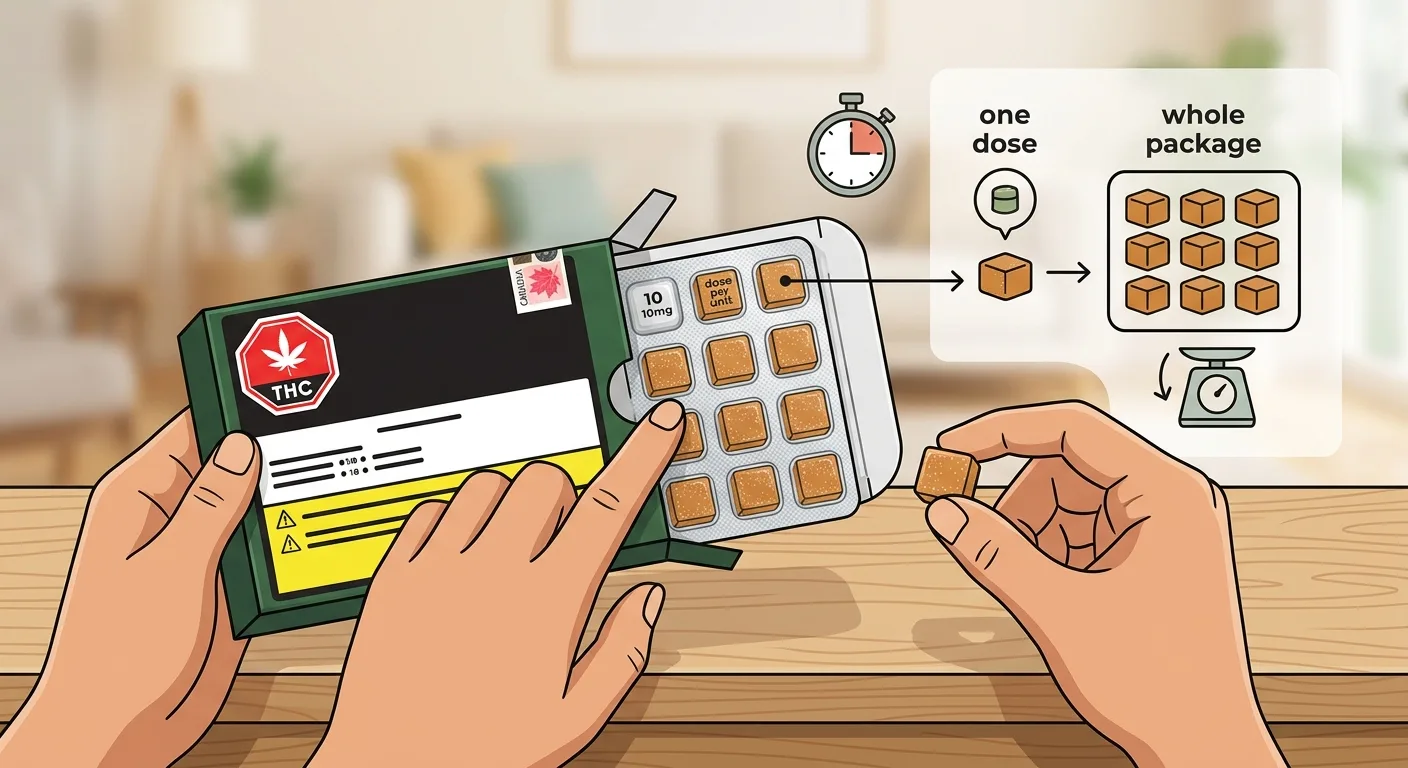
It's neither. It's a package total, and the piece count on the back is the part that actually tells you what you're about to eat. A 600mg bag containing twenty gummies is a bag of 30mg gummies. The same 600mg spread across sixty small chews is a bag of 10mg pieces. Same number on the front, completely different products.
This distinction causes more bad edible experiences than potency ever does. People who would never drink an entire bottle of spirits because it says 40% on the label will eat a whole package of gummies because the label didn't make the per-piece maths obvious. This guide covers how to read these labels properly, how to portion accurately, why onset timing makes over-consumption so easy, and what to do if you misjudge it.
Package Total vs Per-Piece: The Only Number That Matters
Every edible label carries at least two numbers, and the prominent one is usually the less useful one.
Total package THC is the sum of every milligram in the container. It's the marketing number, because a bigger figure signals value for money to a buyer comparing products by price.
THC per piece is what you're actually consuming. It's almost always printed smaller, often on the back, sometimes only in the ingredient panel.
The calculation is simple and you should do it every single time before eating anything:
Total package THC ÷ number of pieces = milligrams per piece
A 600mg package with 20 pieces gives you 30mg each. A 2,000mg package with 40 pieces gives you 50mg each. A 5,000mg chocolate bar scored into 20 squares gives you 250mg per square, which is an extremely large amount for one bite.
Why Package Totals Got So Large
Canada's regulated retail system caps THC at 10mg per package of edibles, which is a conservative limit set for public-health reasons. Outside that system, packages are built for consumers with established tolerance who found the 10mg cap impractical and expensive per milligram.
The result is a market where 600mg, 2,000mg and 5,000mg packages are routine. Those are not single servings and were never intended as such. They're multi-session quantities, the way a bottle of wine is a multi-glass quantity.
The Chocolate Problem
Chocolate bars deserve specific attention because the portioning is less obvious than with individually wrapped pieces. A 5,000mg bar scored into 20 squares is 250mg per square. Eating "a couple of squares" without checking is how people end up with 500mg in them.
Chocolate also behaves differently on absorption because of its fat content, which our article on why fat content changes your high covers in detail. The practical upshot is that a chocolate edible can feel different from a gummy at the identical milligram figure.
Suggested Starting Ranges
These are general reference ranges drawn from commonly used harm-reduction guidance, not a prescription, and individual response varies considerably.
|
Experience level |
Common starting range |
Notes |
|
No cannabis experience |
2.5 to 5mg |
Half a low-dose gummy or less |
|
Occasional flower user, new to edibles |
5 to 10mg |
Edible tolerance differs from smoking tolerance |
|
Regular edible user |
10 to 25mg |
Adjust in small increments |
|
High established tolerance |
25mg+ |
Still worth re-testing after a tolerance break |
Two things worth understanding about this table. First, tolerance to smoked cannabis does not transfer cleanly to edibles. The liver converts THC into a different, generally stronger compound during digestion, which is why experienced smokers are frequently caught out by their first edible.
Second, tolerance resets faster than most people expect. If you've had a few weeks off, treat your previous regular dose as too high and start lower.
Why Onset Timing Causes Over-Consumption
The mechanism behind almost every uncomfortable edible experience is the same, and it's timing rather than dose.
The Waiting Problem
Edibles take 30 to 120 minutes to produce noticeable effects, depending on what you ate recently, your metabolism, and the format. Smoking produces effects in under five minutes. That gap between expectation and reality is where trouble starts.
Someone takes 20mg, feels nothing after 45 minutes, concludes it was weak, takes another 20mg. The first dose then arrives. Twenty minutes later the second one lands on top of it, and now they're dealing with 40mg they never intended to take.
The rule that prevents this: wait a minimum of two hours before considering any additional dose. Not 45 minutes, not "when I feel like it hasn't worked." Two hours. Set a timer if you need to.
Duration Is Longer Than People Plan For
Edible effects commonly last four to eight hours, and residual effects can persist longer. That's a substantially different commitment from smoking, where effects typically taper within two to three hours.
Plan around it. Don't take an edible at 9pm if you need to be functional at 7am, and don't take one before something you can't leave.
Food Changes Everything
Taking an edible on a completely empty stomach can produce faster onset and a sharper peak. Taking one after a meal containing fat tends to slow onset and can increase how much is absorbed overall.
Neither is wrong, but be consistent. Changing that variable while keeping the dose the same will produce a noticeably different experience and make it harder to learn your own tolerance.
Portioning Accurately
If your package doesn't divide neatly into the dose you want, portioning matters.
Cut, don't estimate. Use a knife on a clean surface. THC distribution in a properly manufactured gummy is uniform, so half a gummy really is half the dose. Eyeballing a bite is not.
Warm gummies before cutting. Cold gummies deform rather than cut, which makes portions uneven. Fifteen minutes at room temperature is enough. This matters particularly in winter, as our Ottawa cold weather guide covers.
Wrap and store the remainder. An opened edible left out dries and hardens, and an unwrapped piece of candy on a counter is exactly the kind of thing a child or a pet finds.
If you consistently want smaller doses, buy smaller per-piece products rather than cutting large ones every time. Our gummies and edibles categories list per-piece strengths, and the high-dose section is specifically for people with established tolerance rather than a default starting point. Same-day weed delivery ottawa runs seven days a week if you want to start with a lower-strength product rather than working with what's already in the cupboard.
If You Take Too Much
Uncomfortable, and not dangerous in the way people fear. There is no known lethal dose of THC in humans. What over-consumption produces is a set of temporary and genuinely unpleasant effects: anxiety, a racing heart, nausea, disorientation, and a strong sense that it isn't going to end.
It does end. Typically within a few hours, tapering over several more.
What helps: sitting or lying down somewhere quiet and familiar, drinking water, having someone with you, and distraction that doesn't demand much. Sleep, if it comes, is the fastest route through it.
What doesn't help: more cannabis, alcohol, caffeine, or trying to push through a task that needs concentration.
When to get medical help: if there's chest pain, difficulty breathing, persistent vomiting, or loss of consciousness. Also seek help immediately if a child or a pet has consumed an edible, regardless of amount, because body weight changes the picture completely.
Never combine edibles with alcohol. The interaction intensifies both unpredictably and is behind a large share of bad experiences.
Storage and Household Safety
High-milligram edibles look like candy because they are candy with something added. That's the whole safety problem in one sentence.
Store them in a locked or genuinely inaccessible location, keep them in original packaging so the strength is always visible, and never transfer them into an unlabelled container. Pets are at particular risk because chocolate is separately toxic to dogs, so a cannabis chocolate bar presents two problems at once.
If you have children or animals in the house, treat these products the way you'd treat prescription medication rather than the way you'd treat snacks.
Frequently Asked Questions
Does a 600mg package mean I eat 600mg?
No. That figure is the total THC across every piece in the package. Divide it by the piece count to find the per-piece strength. A 600mg bag of 20 gummies contains 30mg per gummy, which is itself a substantial dose for most people and far more than a beginner should start with.
How long should I wait before taking more?
At least two hours. Edibles take 30 to 120 minutes to take effect, and redosing at the 45-minute mark is the single most common cause of uncomfortable experiences. If you're unsure whether it's working, the answer is to wait longer, not to take more.
I smoke regularly, so can I skip the low starting dose?
Smoking tolerance transfers poorly to edibles. Digestion converts THC into a different and generally stronger compound than inhalation produces, which is why experienced smokers are frequently surprised by their first edible. Start in the 5 to 10mg range regardless of smoking history.
Can you overdose fatally on edibles?
There is no known lethal dose of THC in humans. Over-consumption causes temporary effects including anxiety, rapid heartbeat, nausea and disorientation, which resolve over several hours. Seek medical attention for chest pain, breathing difficulty, persistent vomiting, or if a child or pet has consumed any amount.
Why do edibles affect me differently on different days?
Mainly stomach contents. An edible on an empty stomach tends to come on faster and sharper; one taken after a fatty meal comes on slower and may be absorbed more completely. Metabolism, sleep and recent tolerance all contribute as well. Keeping the food variable consistent makes your dose more predictable.
Can I cut a gummy in half to get half the dose?
Yes, provided the product is commercially manufactured with even distribution. Use a knife rather than biting, and let cold gummies warm to room temperature first so they cut cleanly instead of deforming. Wrap and store the remainder rather than leaving it out.
The Short Version
The number on the front of the package is not your dose. Divide it by the piece count before you eat anything, start lower than you think you need to, and wait a full two hours before considering more.
Those three habits prevent almost every bad edible experience. The products themselves aren't the problem; the labels just make the important number harder to find than it should be.