The cart worked perfectly on Tuesday. On Thursday it won't pull at all, there's oil pooling around the threading, and the two hits you did manage tasted like burnt popcorn. Nothing about your behaviour changed, so the obvious conclusion is that you got a bad cart.
Occasionally, that's true.
Far more often, the cart is fine and something about temperature, storage position, draw technique or voltage changed without you noticing. Cannabis oil is a viscous liquid sitting in a small glass chamber with a heating element and an air channel running through it, and that system is sensitive in ways nobody explains when you buy one.
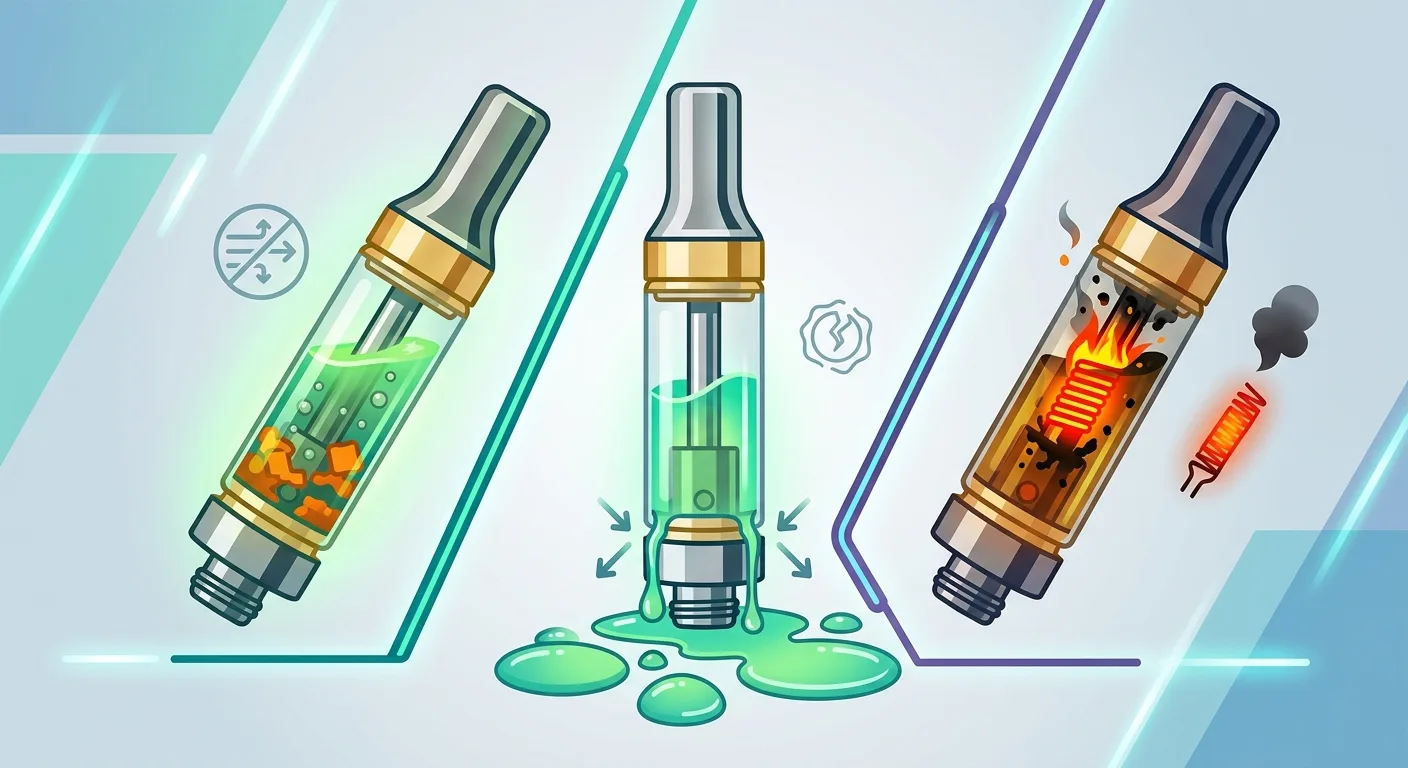
The useful thing about cart problems is that the three main symptoms map fairly cleanly onto specific causes. A clog is different from a leak, and a burnt taste is different from both. Once you know which one you're dealing with, the cause is usually much easier to identify.
How a Cart Actually Works
Understanding the mechanism makes the symptoms below easier to diagnose.
A 510 cartridge holds cannabis oil in a glass reservoir. At the bottom is a heating element and a wick or porous ceramic structure that draws oil toward the heating area.
When the battery activates the heating element, the oil is vaporized and your draw pulls the vapour through the central air channel and out through the mouthpiece.
Three things need to stay balanced:
- The oil needs to be fluid enough to reach the heating element.
- The heating element needs an adequate supply of oil.
- The air channel needs to remain clear.
Most cart problems happen when one of those three conditions changes.
Clogging
Clogging is one of the most common complaints and is often caused by temperature or condensation rather than a defective cartridge.
Cold Oil Won't Move
Cannabis oil becomes thicker as temperatures fall, much like cooking oil becomes more viscous in a cold kitchen.
In very cold conditions, thick oil can move slowly through the cartridge's wick or porous heating structure. This is particularly relevant during Ottawa winters when a cartridge may spend time outdoors.
Fix: Let the cartridge gradually warm to room temperature before using it. Holding the cartridge in your hand or keeping it in an inside pocket can warm it gradually.
Avoid using a lighter, hairdryer, radiator, boiling water or another direct heat source. Rapid or excessive heating can damage the cartridge, seals or glass.
Our winter cannabis guide covers cold-weather storage in more detail.
Condensation in the Air Path
Vapour that remains inside the mouthpiece or air channel can cool and condense back into oil.
Over time, this residue can narrow the airflow path and make the cartridge increasingly difficult to draw from.
Fix: Keep the mouthpiece clean and remove visible residue carefully. If your cartridge manufacturer provides cleaning instructions, follow them.
Avoid inserting sharp objects deeply into the cartridge because they can damage the internal structure.
Pulling Too Hard
Hard, aggressive draws don't necessarily solve a restricted cartridge. They can instead pull excess oil into the airflow path, contributing to flooding and gurgling.
Fix: Use slow, gentle draws rather than trying to force air through a restricted cartridge.
Leaking
Leaks are commonly associated with storage position, temperature changes, pressure or damaged seals.
Storing It Horizontally or Upside Down
Keeping a cartridge on its side for extended periods can allow oil to collect around areas that aren't designed to hold it indefinitely.
Fix: Store cartridges upright with the mouthpiece facing upward whenever possible.
A cartridge standing upright in a stable location is less likely to experience the same pressure and pooling problems as one rolling around inside a bag.
Heat and Pressure Changes
Heat makes oil less viscous and can increase pressure inside a cartridge.
A cartridge left in direct sunlight, inside a hot vehicle or next to a heater can therefore be more likely to leak.
Rapid temperature changes can also affect the pressure inside the cartridge.
Fix: Keep cartridges away from direct sunlight and excessive heat. Allow a cold cartridge to gradually reach room temperature rather than rapidly heating it.
Over-Tightening
Screwing a cartridge too tightly onto a battery can put unnecessary pressure on the connection and seal.
It can also make troubleshooting harder if the actual problem is a dirty connection or battery issue.
Fix: Attach the cartridge until it is secure without forcing it.
Burnt Taste
A burnt taste is a different problem from a clog or leak and is often related to temperature, oil supply or the condition of the heating element.
Voltage Too High
High battery settings can heat cannabis oil excessively.
Many variable-voltage batteries allow settings that range from relatively low to much higher outputs. The appropriate setting depends on the cartridge, oil and battery, so follow the cartridge and battery manufacturer's recommendations.
If you're getting a burnt taste, reducing the voltage or temperature is a reasonable first troubleshooting step.
Chasing larger clouds by increasing power can also increase oil consumption and reduce flavour quality.
Dry Hits
A dry hit happens when the heating element doesn't have enough oil available when it activates.
This can occur when:
- The oil is cold and moving slowly
- The cartridge is nearly empty
- The cartridge is being used repeatedly without enough time for the oil to re-saturate the heating element
Fix: Allow time between draws and make sure the cartridge has enough oil available around the heating area.
If the cartridge has been exposed to cold temperatures, allow it to warm gradually before use.
The Cart Is Simply Finished
Cartridges don't last forever.
As a cartridge approaches empty, the heating element can become harder to keep properly supplied with oil. Residue can also accumulate around the heating area.
If a cartridge suddenly starts tasting burnt near the end of its usable life, replacement may be more practical than trying to revive it.
Our breakdown of what's actually inside a THC vape cartridge explains the components inside a cartridge, while our comparison of disposable vapes vs cartridges looks at the differences between the two formats.
Symptom, Cause, Fix
| What You're Seeing | Most Likely Cause | What to Do |
|---|---|---|
| No airflow, oil looks very thick | Cold oil | Allow it to warm gradually to room temperature |
| Tight draw, cartridge is warm | Condensation or restricted airflow | Clean the mouthpiece according to manufacturer guidance |
| Gurgling or spitting | Excess oil around the heating/air path | Stop pulling hard and allow the cartridge to settle |
| Oil around the threading | Storage position, heat or seal issue | Wipe the connection and store upright |
| Leakage after coming indoors | Temperature or pressure change | Allow the cartridge to gradually equalize |
| Burnt taste with large vapour output | Excessive heat or voltage | Reduce the battery setting |
| Burnt taste with thin vapour | Possible dry hit | Allow the oil to re-saturate the heating element |
| Battery seems weak outdoors | Cold affecting battery performance | Keep the battery closer to room temperature |
Storage Habits That Prevent Most Problems
Store cartridges upright. Keep the mouthpiece facing upward whenever possible.
Keep them at a stable temperature. Avoid hot cars, direct sunlight, radiators and other extreme temperatures.
Avoid unnecessary temperature changes. Let cold cartridges gradually reach room temperature rather than applying direct heat.
Keep the battery connection clean. A small amount of oil or residue around the threading can interfere with electrical contact and cause inconsistent firing.
Don't over-tighten. Secure the cartridge firmly without forcing it.
We carry cartridges, disposables and batteries in our vapes section, with product information provided on individual listings.
You can also browse our weed delivery Ottawa options when you need a replacement cartridge or vape product.
When It's Actually Defective
Some cartridges really are defective.
Consider contacting the retailer or manufacturer if you notice problems such as:
- Oil leaking from a brand-new cartridge despite proper upright storage
- No vapour at room temperature when using a known-compatible, functioning battery
- Visible contamination or unusual separation that doesn't resolve according to the manufacturer's instructions
- A burnt taste immediately from the first use despite following the recommended settings
- A persistent unusual metal or plastic taste
Keep the packaging and purchase information if you need to request a replacement or report a product issue.
Frequently Asked Questions
A cartridge may have restricted airflow, thick oil caused by cold temperatures, or condensation in the mouthpiece. Allow a cold cartridge to warm gradually to room temperature and check the mouthpiece for visible obstruction.
First allow a cold cartridge to warm gradually to room temperature. Check the mouthpiece for visible condensation or residue and clean it according to the manufacturer's instructions. Avoid forcing sharp objects deeply into the cartridge because they can damage internal components.
Common causes include storing the cartridge horizontally or upside down, excessive heat, temperature changes, over-tightening or a damaged seal. Store cartridges upright at a stable temperature and avoid excessive heat.
A burnt taste can result from excessive heat, a battery setting that is too high, insufficient oil reaching the heating element, or a cartridge that is near the end of its usable life. Reduce the battery setting and allow the oil to properly saturate the heating element.
The appropriate voltage depends on the cartridge, oil and battery. Follow the manufacturer's recommended range and start at a lower setting if your battery allows variable voltage. Excessive heat can reduce flavour and increase oil consumption.
Cold temperatures can temporarily reduce the performance and available capacity of lithium-ion batteries. Keeping the battery closer to room temperature, such as in an inside pocket, can help maintain normal performance.
The Short Version
Three symptoms usually point to three different problems.
A clog is often related to cold oil or restricted airflow. A leak is commonly connected to storage position, heat, temperature changes or a damaged seal. A burnt taste usually points toward excessive heat, insufficient oil reaching the heating element or a cartridge that's nearing the end of its usable life.
Four simple habits prevent many problems: store cartridges upright, avoid extreme temperatures, use appropriate battery settings, and avoid aggressive draws.
If a cartridge is still leaking, tastes burnt from the first use, or refuses to work despite proper troubleshooting, it may genuinely be defective and should be raised with the retailer or manufacturer.
Browse cartridges, disposables and vape products from Uper Weed and find the right option for your next order.Shop Vapes in Ottawa