
 %
%
 %
%
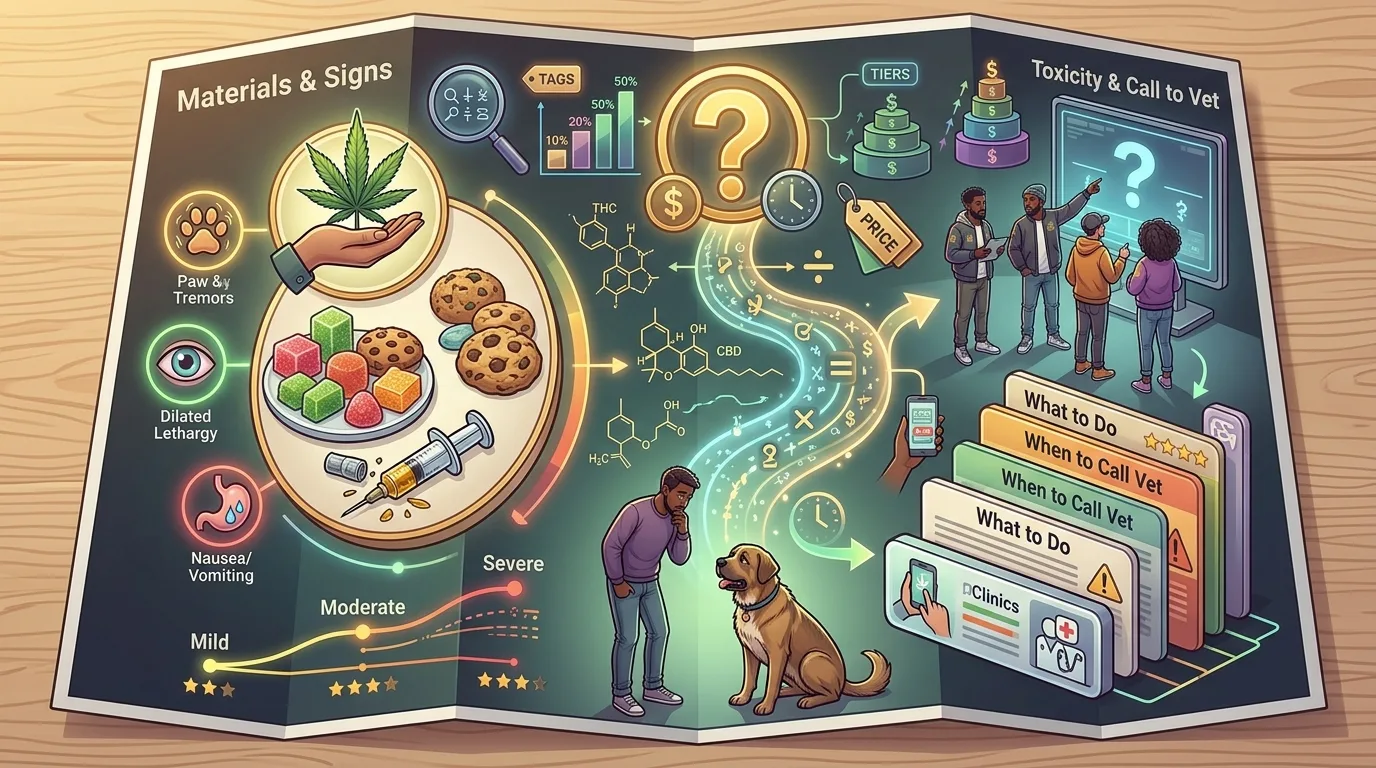
If this is happening right now: call your veterinarian, or an emergency vet clinic if yours is closed. If you can't reach one, the Pet Poison Helpline is (855) 764-7661 and the ASPCA Animal Poison Control Center is (888) 426-4435. Both charge a consultation fee. Do not wait for symptoms to worsen, and do not try to make your dog vomit at home.
The rest of this guide covers what to expect, what to tell the vet, and how to make sure it doesn't happen again.
It usually isn't the flower. Dogs will occasionally eat a bud, but what they really go for is the edible left on a coffee table, the cannabutter cooling on a counter, the jar of already-vaped bud that smells like toast, or the roach in an ashtray. Those are the calls vets get.
Veterinarians across Canada have reported a steady rise in cannabis-related cases since legalisation, and the Pet Poison Helpline has reported a substantial increase in calls about it. The large majority of these animals recover fully. But "usually fine" is not the same as "don't worry about it," and the gap between the two is entirely about how fast you act and how honest you are with the vet.
Why Dogs Are Affected More Than People
Three things stack up.
Body weight. A dose that's mild for an 80kg adult is a very different event for a 10kg dog. The same edible that would give a person a long evening can be a serious exposure for a small animal.
Receptor density. Veterinary literature consistently notes that dogs have a higher density of cannabinoid receptors in parts of the brain, including the cerebellum, which governs coordination. That's part of why the stumbling, uncoordinated presentation is so characteristic.
They can't tell you. A person who takes too much knows what's happening and can wait it out. A dog experiencing the same thing is disoriented and frightened with no context for it.
The Signs
Onset can be as fast as five minutes with inhaled exposure, or take one to two hours after eating something. Effects commonly last twelve to twenty-four hours and sometimes longer, which is considerably longer than the equivalent experience in a person.
Common signs:
-
Wobbling, stumbling, loss of coordination
-
Lethargy, sometimes to the point of near-unresponsiveness
-
Dribbling urine — this is the classic tell and vets watch for it specifically
-
Dilated pupils
-
Excessive drooling
-
Slowed heart rate
-
Low body temperature
-
Hyperesthesia: exaggerated startle responses to sound, light or touch
-
Vomiting
-
Agitation or anxious panting in some animals rather than lethargy
More serious signs that mean go now:
-
Seizures
-
Tremors
-
Unresponsiveness or collapse
-
Difficulty breathing
-
Severe vomiting
The urine dribbling is worth remembering. It's unusual enough in combination with wobbliness that it points fairly specifically at cannabis exposure, and telling your vet you've seen it genuinely helps them.
Note also that secondhand smoke counts. A pet in a room with someone smoking or vapourizing can show mild to moderate signs without having eaten anything.
What to Do
1. Check what's missing. Before you call, look for bite marks, torn packaging and an empty container. Work out as precisely as you can what and how much. This is the single most useful thing you can give the vet.
2. Call your vet or an emergency clinic. Don't wait to see whether it gets worse. If ingestion was recent, there are things a vet can do that stop being options later.
3. Be completely honest. This is the part people hesitate over and it's the part that matters most. Your veterinarian is treating an animal, not investigating you. Withholding the information, or guessing low on the amount, directly worsens the care your dog gets. Vets deal with this regularly and they are not interested in anything beyond the clinical picture.
4. Say exactly what it was. A plain bud, an edible, a chocolate edible, cannabutter, a concentrate, already-vaped bud. These are treated differently, and some involve a second toxin on top of the cannabis.
5. Keep them somewhere safe and quiet. A confined, padded, dimly lit space reduces the chance of injury from stumbling, and reduces the sensory stimulation that makes hyperesthesia worse.
6. Do not induce vomiting at home. This matters. Cannabis has an anti-nausea effect that makes vomiting hard to induce after roughly thirty minutes anyway, and a lethargic or uncoordinated animal that vomits can aspirate it, which turns one problem into a worse one. Only a vet should make that call.
The Things That Make It Worse
Cannabis on its own is rarely the most dangerous component of what a dog eats.
Chocolate. Cannabis chocolate is a double exposure, and chocolate is more acutely toxic to dogs than THC is. A dog that ate a cannabis chocolate bar needs treatment for both.
Xylitol. A sugar substitute used in some gummies and baked goods, and significantly more dangerous to dogs than cannabis. If there's any chance xylitol was involved, say so immediately.
Raisins and grapes. Present in some baked edibles and seriously toxic to dogs.
Concentrated products. Cannabutter, oils, concentrates and high-milligram edibles deliver far more THC per mouthful than flower does. A dog that got into infused butter has had a much larger exposure than one that ate a bud.
Nicotine. If vape products or cigarettes are in the same drawer, mention them.
What Treatment Looks Like
There's no antidote for THC. Veterinary care is supportive, meaning the goal is keeping the animal safe and stable while it clears.
Depending on timing and severity, that can include inducing vomiting if ingestion was very recent and the dog is still alert, activated charcoal to limit further absorption, intravenous fluids, medication to support heart rate and body temperature, and confinement in a safe space with monitoring.
Many mild cases are managed at home after a phone consultation. That should be the vet's decision, not yours, and it's a reasonable outcome to hope for rather than assume.
Prevention
Nearly every case is a storage problem.
Lock it, don't just put it away. A drawer is not storage, and neither is a high shelf for a determined dog. A lockable box is a one-time purchase that removes the entire category of risk.
Edibles are the biggest hazard by a distance. They're designed to smell and taste like food, they're often individually small enough to swallow whole, and the milligram content per piece can be substantial. Our guide to reading THC labels on edibles covers how much is actually in a package, and the numbers are worth knowing in this context specifically.
Never decant into an unlabelled container. If something does happen, the packaging tells the vet the exact milligram content. That information shortens the guesswork considerably.
Cannabutter and infused oils in the fridge need attention. They smell strongly of food, they're concentrated, and dogs are good at fridges and counters.
Don't forget the byproducts. Ashtrays, roaches, grinder contents, and already-vaped bud all still contain cannabinoids and all smell interesting to an animal. AVB in particular smells strongly of toasted food.
Clean up after sessions. Our cleaning guide covers the gear; the relevant point here is that bong water and ash are not things you want accessible.
Ventilate, and don't smoke around pets. Secondhand exposure is real. If you're consuming indoors in a shared space, keep pets away from the area and provide adequate ventilation.
Lockable storage and airtight containers are in our accessories section, and weed delivery Ottawa covers them alongside everything else.
Cats, and Other Animals
Cats are affected by the same mechanism and show broadly similar signs, though they're generally less likely to eat something they find. The response is identical: call a vet, be specific about what was consumed.
Everything in this guide applies to any pet. Smaller body weight means a smaller amount matters more.
Frequently Asked Questions
Call your veterinarian or an emergency clinic immediately, or the Pet Poison Helpline at (855) 764-7661. Before calling, check packaging and bite marks to work out what and how much. Keep your dog confined somewhere quiet and padded. Do not induce vomiting at home.
Veterinarians are treating your animal, not investigating you, and they handle these cases regularly. Being vague or underestimating the amount directly worsens the care your dog receives, because the treatment differs depending on what and how much was consumed. Full honesty is the single most useful thing you can offer.
Stumbling and loss of coordination, lethargy, dribbling urine, dilated pupils, drooling, slowed heart rate, low body temperature and exaggerated startle responses to noise or light. Dribbling urine alongside wobbliness is the characteristic combination. Severe cases can involve vomiting, tremors, seizures or unresponsiveness.
It's rare, and most dogs recover fully with supportive care. Deaths are generally associated with very large exposures, highly concentrated products such as infused butter or oils, or cases where another toxin like chocolate or xylitol was involved. Rare is not the same as impossible, which is why prompt veterinary contact matters.
No, not at home. Cannabis suppresses nausea, which makes vomiting difficult to induce after about thirty minutes, and an uncoordinated or lethargic animal that vomits can inhale it. Only a veterinarian should decide whether to induce vomiting, and they'll do it under conditions where it's safe.
Commonly twelve to twenty-four hours, and sometimes longer, which is considerably longer than the equivalent in a person. Onset is roughly five minutes for inhaled exposure and one to two hours after eating. The duration is one reason veterinary monitoring is worth having rather than waiting it out alone.
The Short Version
Call a vet, be completely honest about what and how much, and don't try to make them sick at home. Those three things cover the entire emergency response.
Watch for stumbling plus dribbling urine, which is the combination vets associate with cannabis specifically. Mention chocolate, xylitol or concentrated products immediately if they were involved, because those change the picture significantly.
And then fix the storage, because almost every one of these cases is a container that wasn't locked. Edibles are the main hazard, AVB and ashtrays are the overlooked ones, and a lockable box costs less than one emergency consultation.