Nobody notices their cannabis gear getting dirty because it happens gradually. What they notice is that their flower suddenly seems worse.
The flavour becomes flatter, the draw gets tighter, and the last few sessions don't feel as good as they should. Then they clean the bong, take another hit, and the flower suddenly tastes great again.
The flower wasn't necessarily the problem. The buildup inside the piece was.
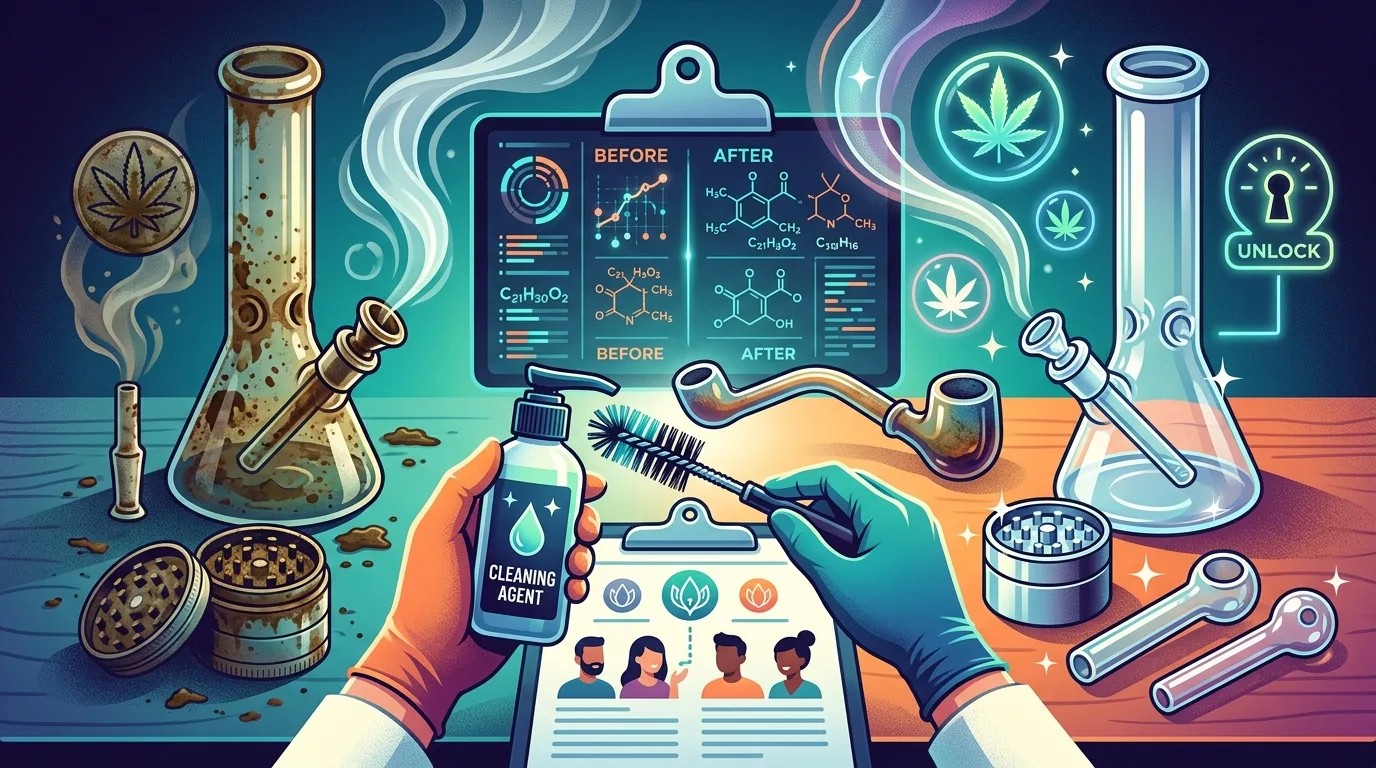
Resin, ash and condensed plant material accumulate wherever smoke passes. Over time, that buildup affects flavour and restricts airflow. Standing bong water can also develop bacteria and mould, particularly when left sitting in a warm room.
Regular cleaning isn't just cosmetic. It makes your equipment easier to use and maintain.
What Resin Actually Does
There are three main problems caused by resin buildup.
It Changes the Taste
Resin is a combustion byproduct. When fresh smoke passes through old residue, you're tasting both the new smoke and the accumulated material inside the piece.
That stale, acrid background flavour often blamed on harsh flower can actually come from a dirty bong or pipe.
It Restricts Airflow
Percolator slits, downstem holes and pipe throats are already relatively narrow.
A layer of resin makes those openings smaller, increasing resistance. That can encourage harder pulls, which can make the overall hit feel harsher.
It Creates an Unclean Environment
Old bong water can develop biofilm and support bacterial or mould growth, particularly when it sits for several days.
Since you're drawing air through the water, leaving dirty water in the piece isn't a good cleaning habit.
How to Clean a Bong
What You Need
For a standard glass bong, you'll need:
- Isopropyl alcohol, ideally 91% or higher
- Coarse salt such as Epsom, kosher or rock salt
- Hot water
- Something to cover the openings
Purpose-made caps work, but a suitable handhold or rubber stopper can also work for temporarily sealing the openings.
Higher-concentration isopropyl alcohol contains less water, giving it stronger solvent action against resin.
The Cleaning Method
1. Empty and rinse.
Dump the old bong water and rinse the piece with hot—not boiling—water. If the glass is cold, allow it to warm gradually to reduce the risk of thermal shock.
2. Remove the pieces.
Take out the bowl and downstem. Clean these separately in a sealed bag or container.
3. Add alcohol and salt.
Pour enough isopropyl alcohol into the bong to reach the affected areas, then add a generous amount of coarse salt.
The salt works as an abrasive. It doesn't dissolve the resin; instead, it scrubs the surfaces after the alcohol has softened the buildup.
4. Plug and shake.
Cover the openings and shake firmly for two to three minutes. As the resin comes loose, the cleaning solution should become darker.
For heavy buildup, soak the piece for around 20 minutes before shaking.
5. Rinse thoroughly.
Rinse repeatedly with hot water until there is no alcohol smell remaining.
This step matters because residual isopropyl can affect flavour and should not be inhaled.
6. Dry completely.
Stand the bong upside down and allow it to dry fully before using it again.
How Often Should You Clean a Bong?
Change the bong water after every session or at least once a day.
For regular use, give the entire bong a full clean about once a week, or sooner if the water becomes discoloured quickly after changing it.
Changing the water takes only a few seconds and prevents much of the buildup that makes deep cleaning more difficult.
How to Clean a Pipe
Cleaning a pipe uses essentially the same basic chemistry, but you don't need to shake a large glass piece.
Place the pipe inside a sealed bag or small container containing isopropyl alcohol and a spoonful of salt.
Seal it, shake briefly and let it soak. Light buildup may need around 30 minutes, while heavier buildup can benefit from a longer soak.
After soaking, use pipe cleaners or cotton swabs to work through the bowl and stem. These areas often collect the most residue.
A suitable tool can also be used to clear the carb hole and throat if they're blocked.
Rinse thoroughly with hot water until there is no alcohol smell and allow the pipe to dry completely.
Silicone pieces require different treatment. Some are dishwasher-safe on the top rack, while another approach is freezing them so the resin becomes brittle and can be flexed away from the flexible surface.
How to Clean a Grinder
Freeze It First
If your grinder has accumulated a significant amount of resin and kief, don't immediately reach for the alcohol.
Put the grinder in the freezer for 30–60 minutes.
The cold makes accumulated resin more brittle and helps trichomes detach instead of becoming smeared across the grinder.
After freezing, tap the grinder firmly over parchment paper and use a stiff brush or old toothbrush to clean the chambers and screen.
The material collected on the parchment is kief. Our kief guide explains what you can do with it.
If you clean the grinder with alcohol first, that material can dissolve into the cleaning solution and be lost.
Deep Clean the Grinder
Once you've recovered the kief, soak the grinder components in isopropyl alcohol for around 20–30 minutes.
Scrub the teeth and threads with a brush, rinse thoroughly with hot water and let everything dry completely before putting the grinder back together.
Check the Grinder Material
Isopropyl alcohol is generally suitable for stainless steel and many anodised aluminium grinders, but coatings and painted finishes can react differently.
Wooden grinders should not be soaked. Brush them clean while dry instead.
Always consider the material and finish of your grinder before submerging it.
How Often Should You Clean a Grinder?
For regular use, every two to three months is a reasonable cleaning interval, or whenever the threads become difficult to turn and the grind starts feeling gritty.
A grinder that becomes difficult to turn is overdue for maintenance, and forcing it can damage the teeth.
Cannabis Gear Cleaning Schedule
| Item | Minimum Frequency | Method |
|---|---|---|
| Bong water | Every session / daily at worst | Dump and rinse |
| Bong, full clean | Weekly with regular use | Isopropyl and salt |
| Bowl piece | Weekly or when airflow drops | Soak and clean |
| Pipe | Weekly | Soak and pipe cleaners |
| Grinder | Every 2–3 months | Freeze, recover kief, then soak |
| Vape cart threading | When contact becomes intermittent | Cotton swab, dry |
| Ash catcher | Alongside the bong | Same cleaning solution |
Keeping a simple schedule prevents heavy buildup from becoming a difficult cleaning job.
What Not to Do
There are a few cleaning mistakes worth avoiding.
Don't use acetone.
It's more aggressive than necessary and can damage certain plastics and finishes.
Don't pour boiling water into cold glass.
Sudden temperature changes can cause thermal shock and crack glass.
Don't use bleach.
Bleach residue can be difficult to remove completely, and you don't want to inhale through a piece that has held it.
Don't reuse dirty cleaning solution.
Once the solution is saturated with dissolved resin, it can redeposit that material.
Don't skip the final rinse.
Residual isopropyl can ruin the flavour of subsequent sessions and should not remain inside the piece.
Don't soak wooden or painted pieces.
Use a dry-brushing method instead when the material or finish isn't suitable for soaking.
What About Reclaim?
Reclaim is the resin recovered from a cannabis piece. It can contain cannabinoids because it is condensed material that has already passed through combustion.
Some people collect and reuse it, but reclaim is generally harsh, tastes poor and has already undergone combustion-related degradation.
More importantly, reclaim recovered from an isopropyl alcohol cleaning should not be consumed because it can contain solvent residue.
If you're looking for concentrated cannabis products rather than leftover residue, our guides to M.M.S hash and live resin vs. live rosin vs. cured resin cover the differences between these categories.
Uper Weed also offers weed delivery in Ottawa alongside cannabis accessories.
Frequently Asked Questions
Use 91% or higher isopropyl alcohol with coarse salt. Empty and rinse the bong, remove the bowl and downstem, add alcohol and salt, seal the openings and shake for two to three minutes. For heavy buildup, soak first. Rinse thoroughly until no alcohol smell remains and allow the piece to dry completely.
Ideally after every session, and at least daily. Standing bong water can develop bacteria, mould and biofilm, while also affecting flavour.
Freezing makes accumulated resin more brittle and helps trichomes detach without smearing. Freeze the grinder for 30–60 minutes, then tap it over parchment and brush out the chambers before using alcohol.
They can work, but their higher water content makes them less effective as solvents and may require more soaking and scrubbing. If using alcohol, rinse the piece thoroughly with hot water before using it again.
Yes. Smoke passing over accumulated resin can carry the flavour of that residue. Buildup can also restrict airflow through percolators and downstems, affecting the draw.
Reclaim collected mechanically contains cannabinoids but can be harsh and degraded from combustion. Reclaim recovered from an isopropyl alcohol cleaning should not be consumed because it may contain solvent residue.
The Short Version
Resin affects flavour and airflow long before a piece looks completely dirty. That means the drop in quality you notice may sometimes be coming from your equipment rather than your flower.
For glass bongs and pipes, 91% or higher isopropyl alcohol and coarse salt handle most buildup. Shake the piece, soak it when necessary and rinse thoroughly until no alcohol smell remains.
For grinders, freeze first and recover the kief before using alcohol.
Most importantly, change your bong water after every session or at least daily. That simple habit prevents much of the buildup that makes deep cleaning necessary.
Explore Uper Weed for cannabis products and accessories in Ottawa.Keep Your Cannabis Setup Ready