

 %
%
 %
%

Moroccan hash has a reputation that stretches far beyond Morocco.
For decades, those dense brown slabs, golden pieces, and soft pressed blocks have been part of cannabis culture across Europe and beyond. Even today, when shelves can include everything from live resin to six-star bubble hash, traditional Moroccan-style hash still has its own audience.
But what actually turns a cannabis plant into that familiar piece of pressed hash?
It isn't simply:
Grow weed → squeeze it → hash.
The finished product reflects a chain of decisions involving the plants, harvest, drying, sieving, resin separation, pressing, storage, and aging.
Change one part of that process and you can change the hash.
Let's follow the journey from dried cannabis plants to pressed resin and see why two pieces labelled "Moroccan hash" can be completely different.
Traditional Moroccan hash is generally made by drying harvested cannabis, mechanically separating the resin-rich trichomes from the plant material through dry sieving, collecting that loose resin or kief, and pressing it into blocks or slabs. Plant quality, sieve technique, resin purity, pressure, heat, storage, and age can all influence the finished hash.
It Starts With the Cannabis Plant
Good hash can't magically appear from poor starting material.
Before anyone starts talking about screens, kief, or pressing, there's cannabis to grow.
The plants produce tiny resin glands called trichomes, concentrated heavily around the flowers.
Those trichomes contain much of the plant's cannabinoids and aromatic compounds.
Hash production is essentially an attempt to separate and concentrate that resin.
Which means the quality of the starting plants matters.
Genetics matter.
Plant health matters.
Harvest timing matters.
Resin production matters.
And the condition of the material after harvest matters.
Start with better resin and you have a better ceiling for the final product.
Step 1: Harvesting the Cannabis
Once the crop reaches harvest, the plants are cut and prepared for post-harvest processing.
This is already different from thinking about cannabis exclusively as premium flower.
When flower itself is the final product, growers care enormously about preserving perfect buds.
For traditional hash production, the real target is the resin.
The plant material is valuable largely because of the trichomes attached to it.
Harvest too early and the resin may not have reached the desired maturity.
Handle the crop poorly and resin can be lost or degraded before separation even begins.
So although the famous part of hash production happens later, quality decisions start here.
Step 2: Drying
Traditional dry-sift hash requires dried cannabis material.
After harvest, the plants need to lose moisture before effective dry separation.
Why?
Because dry resin glands become easier to detach mechanically from the plant material.
The goal isn't to pulverize the entire plant.
It's to separate those resin-rich trichomes while minimizing the amount of unwanted leaf and other plant particles that come through with them.
Drying therefore affects more than convenience.
Poor handling can influence aroma, resin condition, and the character of the finished hash.
And just like flower, drying cannabis too aggressively can cost you some of the qualities you wanted to preserve.
Step 3: Sieving the Dried Material
Now we reach one of the defining stages of traditional Moroccan hash production:
Dry sieving.
Dried cannabis material is worked over a fine screen.
As the material is agitated, brittle trichomes detach and fall through the mesh.
The powder collected underneath is commonly called kief or dry sift.
At first glance, it looks simple.
Shake cannabis over a screen.
Collect powder.
Done.
But this is where technique begins separating cleaner hash from dirtier hash.
Gentle Sieving vs. Aggressive Sieving
Imagine gently working dried flower over a screen.
Trichome heads detach and pass through.
Now imagine beating and grinding that same plant material aggressively for much longer.
You'll probably collect more.
But you're also increasingly likely to push small pieces of plant material through with the resin.
That's the trade-off.
Higher yield doesn't automatically mean higher quality.
The cleanest resin fractions may come from more selective passes.
Later or more aggressive passes can increase yield while also increasing contamination.
Sieving is a balance between yield and purity. More aggressive processing may collect more material, but that extra weight can include more broken plant matter rather than additional clean resin.
This is one reason two hash products made from similar plants can end up looking, smelling, burning, and tasting very different.
What Is Kief, Exactly?
Kief is the loose collection of trichomes and resinous material separated from cannabis.
You've probably seen a basic version of it in the bottom chamber of a grinder.
That powder isn't hash yet.
Think of it as the raw material.
When enough resin is collected, it can be cleaned further, graded, and eventually pressed.
The purity of that kief matters enormously.
Cleaner kief contains a higher proportion of desirable resin glands and less green plant material.
Dirtier sift contains more contaminants.
And pressing doesn't make those contaminants disappear.
It just presses them too.
Multiple Sieves Can Mean Different Grades
Hash production doesn't necessarily result in one perfectly uniform pile.
Different screens and passes can separate material by size and quality.
A cleaner fraction may be reserved for a higher-grade product.
Another fraction containing more plant matter may become a lower grade.
This helps explain why "Moroccan hash" isn't one quality level.
It's a style and tradition of hash production, not a guarantee that every block is equivalent.
One batch might be aromatic, soft, and resin-rich.
Another may be harder, drier, and much less expressive.
Same broad category.
Different starting material and processing.
Step 4: Collecting and Cleaning the Resin
Once the resin has passed through the screen, it's collected.
At this stage, quality becomes visible in the composition of the sift.
How much of it is actual resin?
How much is broken plant material?
How uniform is it?
How aromatic is it?
Cleaner sift generally gives the producer better material to work with during pressing.
But colour alone shouldn't become your entire grading system.
Very light kief isn't automatically perfect.
Darker material isn't automatically terrible.
Genetics, plant maturity, oxidation, storage, contamination, and processing can all affect appearance.
The important distinction is the amount and quality of resin relative to unwanted material.
Step 5: Pressing the Kief Into Hash
Loose kief is then transformed into something much more recognizable.
Hash.
Pressing compresses the collected resin into a dense mass.
Depending on the producer and desired style, pressure may be combined with warmth to help the resin bind together.
As the trichome material is compressed, its texture and appearance can change significantly.
Loose sandy resin becomes a cohesive piece.
That piece may become:
A slab
A brick
A bar
A ball
A smaller hand-pressed piece
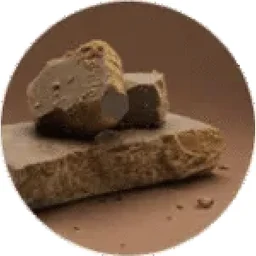
This is the stage most people picture when they hear "pressed hash."
But pressing isn't just about making transportation convenient.
It can affect texture and the way the product develops afterward.
Hand-Pressed vs. Mechanically Pressed
Not all pressing looks the same.
Small quantities of resin can be worked and compressed by hand.
Larger-scale production may use mechanical pressure to create uniform slabs or blocks.
Neither method automatically guarantees quality.
A beautifully hand-pressed piece can start with mediocre sift.
A mechanically pressed block can begin with excellent resin.
The quality of the input still matters.
What pressing changes is the physical structure of that resin and, depending on pressure and temperature, some of its characteristics.
That's why evaluating hash requires looking further back than the final shape.
What Heat Does During Pressing
Resin becomes softer and more workable with warmth.
Controlled heat can help trichomes bind together during pressing and contribute to the familiar dense texture of traditional hash.
Too much heat, however, isn't automatically better.
Aromatic compounds are volatile.
Excessive heat and poor storage can reduce the character you're trying to preserve.
The objective isn't simply to make the hash as hot and dark as possible.
It's to achieve the desired consistency without unnecessarily degrading the resin.
Again:
Technique.
Why Some Moroccan Hash Is Hard and Some Is Soft
Pick up two pieces of Moroccan-style hash and they may behave completely differently.
One bends when warmed between your fingers.
Another snaps.
One becomes soft almost immediately.
Another stays firm.
Several variables can contribute:
Resin content
Plant material
Pressing pressure
Temperature
Age
Storage conditions
The characteristics of the original cultivar
So softness alone doesn't prove quality.
Neither does hardness.
Context matters.
A resin-rich hash may become wonderfully pliable with warmth, but texture can also change substantially during storage.
Step 6: Aging and Storage
Hash doesn't necessarily stop changing the moment it leaves the press.
Over time, exposure to oxygen, temperature, and light can change its aroma, colour, texture, and chemical composition.
Some traditionally produced hash is intentionally allowed to rest or age.
Under suitable conditions, the product may develop a different texture and aromatic character.
But here's where romantic descriptions can become misleading.
Old doesn't automatically mean aged well.
There's a difference between controlled maturation and simply leaving cannabis somewhere for a long time.
Poor storage can degrade terpenes.
Heat can change texture.
Excessive exposure to air can contribute to oxidation.
Moisture problems can create bigger concerns.
Aging can be part of the product's character.
Neglect isn't craftsmanship.
Time changes hash, but age by itself isn't a quality indicator. Starting material, processing, storage temperature, oxygen exposure, moisture, and handling all influence whether an older product remains enjoyable or simply becomes degraded.
Why Moroccan Hash Can Be Different Colours
You've probably seen Moroccan-style hash ranging from light tan or golden brown to deep brown.
Colour can change between the exterior and interior too.
Several things can influence that appearance.
The original resin.
The amount of plant material.
How aggressively it was sieved.
Pressing.
Heat.
Oxidation.
Age.
Storage.
This means a simple rule like:
Light hash = good. Dark hash = bad.
doesn't work reliably.
A darker exterior may simply reflect oxidation while the interior looks different.
Likewise, light colour doesn't guarantee exceptional purity.
Use colour as one clue.
Not the verdict.
Why the Smell Matters
Open good hash and you should expect character.
Maybe earthy.
Spicy.
Floral.
Sweet.
Herbal.
Piney.
Gassy.
The exact profile depends on the cannabis used and how well its aromatic compounds survived the process.
This is one of the easiest ways to understand why careful handling matters.
If the starting plant contained a beautiful aromatic profile but drying, processing, heat, and storage stripped most of it away, the final hash can't magically recreate those lost compounds.
A strong, distinctive aroma isn't a perfect quality test.
But dead-smelling hash with very little character isn't exactly a selling point either.
What Does Good Moroccan Hash Feel Like?
There isn't one correct texture.
Still, traditional pressed hash should generally feel like a cohesive resin product rather than compressed green plant dust.
Depending on the style and temperature, it may be firm at room temperature and soften with warmth.
Some batches are naturally softer.
Others are more solid.
What's more useful is considering several characteristics together:
Aroma
Texture
Resin content
How it responds to warmth
How it burns
Flavour
Freshness
That's much more informative than trying to identify quality from one trick.
Does Bubbling Mean Moroccan Hash Is Good?
Heating hash can cause resin-rich material to bubble.
Generally, visible melting and bubbling can indicate meaningful resin content.
But we've already learned this lesson from bubble hash:
Don't turn one behaviour into a complete quality certificate.
How much it bubbles can depend on resin purity, moisture, temperature, and other characteristics of the material.
A useful observation?
Yes.
A complete laboratory analysis performed with a lighter?
No.
Traditional Moroccan Hash vs. Bubble Hash
The names can get confusing because both products concentrate cannabis resin.
The major difference is the separation method.
Traditional Moroccan-style hash is associated with dry-sift techniques, where dried plant material is mechanically worked over screens.
Bubble hash uses ice water to help separate trichomes before filtration through bags or screens.
Both methods are solventless.
Both are trying to isolate resin.
But the processes create different products and traditions.
Neither category is automatically superior.
Quality depends on what went in and how well the process was executed.
Traditional Hash vs. Modern Concentrates
Today's concentrate market includes products produced with very different technologies.
Rosin.
Bubble hash.
Live resin.
Various extracts.
Traditional pressed hash can look almost simple beside them.
That's part of its appeal.
The basic concept is centuries old:
Separate resin.
Collect it.
Press it.
But simple doesn't mean easy.
Producing genuinely clean dry sift without bringing excessive plant material along requires control.
Pressing it well requires experience.
Preserving the aroma requires careful handling.
And maintaining quality through storage requires somebody to care after the hash has already been made.
From the Press to the Consumer
Once hash has been produced, the supply chain isn't over.
The product still needs to be stored, transported, portioned, packaged, and eventually sold through whatever legal and regulated distribution framework applies in the market where it's being offered.
Every stage creates another opportunity for quality to change.
Too much heat during storage?
Texture changes.
Repeated exposure to air?
Aroma can fade.
Poor packaging?
The product may dry or pick up unwanted odours.
Excessive handling?
The condition can deteriorate.
So when two pieces supposedly came from similar production traditions but one seems dramatically fresher than the other, the difference may not have happened at the sieve.
It may have happened afterward.
That's why the phrase "from kief pressing to your door" is really a story about preservation.
Is Moroccan Hash Stronger Than Flower?
Usually, hash contains a more concentrated proportion of cannabis resin than ordinary flower, so it can contain higher cannabinoid levels.
But don't assume every piece of Moroccan hash has one predictable potency.
Traditional hash varies enormously.
Starting material matters.
Resin purity matters.
Processing matters.
Different grades can have very different cannabinoid concentrations.
If precise potency matters, actual product testing tells you much more than appearance, country-of-style, softness, or how dramatically somebody describes it.
"Moroccan" isn't a THC percentage.
Why Cheap Moroccan Hash Can Be So Different From Premium Hash
Remember the sieving stage?
That's one major reason.
Cleaner early resin fractions can be more valuable.
More aggressive or repeated processing can produce additional material with more plant contamination.
Combine that with differences in starting plants, pressing, storage, and age, and the quality gap can become substantial.
Premium hash isn't expensive simply because someone pressed it harder.
You're potentially paying for:
Better starting resin
Cleaner separation
Lower contamination
Better aroma preservation
More careful pressing
Better storage
But labels aren't proof.
Judge the actual product.
Frequently Asked Questions
Traditional Moroccan-style hash is generally produced by drying harvested cannabis, mechanically separating resin-rich trichomes through dry sieving, collecting the resulting kief or dry sift, and pressing that resin into slabs, blocks, or other forms.
Kief is loose resinous material made up largely of cannabis trichomes that have been separated from the plant. It can be collected, graded, and pressed to create hash.
Pressing transforms loose dry-sift resin into a cohesive hash product. Pressure, sometimes combined with controlled warmth, helps the resin bind together and creates the dense texture associated with traditional pressed hash.
Colour can be affected by the starting cannabis, resin maturity, plant contamination, pressing, heat, oxidation, age, and storage. Darker hash isn't automatically lower quality, and lighter hash isn't automatically better.
No. Traditional Moroccan-style hash is generally associated with dry-sift separation of resin from dried cannabis. Bubble hash uses ice water and filtration bags or screens to separate trichomes. Both approaches are solventless but use different processes.
Resin-rich hash may bubble and soften when heated, so melt behaviour can provide useful information. However, bubbling alone doesn't prove overall quality, purity, potency, or safety.
Not automatically. Hash can change as it ages, but the result depends heavily on storage, temperature, oxygen exposure, moisture, starting quality, and handling. Properly managed aging and simple degradation aren't the same thing.
The Bottom Line on Moroccan Hash
Traditional Moroccan hash sounds simple on paper.
Grow cannabis.
Dry it.
Sieve it.
Collect the kief.
Press it.
But each of those steps contains decisions that affect what eventually reaches the consumer.
Start with resin-rich cannabis and you've raised the quality ceiling.
Sieve carefully and you can collect cleaner resin.
Push the material harder and you may increase yield while bringing more plant matter along.
Press it properly and loose kief becomes the dense hash people recognize immediately.
Store it carefully and you have a better chance of preserving the aroma, texture, and character that made the resin worth collecting in the first place.
That's why two blocks carrying the same broad Moroccan hash label can be worlds apart.
The technique matters.
The starting material matters.
The storage matters.
And most importantly, the final product reflects the entire journey — not just the moment somebody put the kief under a press.