 %
%
 %
%
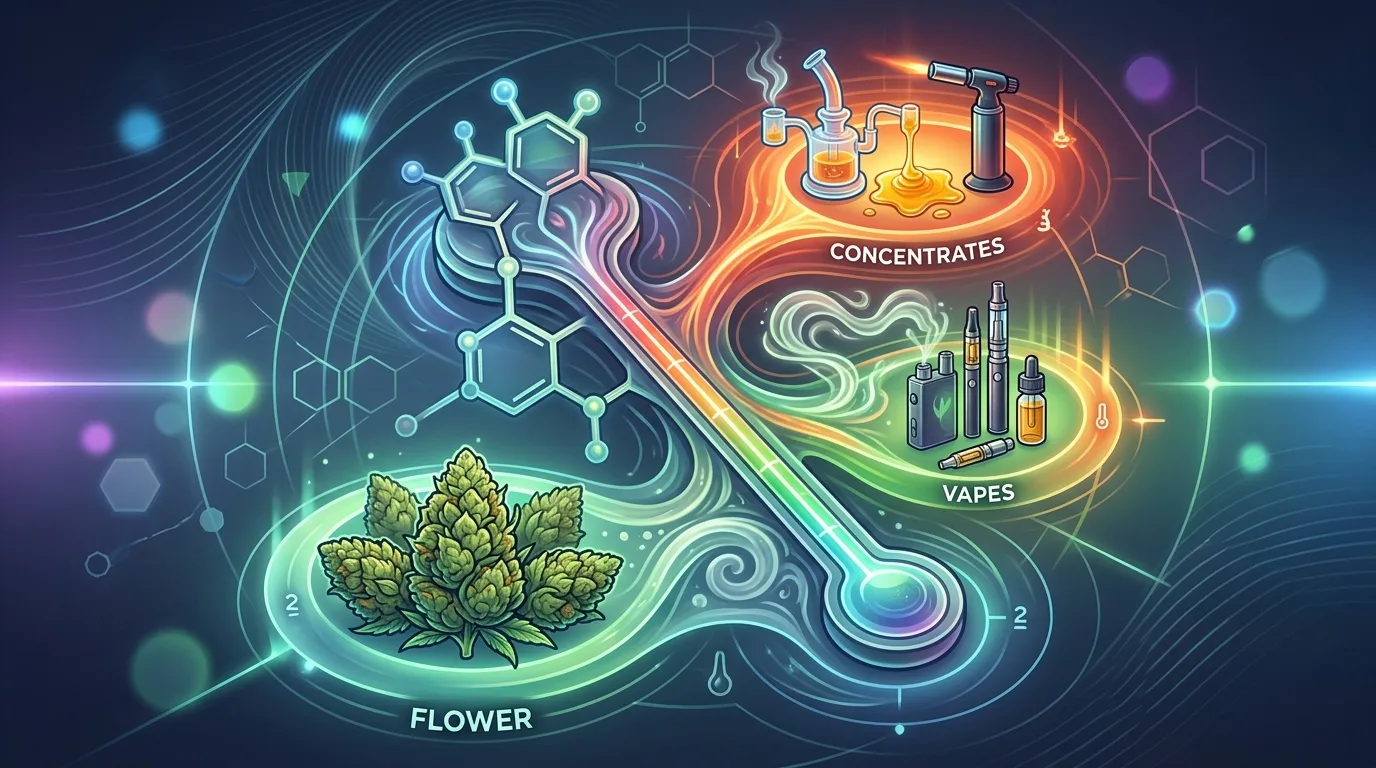
Temperature is the most consequential setting in cannabis consumption and the one almost nobody adjusts. People buy a temperature-controlled device, leave it wherever it is shipped, and then wonder why their expensive live rosin tastes like their cheap distillate.
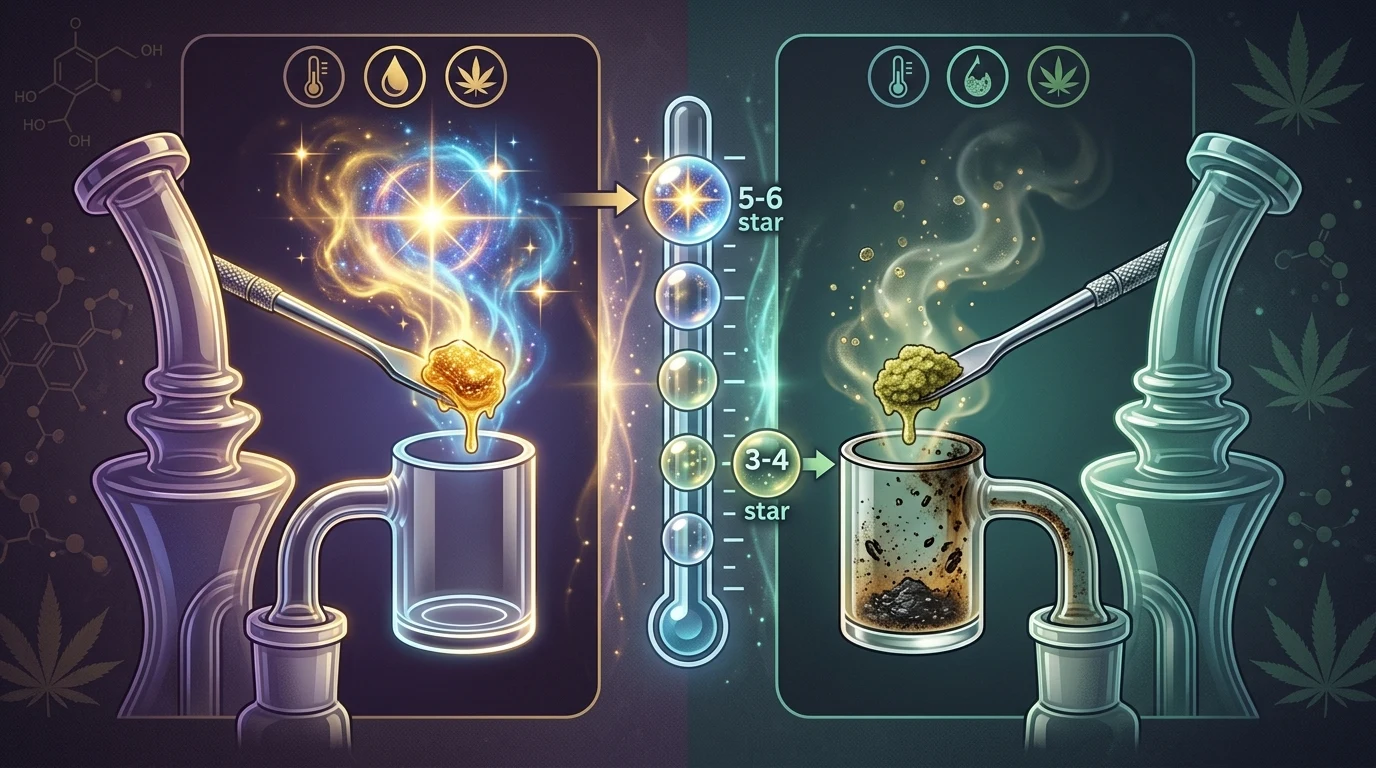
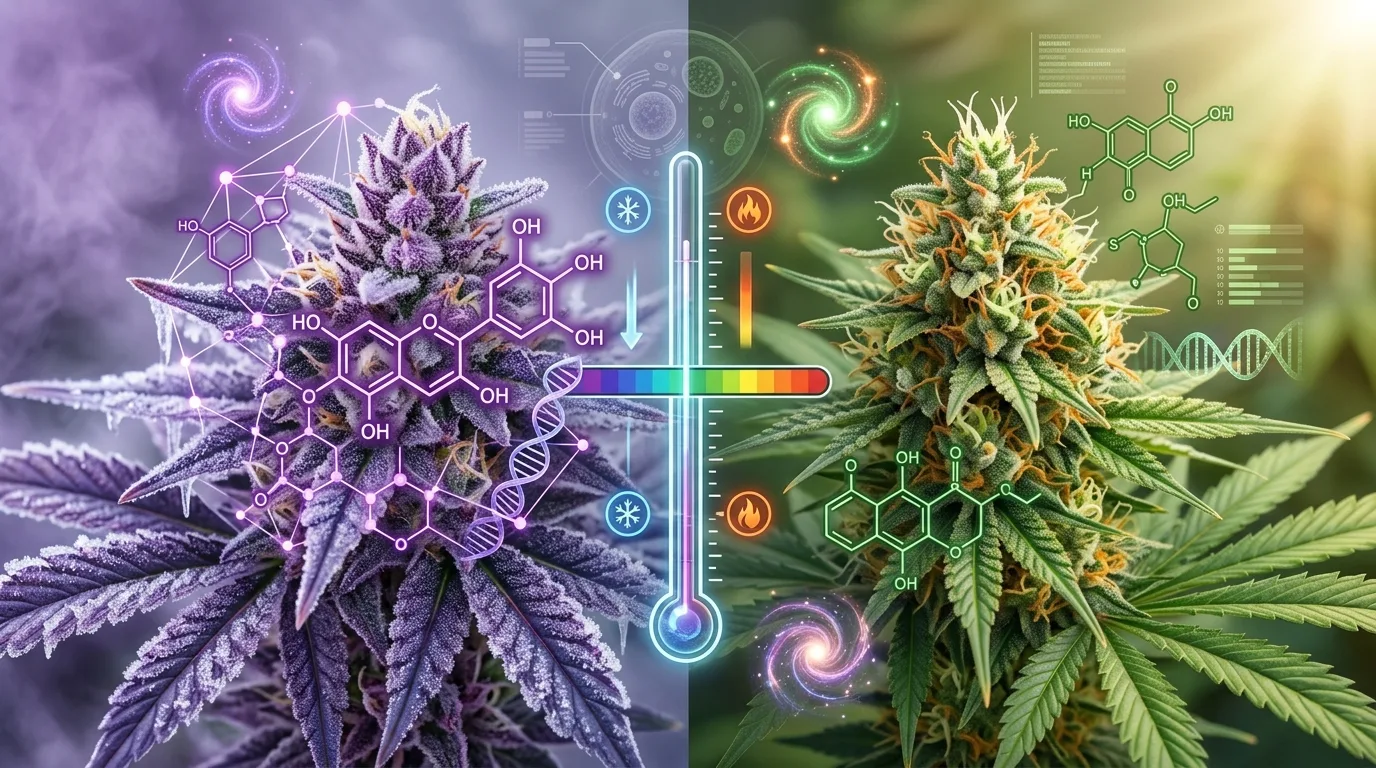
The relationship is simple enough to state in one sentence: low temperatures favour flavour and preserve volatile compounds, while high temperatures favour vapour volume and can degrade them. There's no setting that gives you both, and chasing clouds is one of the easiest ways to waste money on premium concentrates.
What makes this worth a full article is that the right answer differs by product. The temperature that suits a 6-star hash rosin is wrong for a distillate cart and wrong again for a dry herb vapourizer loaded with flower.
The Basic Trade-Off
Cannabinoids and terpenes vapourize at different temperatures. The volatile aromatic compounds generally become available at lower temperatures, while heavier material requires more heat.
So a low-temperature session can emphasize flavour and still deliver meaningful cannabinoid vapour, producing thinner, cooler, intensely flavourful vapour. A high-temperature session produces denser visible clouds and can create a harsher experience while reducing some of the aromatic character.
The visible cloud is not a direct measure of how much you absorbed. It is heavily influenced by how hot you ran the device.
A Note on Terpene Boiling Point Charts
You'll find widely circulated tables listing precise boiling points for individual terpenes. They're useful as a rough guide, but they're worth treating sceptically as precision instruments.
Those figures are typically measured for isolated compounds under laboratory conditions, which is not the environment inside a banger or a vapourizer chamber. Pressure, the surrounding mixture, and how heat actually transfers through the material can all affect real-world behaviour.
Treat the charts as directional rather than settings to dial in to the exact degree.
The broader lesson remains useful: aromatic compounds can vapourize well below combustion temperatures, and excessive heat can reduce the flavour compounds you're trying to preserve.
Concentrates
The Temperature Bands
| Surface temperature | What you get | Suits |
|---|---|---|
| 150 to 180°C | Maximum flavour, thin vapour, more residue | Live rosin, full melt hash, terp-rich live resin |
| 180 to 210°C | Strong flavour, good vapour, moderate residue | Most live resin, badder, sauce |
| 210 to 240°C | Reduced flavour, dense vapour, little residue | Cured resin, shatter, distillate |
| Above 240°C | Harsh, flat vapour and significant terpene degradation | Not recommended for flavour-focused sessions |
The honest trade-off at the low end is residue.
Low-temperature dabs don't fully vapourize all of the material, so there can be leftover oil in the banger. That isn't necessarily wasted product; some of what remains can be heavier material that requires more heat.
The trade-off is more frequent cleaning in exchange for better flavour.
Why This Matters Most for Expensive Material
If you've bought live rosin or 6-star hash, you paid specifically for terpene-rich material and its flavour profile.
Running it at very high temperatures can undermine the characteristics you're paying a premium for, potentially making a premium concentrate taste much closer to a less flavour-focused product.
Our comparison of live resin, live rosin and cured resin covers what each category costs and why, while our guide to full melt hash grades explains melt behaviour, which is itself strongly influenced by temperature.
Cold Start vs Hot Start
Hot start is the traditional method: heat the banger, wait for it to cool toward the desired temperature, and then introduce the concentrate.
The waiting period is where many people go wrong by not allowing enough cooling time.
With quartz, a rough approach is to heat the banger and then allow it to cool. Exact cool-down time varies significantly depending on banger thickness, ambient temperature, and the heating method.
A temperature reader can remove much of this guesswork.
Cold start, sometimes called a reverse dab, puts the material into a cold banger first and then applies heat gradually until it vapourizes.
Advantages include:
- Less timing guesswork
- Strong flavour
- Naturally lower-temperature sessions
- Simple setup
The disadvantages are that it can be slower and may be less consistent if heat is applied unevenly.
For anyone without a temperature reader, cold start is generally an easier way to stay in a lower-temperature range.
Dry Herb Vapourizers
Dry herb requires different temperature ranges from concentrates.
| Setting | Range | What happens |
|---|---|---|
| Low | 160 to 180°C | Light, very flavourful vapour with minimal visible output |
| Medium | 180 to 200°C | Balanced flavour and vapour; a general-purpose range |
| High | 200 to 220°C | Denser vapour with reduced flavour |
| Very high | 220°C+ | Approaches combustion and can become harsh |
A useful technique is to start a session low and gradually increase the temperature.
The first draws can emphasize flavour, while raising the temperature later can extract more from the same load. If you save your AVB, this approach can also leave more material available for later use.
Dry herb vapourizers can also produce substantially less odour than combustion, which can matter in shared buildings. Our guide on cannabis and condo living in Ottawa covers odour, building rules, and lower-smell options.
Flower Moisture Affects This
Over-dry flower can vapourize unevenly and may become harsher at settings that would otherwise work well for properly conditioned material.
Keeping flower at an appropriate humidity range can help maintain more consistent texture and vapourization.
Our humidity pack guide covers cannabis storage and humidity control.
Vape Cartridges
Vape cartridges are among the most commonly overheated cannabis products.
Many 510 batteries offer settings somewhere between roughly 2.0 and 4.0 volts, which loosely affects the heat generated by the cartridge.
A starting range of around 2.5 to 3.3 volts works well for many cannabis oils, although the ideal setting varies by cartridge, battery, oil viscosity, and hardware.
Higher settings can produce larger clouds, but they can also increase oil consumption, reduce flavour, and contribute to a burnt taste.
Our guide on why your vape cart clogs, leaks or burns out covers the common cartridge problems and their causes.
Start at the lowest setting your battery offers and increase only if vapour production is genuinely insufficient.
If the oil is thick because it has been exposed to cold temperatures, use a preheat function if available rather than immediately increasing the voltage.
Our vapes section notes oil types on individual listings, which can help when deciding how to approach temperature settings.
Practical Rules
- Start low and work up. You can always add heat. You can't recover a flavour profile after excessive heating.
- Match the temperature to what you paid for. Premium, terpene-rich material generally benefits from the lower end of the range.
- Clouds aren't the metric. Visible vapour is influenced heavily by temperature and device characteristics rather than simply indicating how much you absorbed.
- Accept some residue at low temperatures. It can be part of the trade-off for better flavour and means you'll need to clean your equipment more frequently. Our guide on cleaning a bong, pipe or grinder covers cleaning methods.
- Cold product needs warming first, not necessarily more heat. In an Ottawa winter, this can be a daily issue. Our cold weather cannabis guide covers it.
- A temperature reader can remove the guesswork if you dab regularly. It can make it easier to reproduce the temperature range you're aiming for.
Concentrates, carts and accessories are available across our concentrates, vapes and accessories sections, with same-day weed delivery in Ottawa available through Uper Weed.
Frequently Asked Questions
Between 150 and 210°C at the surface works as a general range for many concentrates. The lower end, around 150 to 180°C, emphasizes flavour and can suit live rosin and full melt hash. The 180 to 210°C range provides a balance between flavour and vapour production. Higher temperatures can produce harsher vapour and reduce the aromatic character of terpene-rich concentrates.
Low-temperature dabs can leave more residue in the banger, but that isn't necessarily the same as wasting the product. Some of what remains can be heavier material that requires more heat to vapourize. The trade-off is generally more residue and cleaning in exchange for emphasizing flavour.
A cold start dab places the concentrate into a cold banger first and then applies heat gradually until it vapourizes, rather than heating the banger first and waiting for it to cool. It reduces some of the timing guesswork, naturally stays in a lower-temperature range, and can produce strong flavour. It is generally slower than a traditional hot start.
Around 160 to 180°C emphasizes flavour with lighter vapour, 180 to 200°C provides a balanced general-purpose range, and 200 to 220°C produces denser vapour with less emphasis on flavour. Starting low and gradually increasing the temperature through a session is a useful approach.
A starting range of around 2.5 to 3.3 volts works well for many cannabis cartridges, although the ideal setting varies by battery, cartridge and oil. Start at the lowest setting available and increase only if vapour production is genuinely too low. Higher settings can produce larger clouds while increasing oil consumption and the risk of a burnt taste.
They are directionally useful but should not be treated as precise temperature settings. Published figures generally come from isolated compounds under laboratory conditions, which differ from the environment inside a banger or vape chamber. Pressure, surrounding compounds and heat transfer can all affect real-world behaviour.
The Short Version
Low heat generally emphasizes flavour and produces thinner vapour. Higher heat produces denser clouds but can reduce aromatic character. There is no single setting that delivers maximum flavour and maximum vapour at the same time.
For concentrates, 150 to 210°C is a useful general range, with the lower end particularly suited to terpene-rich material.
For dry herb, 180 to 200°C is a practical balanced range for many users.
For vape cartridges, 2.5 to 3.3 volts is a useful starting range, with the lowest available setting generally worth trying first.
The rule that covers all three is simple: match the temperature to what you paid for.
Running premium live rosin or terpene-rich concentrates excessively hot can undermine the flavour and characteristics that make those products worth the premium in the first place.