Three jars on a concentrate menu can look almost identical: cured resin at $35 a gram, live resin at $50, and live rosin at $110. The names differ by only a word or two, yet the price can more than triple by the time you reach the premium option.
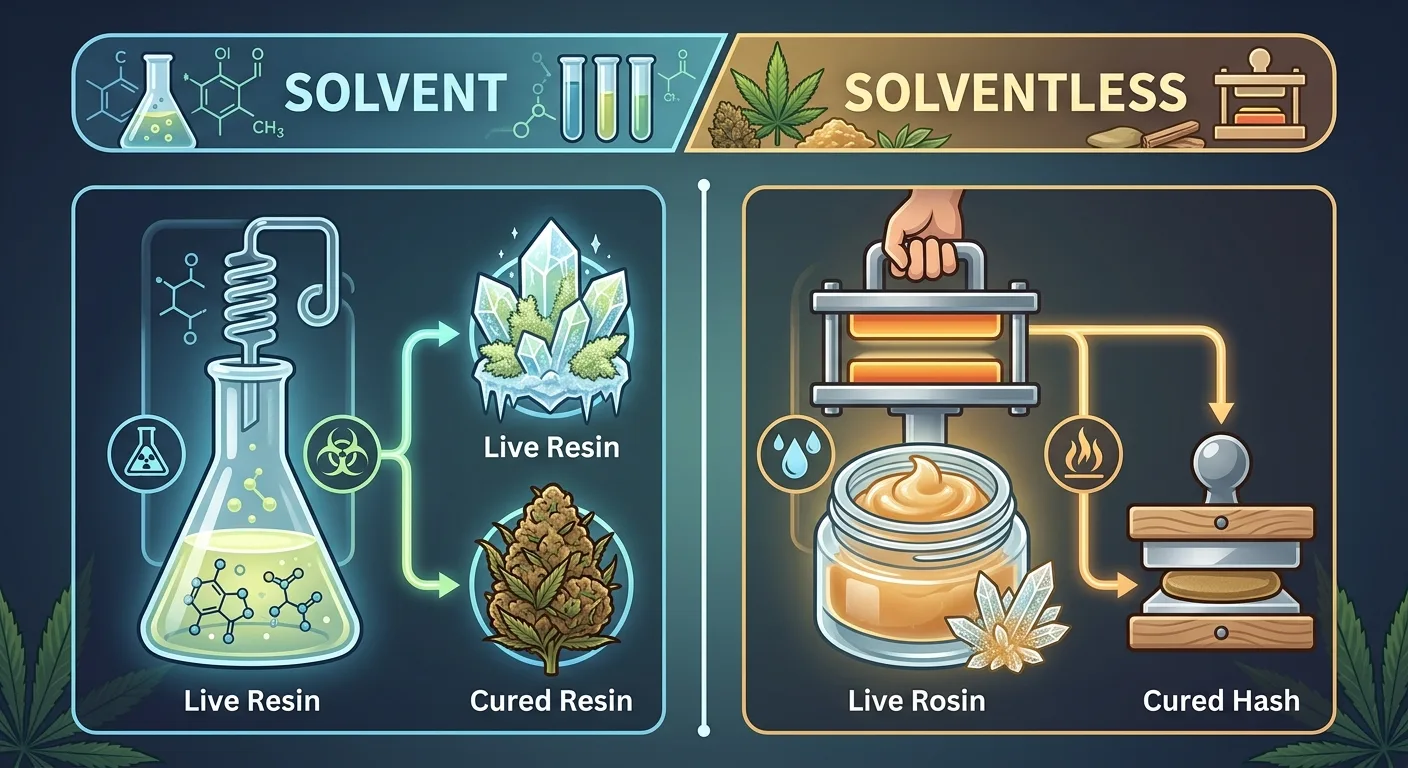
The difference isn't just marketing. These names describe two separate variables: what happened to the cannabis after harvest and how the resin was extracted. Once you understand those two variables, the pricing and differences between cured resin, live resin and live rosin become much easier to understand.
The Two Variables
Variable One: Fresh-Frozen or Cured
Cured cannabis is harvested, dried over roughly one to two weeks, and then cured in containers for several more weeks. This is the standard process used to prepare cannabis flower.
Curing is useful for developing the characteristics of flower, but drying can reduce some of the plant's original volatile terpene content. Terpenes are aromatic compounds that can evaporate during processing.
Fresh-frozen cannabis goes into a freezer shortly after harvest, without going through the normal drying and curing process. Keeping the material frozen helps preserve more of the plant's original terpene profile until extraction.
The word "live" on a concentrate menu generally refers to this fresh-frozen starting material. It doesn't mean the plant remains alive during extraction, and it doesn't identify the extraction method.
Variable Two: Solvent or Solventless
Solvent-based extraction uses hydrocarbons such as butane or propane to separate resin from the plant material. The resulting extract is processed and purged to remove residual solvent.
Solventless extraction relies on physical processes rather than chemical solvents. Ice water, agitation, filtration, heat and pressure can be used to separate and collect the resin.
Rosin refers to a solventless extract. Resin, when used in this extraction context, generally refers to an extract made using solvents.
That distinction between resin and rosin explains a significant part of the price difference between concentrates.
The Three Products
Cured Resin
Cured resin is cured, solvent-based concentrate made from dried and cured cannabis material.
This category can include textures and formats such as shatter, budder, wax and crumble. Our guide to budder vs shatter vs crumble explains how those formats differ.
Cured resin can offer high cannabinoid potency at a lower price than many live concentrates. Because the starting material has already been dried and cured, its terpene profile can be different from concentrates made from fresh-frozen cannabis.
For shoppers primarily concerned with value and potency, cured resin can make sense.
Live Resin
Live resin is fresh-frozen, solvent-based concentrate.
The extraction method is similar to cured resin, but the starting material was frozen shortly after harvest rather than dried and cured first.
The main appeal is flavour. Fresh-frozen material can retain more of the plant's original aromatic compounds, giving live resin a more pronounced and strain-specific profile.
Live resin can appear in several textures, including:
- Sauce
- Badder
- Sugar
- Diamonds in terpene-rich sauce
These formats can look and handle differently while still falling under the broader live-resin category.
Live Rosin
Live rosin is fresh-frozen, solventless concentrate and is generally positioned as a premium product.
The process can involve washing fresh-frozen cannabis in ice water, separating trichome heads through filtration, collecting the resulting hash, freeze-drying it, and then pressing it with controlled heat and pressure.
The multiple stages and lower recovery compared with some solvent-based extraction methods contribute to the higher cost per gram.
The basic principle of physically separating trichomes is related to traditional dry-sift methods. Our M.M.S hash guide covers that traditional concentrate category in more detail.
Live rosin is therefore not simply "stronger resin." Its premium positioning comes from its solventless production method, fresh-frozen starting material, flavour and processing requirements.
Side by Side
| Cured Resin | Live Resin | Live Rosin | |
|---|---|---|---|
| Starting material | Dried and cured | Fresh-frozen | Fresh-frozen |
| Extraction | Hydrocarbon solvent | Hydrocarbon solvent | Ice water, heat and pressure |
| Solvent involved | Yes | Yes | No |
| Potency | Often high | Often high | Often high |
| Flavour intensity | Moderate | High | High to very high |
| Typical price | Lowest | Middle | Highest |
| Storage | Relatively stable | More sensitive | More temperature-sensitive |
| Best suited to | Value and potency | Flavour at a moderate premium | Solventless production and premium flavour |
The important point is that you are not necessarily paying more for more THC.
The premium often reflects the starting material, extraction method, processing requirements, yield, labour and preservation of the plant's aromatic profile.
Storage Differs, and It Matters
Concentrates can be more sensitive to storage conditions than flower, particularly products with higher terpene content.
Cured resin is generally the most forgiving. Store it in an airtight container in a cool, dark environment and minimize exposure to heat, light and air.
Live resin can be more sensitive because preserving volatile compounds is part of its appeal. Keeping it sealed and cool can help preserve its flavour and texture.
Live rosin is particularly sensitive to heat. Depending on the specific product and producer's recommendations, refrigeration or another controlled-cold storage method may be appropriate.
Avoid repeatedly exposing concentrates to large temperature swings. If a product has been refrigerated, allow the container to come toward room temperature before opening so condensation is less likely to form inside.
Ottawa's winter temperatures and dry heated indoor air can create additional storage challenges. Our cold weather cannabis guide covers how seasonal conditions can affect cannabis products.
Consumption Temperature Changes Everything
Concentrates are sensitive to temperature, and excessive heat can affect flavour.
Lower temperatures generally emphasize flavour and terpene preservation while producing less visible vapour.
Higher temperatures can produce larger vapour output and a more intense experience, but excessive heat can degrade or volatilize aromatic compounds and produce harsher vapour.
If your device offers temperature control, starting at a lower setting and gradually increasing it gives you more control over the balance between flavour and vapour.
The ideal setting also depends on the device, concentrate and manufacturer's recommendations, so treat temperature ranges as general guidance rather than a universal rule.
Which One Should You Buy?
Cured resin makes sense if your priority is getting a concentrate at a lower price and you care more about value and potency than maximum terpene preservation.
Live resin offers a middle ground. You get fresh-frozen starting material and a pronounced flavour profile without moving all the way into the higher price of solventless extraction.
Live rosin is aimed at shoppers who specifically want a solventless concentrate and are willing to pay more for the production method and premium flavour experience.
You can explore the full selection in our concentrates section, where product descriptions can help you compare concentrate types before ordering.
For customers looking for weed delivery in Ottawa, concentrates can be ordered alongside other cannabis products.
Frequently Asked Questions
It generally means the cannabis was fresh-frozen shortly after harvest rather than dried and cured before extraction. The term describes the starting material, not the extraction method.
Resin generally refers to concentrate made using a solvent-based extraction method, while rosin refers to a solventless extract produced using physical processes such as filtration, heat and pressure.
Not necessarily. Both can have high cannabinoid potency. The higher price of live rosin is generally associated with its solventless production, processing requirements, starting material and flavour profile rather than simply a higher THC percentage.
Live rosin requires fresh-frozen material and multiple processing stages, including separation, filtration, drying and pressing. Solventless extraction can also produce lower yields, meaning more starting material and labour may be required for each gram of finished product.
Live rosin is particularly sensitive to heat and temperature changes. Follow the producer's storage instructions, and when refrigeration is recommended, keep the product cold and minimize repeated temperature changes.
Lower temperatures generally emphasize flavour and terpene preservation, while higher temperatures produce more vapour but can reduce flavour quality. If your device has temperature control, start lower and adjust gradually according to the device and concentrate manufacturer's guidance.
The Short Version
Two questions explain most of the difference between cured resin, live resin and live rosin:
Was the cannabis fresh-frozen or dried and cured?
Was the concentrate extracted with solvents or produced solventlessly?
"Live" generally tells you the cannabis was fresh-frozen. "Rosin" tells you the concentrate was made without chemical solvents.
Cured resin is generally the value-focused option. Live resin combines fresh-frozen material with solvent-based extraction and offers a strong flavour-focused middle ground. Live rosin is the premium solventless option, with additional processing and production costs.
Whichever concentrate you choose, proper storage and reasonable temperature control help preserve the qualities you paid for.
Compare cured resin, live resin, live rosin and other concentrate options available for delivery in Ottawa.Explore Cannabis Concentrates in Ottawa