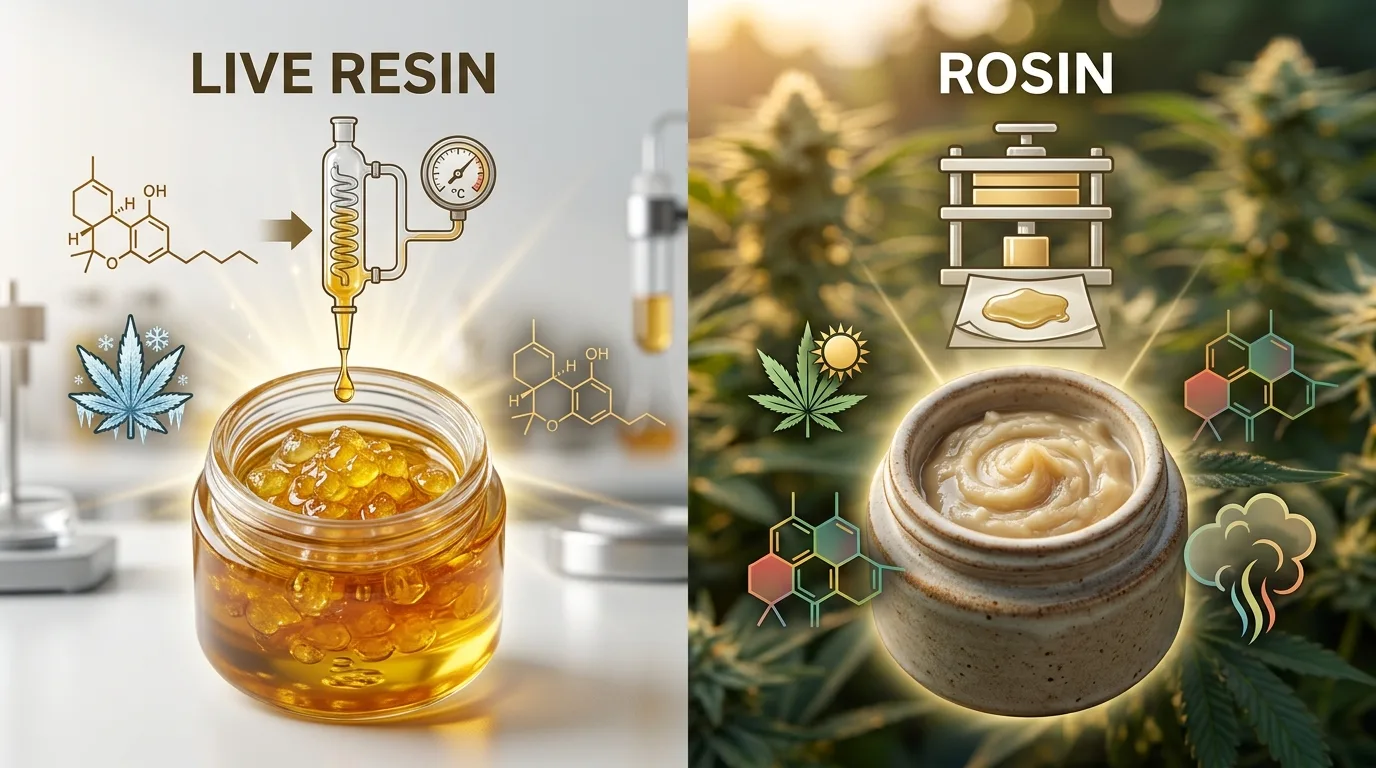
Walk into any cannabis dispensary in Ottawa and ask for premium concentrates, and you'll inevitably hear two names: live resin and rosin. They sound nearly identical, they're both prized by connoisseurs, and they both command premium prices, but these two concentrates represent fundamentally different philosophies in cannabis extraction. One relies on sophisticated hydrocarbon solvents and flash-freezing technology. The other uses nothing but heat, pressure, and fresh flower. Understanding the difference between live resin and rosin isn't just cannabis trivia. It's the key to choosing concentrates that match your priorities, whether you value absolute terpene preservation, solventless purity, or maximum potency.
The confusion is understandable. Both concentrates prioritize freshness, both deliver exceptional flavour profiles that blow traditional extracts out of the water, and both sit at the top of the quality pyramid. But the production methods, final characteristics, and ideal use cases differ dramatically. This guide breaks down everything you need to know about live resin versus rosin, from extraction techniques to taste profiles, potency differences to price points, so you can make informed choices at the dispensary counter.
The Fundamental Difference: Solvent-Based vs Solventless Extraction
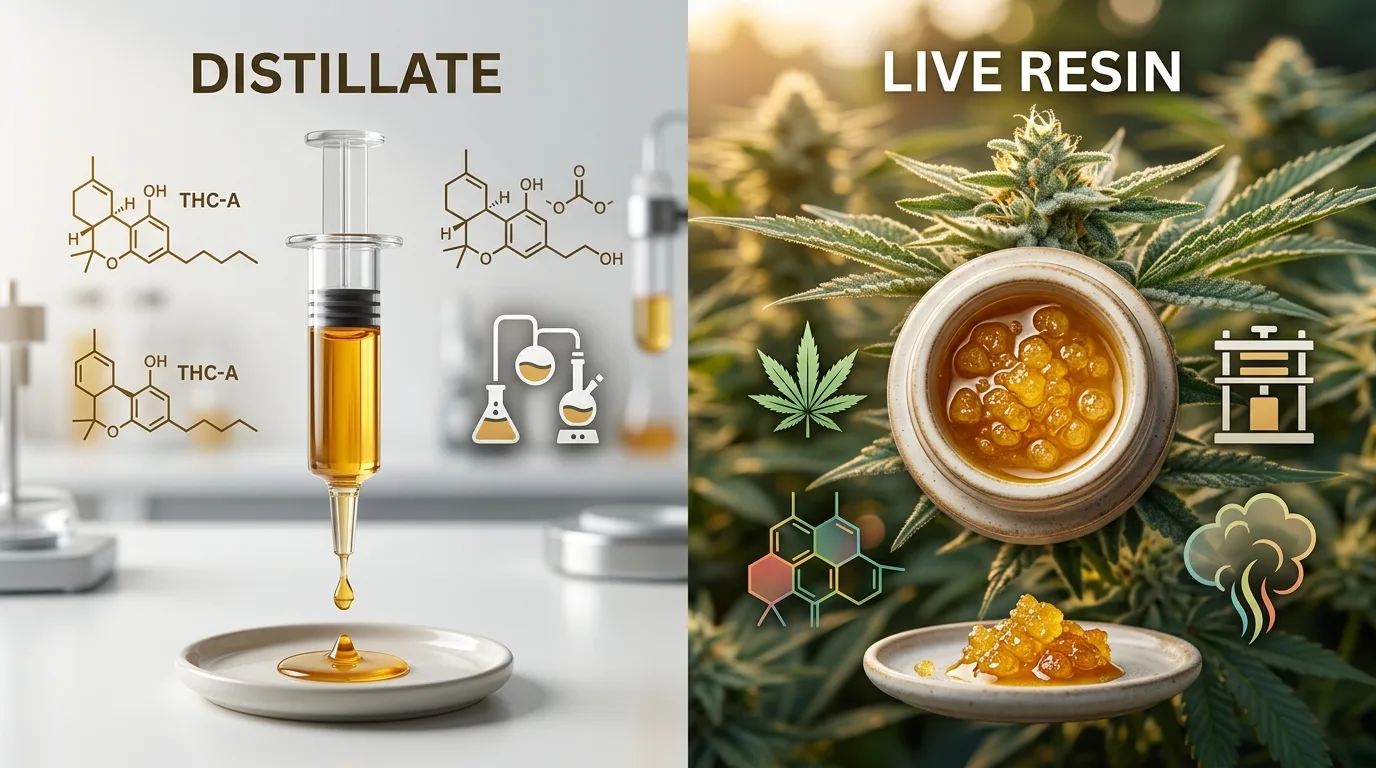
The single most important distinction between live resin and rosin comes down to extraction methodology. Live resin is a solvent-based concentrate, typically produced using butane, propane, or a blend of hydrocarbons to strip cannabinoids and terpenes from flash-frozen cannabis plant material. The solvents dissolve the desirable compounds, which are then separated from the plant matter and purged to remove residual solvents, leaving behind a potent, terpene-rich concentrate.
Rosin, by contrast, is completely solventless. It's made by applying heat and pressure to cannabis flower, hash, or kief, physically squeezing out the resinous cannabinoid and terpene-laden oils without any chemical intermediaries. Think of it as the difference between using gasoline to extract gold from ore versus simply crushing gold-bearing rock until the metal flows out. Both methods work, but they operate on entirely different principles.
This distinction matters for several reasons beyond chemistry. Solventless advocates prize rosin for its purity, arguing that even after thorough purging, solvent-based concentrates may contain trace residuals. Solvent-based proponents counter that modern closed-loop extraction systems produce incredibly clean products while achieving cannabinoid and terpene profiles that are difficult to replicate through pressure alone. Neither position is wrong. They simply reflect different priorities in what makes a concentrate "premium."
Why the Extraction Method Shapes Everything Else
The solvent versus solventless divide cascades through every other characteristic of these concentrates. Solvent-based extraction allows processors to work at ultra-cold temperatures that preserve delicate volatile terpenes while achieving near-complete cannabinoid extraction. The process is highly controllable, consistent, and scalable. Solventless extraction, meanwhile, relies on mechanical separation, which means the final product is entirely dependent on starting material quality, pressure calibration, and temperature control. You can't "fix" mediocre flower by pressing it. What goes in is what comes out.
This difference also affects potency ceilings. Live resin typically tests between 65-90% total cannabinoids, with the variance depending on strain genetics and extraction parameters. Rosin usually ranges from 50-80%, with hash rosin (pressed from ice water hash rather than flower) reaching the higher end. The gap exists because solvent extraction is simply more efficient at stripping every available molecule from plant material, while mechanical separation leaves some behind.
What Makes Live Resin "Live"
The "live" in live resin refers to the state of the cannabis at the time of extraction, not the final product. Traditional concentrates are made from dried and cured cannabis, which means the plant material has spent weeks in controlled environments where temperature, humidity, and airflow gradually reduce moisture content and allow chlorophyll to break down. This process is essential for smokable flower but comes with a significant downside: terpene loss. Those aromatic compounds that give cannabis its distinctive smell and flavour are volatile. Many evaporate or degrade during the curing process.
Live resin sidesteps this issue entirely. Freshly harvested cannabis is immediately flash-frozen, typically to temperatures around -40°C or lower, locking in the terpene profile exactly as it existed on the living plant. The frozen material is then extracted using chilled solvents, maintaining those frigid temperatures throughout the process to prevent terpene volatilization. The result is a concentrate with a terpene content that can exceed 10-15% by weight, compared to 1-5% in most traditional concentrates.
This terpene density translates directly to sensory experience. Live resin smells and tastes intensely like the strain it came from, capturing subtle aromatic notes that disappear in dried flower. A quality live resin from a citrus-forward strain like Very Berry Haze doesn't just hint at limonene. It practically screams fresh orange peel. That flavour intensity has made live resin the concentrate of choice for connoisseurs who prioritize taste alongside potency.
The Flash-Freezing Factor
Flash-freezing isn't just a gimmick. It's a preservation technique that fundamentally changes what can be captured in the final extract. When cannabis freezes quickly enough, ice crystals form without rupturing cell walls, and terpenes remain trapped in place rather than evaporating or oxidizing. The process requires specialized equipment and careful handling, but the payoff is access to a terpene spectrum that's otherwise impossible to preserve.
Different producers use different freezing protocols. Some harvest and freeze whole plants. Others selectively freeze just the premium colas. Some maintain frozen storage for months before extraction, while others move from harvest to extraction within days. These variables affect the final product, which is why live resin from one producer can smell dramatically different from another producer's version of the same strain.
How Rosin Preserves Freshness Without Solvents
Rosin achieves terpene preservation through a completely different approach: pressing fresh or minimally processed material before those terpenes have a chance to degrade. The technique varies depending on starting material. Flower rosin is made by pressing dried and cured bud, which gives decent results but doesn't compete with solvent-based live products on terpene content. Live rosin takes a page from the live resin playbook by using freshly frozen cannabis, but instead of extracting with solvents, processors first wash the frozen material with ice water to create bubble hash, which concentrates trichome heads while leaving plant matter behind. That hash is then freeze-dried and pressed into rosin.
This multi-step process, sometimes called fresh frozen hash rosin, represents the pinnacle of solventless extraction. By working with frozen material and concentrating trichomes before pressing, producers capture a terpene profile comparable to live resin while maintaining the solventless purity that rosin enthusiasts demand. The tradeoff is complexity and cost. Creating premium live rosin requires more labour, more equipment, and more expertise than either standard rosin or live resin production.
The pressing itself is both art and science. Too much pressure or heat damages terpenes and creates a darker, less flavourful product. Too little pressure leaves cannabinoids and terpenes trapped in the starting material, tanking yield. Professional rosin makers dial in precise pressure levels (typically 600-1500 PSI), temperatures (160-220°F depending on material), and press times (45 seconds to several minutes) to optimize both quality and return. Home pressing has become popular, but commercial operations achieve consistency that's difficult to replicate without specialized equipment.
The Solventless Selling Point
For many consumers, the complete absence of solvents is rosin's defining advantage. There's no possibility of residual butane, propane, or hexane because none were used in the first place. This matters particularly to health-conscious users, medical patients, or anyone who prefers their cannabis products as close to the plant as possible. Rosin is, in essence, concentrated trichomes. Nothing has been added, and aside from plant waxes and fats, nothing has been removed that you wouldn't remove by simply smoking or vaping flower.
That purity comes with a price tag. Solventless extraction is less efficient than solvent-based methods, meaning you need more starting material to produce the same amount of final product. A rosin press might yield 15-25% return from premium flower, while hydrocarbon extraction can achieve 20-30% or higher from the same material. Lower yields mean higher prices, which is why top-shelf live rosin often costs more per gram than live resin, even though both represent premium categories.
Taste and Potency: How They Actually Compare
In blind taste tests, experienced consumers can usually distinguish live resin from rosin, but the differences are subtler than you might expect. Live resin typically delivers a sharper, more pronounced terpene flavour, particularly in the lighter aromatic notes. That citrus, pine, or floral character hits immediately and intensely. Rosin tends toward a fuller, richer flavour profile, sometimes described as earthier or more plant-forward, with the terpene spectrum feeling more integrated rather than punchy.
Neither is objectively better. Preference comes down to individual palate. Some users find live resin's intensity overwhelming or artificial-tasting, preferring rosin's more rounded character. Others feel rosin lacks the bright top notes that make live resin so distinctive. The only way to know which you prefer is to try both, ideally from the same strain produced by reputable manufacturers.
Potency-wise, the gap is smaller than the extraction method difference would suggest. High-quality live resin and live rosin both routinely exceed 70% total cannabinoids, with some examples pushing into the mid-80s. The difference in typical ranges, 5-10 percentage points, matters less in practical terms than terpene content and individual tolerance. A 75% THC live rosin with 8% terpenes will likely feel stronger and more complex than an 85% THC distillate with minimal terpenes because of the entourage effect, where cannabinoids and terpenes work synergistically.
The Entourage Effect Advantage
Both live resin and rosin excel at delivering the entourage effect, the phenomenon where cannabis compounds work better together than in isolation. Their high terpene content means you're getting not just THC or CBD but also the supporting cast of aromatic molecules that modulate and enhance cannabinoid effects. This is why concentrate enthusiasts often report that 500mg of full-spectrum live resin or rosin feels more effective than 500mg of isolated distillate, even when the latter tests higher for pure THC content.
The specific terpene profile affects the experience as much as total cannabinoid percentage. A myrcene-dominant indica rosin will deliver sedative, body-focused effects, while a limonene-heavy sativa live resin provides energizing, cerebral stimulation. If you want to understand more about how different consumption methods affect your experience, this clinical guide to cannabis consumption methods breaks down the science behind inhalation and ingestion.
Who Should Choose Live Resin vs Who Should Choose Rosin
Live resin makes the most sense for consumers who prioritize maximum terpene intensity, consistent potency, and broad strain availability. Because solvent extraction is more scalable and forgiving of minor variations in starting material, you'll find more strain options in live resin than live rosin. It's also typically more affordable than solventless alternatives of comparable quality, making it the better choice for regular users who want premium concentrates without breaking the bank.
If you're new to concentrates and coming from flower or vaping, live resin offers the smoothest introduction to dabbing. The flavour is intense enough to be impressive but not so different from high-quality flower that it feels alien. The consistency (usually a sugary or sauce-like texture) is easy to work with, and because it's widely available, you can experiment with different strains and producers without committing to premium-priced rosin.
Rosin is ideal for purists who want absolute certainty about what they're consuming. If the idea of residual solvents bothers you, even at parts-per-million levels that testing consistently confirms are safe, rosin eliminates the question entirely. It's also the best choice for medical patients with chemical sensitivities or anyone operating under a strict whole-plant medicine philosophy. The flavour profile appeals particularly to users who find live resin overly intense or prefer a more natural, unprocessed taste.
Consider Your Consumption Method
Your preferred way of consuming concentrates should influence the choice between live resin and rosin. For dabbing with a traditional rig or e-nail, both work beautifully, though rosin's tendency to leave slightly more residue means more frequent cleaning. For portable vapourizers designed for concentrates, live resin's generally cleaner vapourization and lower plant lipid content often performs better in cartridge-based systems. If you're interested in vaping concentrates, check out this complete guide comparing distillate and live resin for vape cartridge applications.
For topping bowls or infusing joints, rosin's thicker consistency at room temperature makes it easier to handle without specialized dab tools. It doesn't run or separate as readily as live resin sauce, which can be frustratingly difficult to work with when you're trying to add a small amount to flower. If your concentrate use is primarily about enhancing flower sessions rather than standalone dabbing, rosin's practicality gives it an edge.
Storage, Handling, and Shelf Life Differences
Both live resin and rosin degrade over time when exposed to light, heat, and oxygen, but they age differently. Live resin's higher terpene content means more volatile compounds that can evaporate if containers aren't properly sealed. The sugary crystalline texture common in live resin is also somewhat unstable. THCA crystals can dissolve back into the terpene-rich sauce portion if temperatures fluctuate, changing the consistency without necessarily reducing quality.
Rosin is generally more stable at room temperature but also more susceptible to oxidation because it lacks the chemical extraction process that can be fine-tuned to minimize reactive compounds. Fresh rosin is typically light in colour, from pale yellow to golden amber. As it oxidizes, it darkens, eventually turning brown or even black if stored improperly for extended periods. This colour change doesn't necessarily mean the rosin has gone bad, but terpene loss and degraded cannabinoids will reduce both flavour and potency.
Proper storage for both concentrates means cool, dark, airtight conditions. Glass or silicone containers work better than plastic, which can impart flavours or leach chemicals over time. A refrigerator is ideal for long-term storage, though you'll need to let the concentrate warm to room temperature before opening the container to prevent condensation. Freezers work for extended storage (several months to a year) but introduce the risk of moisture damage if containers aren't perfectly sealed.
Working With Different Consistencies
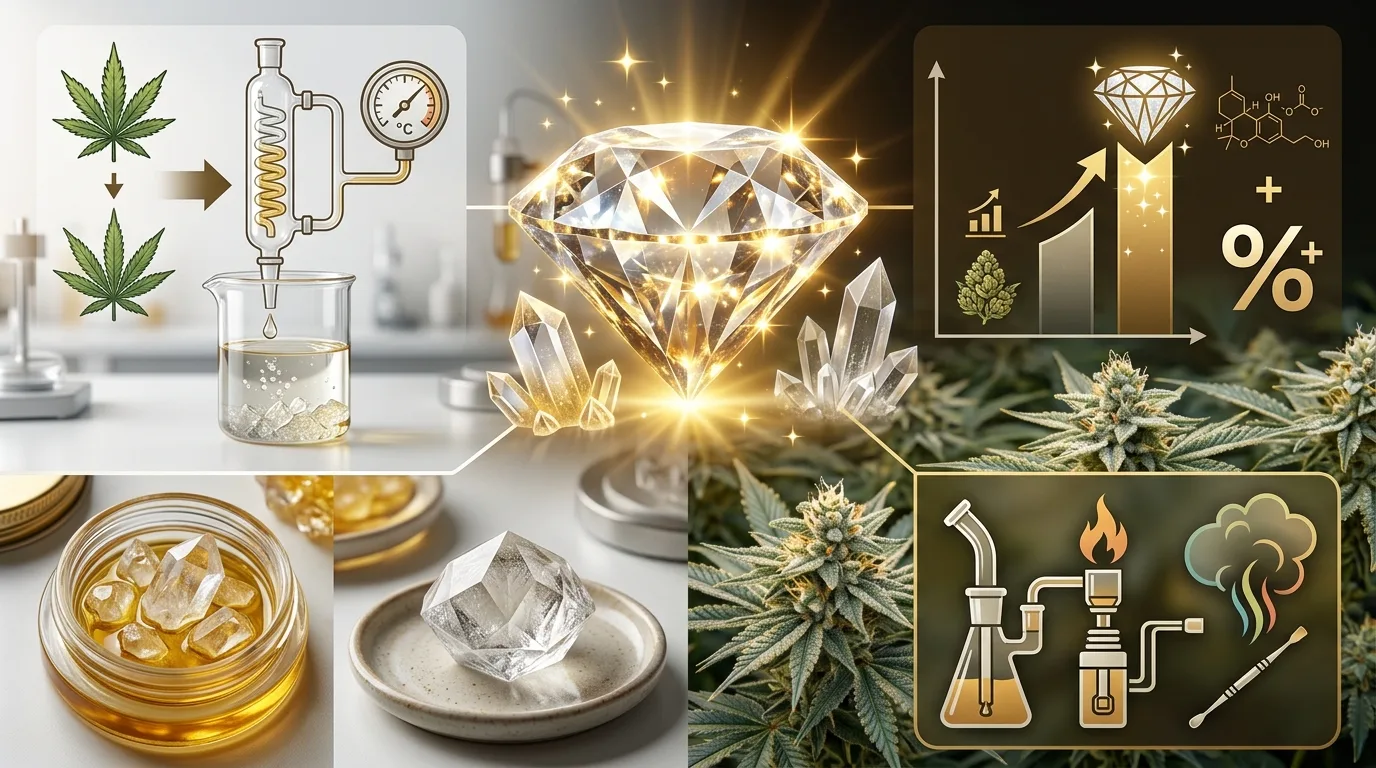
Live resin comes in several consistency variations: sauce (high terpene content with THCA crystals), sugar (granular crystalline texture), budder (creamy and easy to scoop), and diamonds (pure THCA crystals in a terpene sauce). Each handles differently. Sauce and diamonds require careful dab tool technique to capture both crystal and liquid portions for the full experience. Sugar and budder are more forgiving, scooping easily and staying put on a dab tool or in a vapourizer chamber.
Rosin consistency depends heavily on starting material and processing technique. Flower rosin is usually stable and budder-like at room temperature. Hash rosin can range from cake batter texture to nearly liquid, depending on terpene content and how it's cured after pressing. Some producers "cold cure" rosin, stirring and storing it at controlled temperatures to develop a creamy consistency that's easy to work with. Others prefer the natural texture that results from minimal post-processing.
Price, Availability, and Value Considerations Across Ottawa
In Ottawa's cannabis market, live resin typically retails between forty and seventy dollars per gram for premium products, with mid-tier options available in the thirty to forty-dollar range. Live rosin commands a significant premium, usually starting around sixty dollars per gram and climbing to ninety or more for top-shelf hash rosin from sought-after producers. The price difference reflects the labour intensity and lower yields inherent in solventless extraction.
Value assessment depends on usage patterns and priorities. For daily or frequent concentrate users, live resin offers better bang for buck. The potency and terpene content are high enough that you're not compromising much on quality, and the lower price means you can afford to use concentrates regularly without devastating your budget. If you dab occasionally, treating concentrates as a special indulgence rather than your primary consumption method, premium live rosin's purity and unique flavour profile justify the cost.
Availability also factors into the equation. Live resin has become mainstream enough that most dispensaries stock multiple strains and brands. Live rosin, particularly premium fresh frozen hash rosin, remains more niche. Selection is often limited, and specific sought-after drops sell out quickly. If you fall in love with a particular live rosin, you can't always count on finding it again, whereas popular live resin products tend to be consistently restocked. UperWeed's selection of concentrates includes both categories, with same-day delivery throughout Ottawa making it easy to explore without driving between multiple locations.
How to Spot Quality Without Lab Testing
Visual inspection reveals a lot about concentrate quality. High-grade live resin should be relatively light in colour, from pale yellow to amber, with clarity that allows you to see through thinner sections. Darker colours often indicate oxidation, degraded terpenes, or inadequate purging. The aroma should be intense, distinctive, and true to the strain's character. If it smells faintly like chemicals or has a generic "cannabis" smell without distinguishing notes, quality is questionable.
Premium rosin is similarly light in colour when fresh, though darker doesn't automatically mean inferior. The key is consistency. Quality rosin from the same batch and producer should look uniform. If you see dramatic colour variations within a single container, processing was likely inconsistent. The texture should be smooth and homogenous, without graininess or separation. When dabbed, both live resin and rosin should vapourize cleanly without leaving excessive dark residue. A white or light grey ash after vapourization indicates pure product. Black residue suggests contaminants or plant matter that should have been removed during processing.
Making the Choice: Your Personal Concentrate Decision Matrix
Choosing between live resin and rosin ultimately comes down to aligning product characteristics with your priorities. If absolute solventless purity ranks above all else, rosin is the clear winner. If you want maximum terpene intensity at the best value, live resin delivers. For medical users with specific chemical sensitivity concerns, rosin's simplicity provides peace of mind. For recreational users who want variety and consistent availability, live resin's broader market presence makes exploration easier.
Consider also your experience level. Beginners sometimes find rosin more approachable because the extraction process is conceptually simpler and the flavour profile feels more natural. Live resin's intensity can overwhelm new concentrate users, making them cough harder or feel that the high is too sudden. Conversely, experienced users who've developed tolerance and refined palates often gravitate toward live resin's pronounced characteristics, finding rosin too mellow by comparison. Neither reaction is universal, but they're common enough to note.
The good news is that you don't have to choose permanently. Most concentrate enthusiasts keep both types in rotation, selecting based on mood, occasion, and what they're optimizing for on a given day. A lazy weekend morning might call for savouring a complex hash rosin at low temperature, while a quick afternoon dab before an activity might lean toward the reliable efficiency of live resin. Building a varied concentrate collection lets you match the product to the experience you're seeking. If you're considering expanding beyond concentrates into other forms, this guide to understanding THC tolerance can help you use different product categories strategically to maintain effectiveness.
Regional Variations and Craft Producers Worth Seeking
Canada's concentrate market has matured significantly, with regional producers developing distinctive reputations. British Columbia's craft hash rosin makers have built followings based on specific pressing techniques and strain selections. Ontario operations have scaled up live resin production to balance quality with accessibility, creating consistent products at multiple price points. Quebec producers have experimented with hybrid approaches, creating solventless but terpene-enhanced products that bridge the categories.
When exploring live resin and rosin, don't overlook small-batch producers. The craft concentrate scene mirrors craft beer, where passionate makers focus on quality over quantity, resulting in products that often exceed anything from large commercial operations. These micro-producers may only release limited quantities, but tracking them down (often through knowledgeable dispensary staff or cannabis community recommendations) rewards you with some of the finest concentrates available anywhere.
Frequently Asked Questions About Live Resin and Rosin
Not necessarily. Both can exceed 70-80% total cannabinoids depending on strain and production quality. The difference in potency is typically small, with extraction efficiency affecting cannabinoid concentration more than the solvent versus solventless distinction. Terpene content and the resulting entourage effect often matter more to the perceived strength of the experience than raw THC percentage.
Live rosin production is more labour-intensive and generates lower yields. Creating premium hash rosin requires washing fresh frozen material to make bubble hash, freeze-drying that hash, and then pressing it with precise temperature and pressure control. Each step adds time and expertise, and because mechanical extraction is less efficient than solvent extraction, you need more starting material to produce the same amount of final product. Those factors combine to drive prices higher.
Experienced users often can, though the differences are subtle. Live resin typically delivers sharper, more pronounced individual terpene notes, particularly lighter aromatics like citrus or pine. Rosin tends toward a fuller, more integrated flavour profile that some describe as earthier or more plant-forward. Blind taste testing is the only reliable way to develop your personal ability to distinguish them, and individual products vary enough that generalization only goes so far.
Both are safe when produced by licenced, reputable manufacturers who test for contaminants and residual solvents. Live resin from professional extractors contains negligible residual solvents, far below health concern thresholds. Rosin eliminates even that minimal risk because no solvents are used. For most users, the safety difference is theoretical rather than practical. For individuals with specific chemical sensitivities or philosophical preferences for minimal processing, rosin offers additional peace of mind.
With proper storage in a cool, dark, airtight container, both can maintain quality for several months. Terpene loss accelerates once containers are opened and air exposure begins, so you'll notice the most dramatic flavour degradation in the first month. Potency degrades more slowly, with properly stored concentrates retaining most cannabinoid content for six months to a year. Refrigeration significantly extends shelf life for both products.