If you've ever wondered what the purest possible cannabis product looks like, THC isolate is your answer. This crystalline powder contains up to 99.9% pure tetrahydrocannabinol (THC), stripped of all other cannabinoids, terpenes, flavonoids, and plant materials. Unlike the cannabis flower you might smoke or the full-spectrum concentrates you dab, THC isolate is completely odourless, tasteless, and colourless,a pharmaceutical-grade refinement that represents both the pinnacle of extraction technology and a unique tool in the modern cannabis toolkit.
Whether you're a medical patient seeking precise dosing, a concentrate enthusiast exploring new frontiers, or simply curious about how cannabis science has evolved, understanding THC isolate opens a window into the sophisticated world of cannabinoid refinement. This comprehensive guide will walk you through exactly what THC isolate is, how manufacturers create it, why it lacks the characteristic flavour and aroma of cannabis, and the many ways consumers incorporate it into their routines.
What Exactly Is THC Isolate?
THC isolate is a crystalline solid or powder form of pure delta-9-tetrahydrocannabinol, the primary psychoactive compound in cannabis. Through advanced extraction and refinement processes, manufacturers isolate this single cannabinoid molecule from all other compounds found in the cannabis plant. The result is a substance that typically reaches 99% purity or higher,essentially pharmaceutical-grade THC in its most concentrated form.
Unlike full-spectrum extracts that preserve the plant's complete chemical profile or broad-spectrum products that remove only THC, isolate represents the opposite approach: removing everything except the target cannabinoid. This creates a product with predictable, consistent effects that derive solely from THC itself, without the modulating influence of other cannabinoids, terpenes, or flavonoids.
THC Isolate vs. Full-Spectrum Concentrates
The difference between THC isolate and full-spectrum concentrates like shatter or live resin is fundamental. Full-spectrum products preserve the cannabis plant's complete cannabinoid and terpene profile, creating what researchers call the "entourage effect",the synergistic interaction between cannabis compounds that many believe enhances therapeutic benefits and creates more nuanced psychoactive experiences.
THC isolate, by contrast, offers no entourage effect. You're consuming pure THC without the supporting cast of minor cannabinoids like CBC, CBG, or CBN, and without the aromatic terpenes that give cannabis strains their distinctive characteristics. Some users prefer this singular focus, while others find full-spectrum products more effective or enjoyable. Neither approach is inherently superior,they simply serve different purposes and preferences.
Physical Characteristics and Appearance
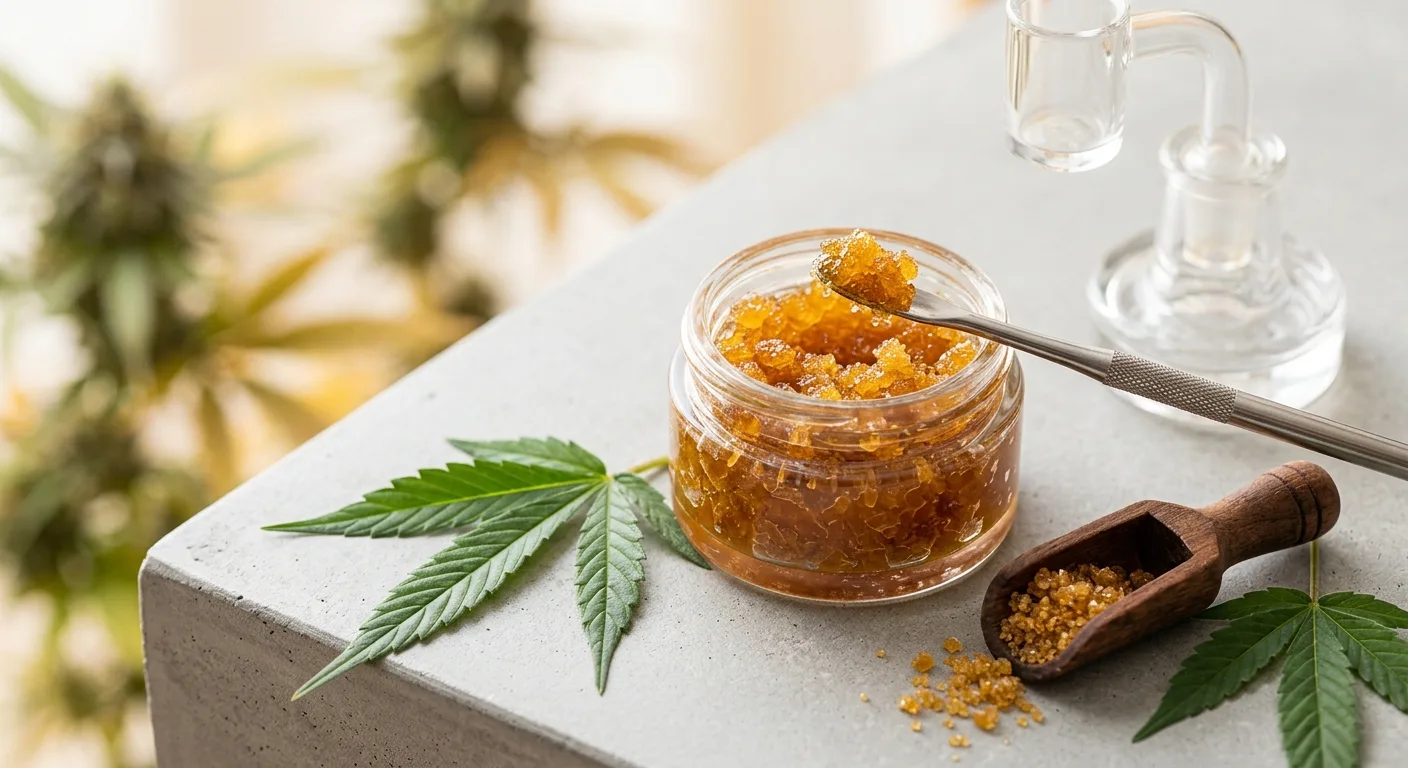
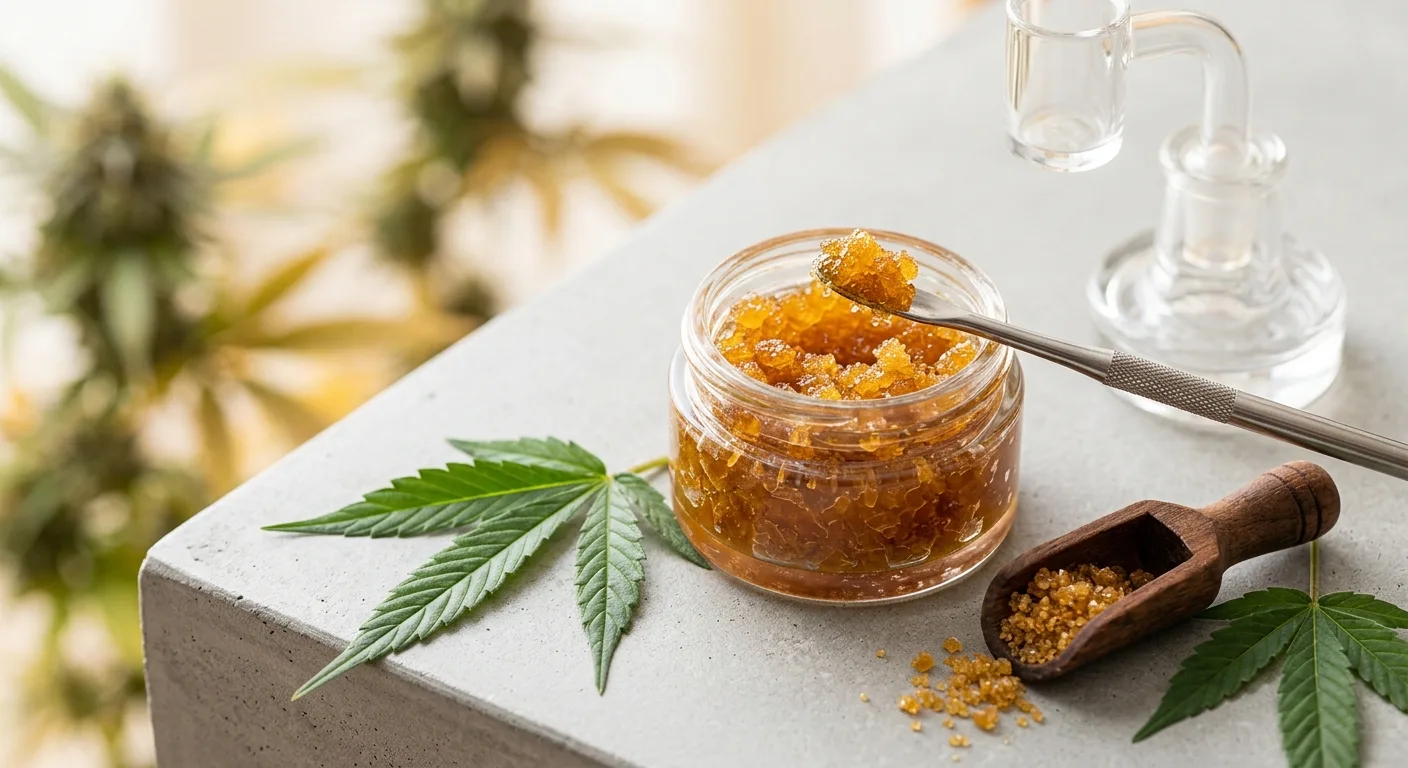
Pure THC isolate typically appears as a fine white powder or crystalline solid, resembling table salt or granulated sugar in texture. At room temperature, it may form chunky crystals or maintain a powdery consistency depending on how it's processed and stored. Unlike golden-hued concentrates such as sugar wax, THC isolate has no colour because all the plant pigments and chlorophyll have been removed during refinement.
The isolate melts at approximately 157°C (315°F), making it suitable for various consumption methods. Its lack of viscosity or stickiness at room temperature distinguishes it from resinous concentrates, though it will liquefy when heated sufficiently for vapourization or incorporation into edibles.
How THC Isolate Is Made: The Refinement Process
Creating THC isolate requires sophisticated equipment and multiple purification stages that go far beyond basic cannabis extraction. The process transforms raw plant material into pharmaceutical-grade cannabinoid powder through careful application of chemistry and engineering principles.
Step One: Initial Extraction
The refinement process begins with standard cannabis extraction, typically using hydrocarbon solvents like butane or propane, CO2 extraction systems, or ethanol washing. This initial extraction pulls cannabinoids, terpenes, waxes, lipids, and other compounds from the plant material, creating a crude oil that contains THC alongside dozens of other substances.
At this stage, the extract resembles typical cannabis concentrates,dark, sticky, and aromatic. The crude oil might contain anywhere from 60-80% cannabinoids, with the remainder consisting of plant waxes, lipids, chlorophyll, and residual solvents that must be removed before further refinement can occur.
Step Two: Winterization and Filtration
Winterization removes plant waxes and lipids that would interfere with later purification stages. Technicians dissolve the crude extract in ethanol and freeze the mixture at temperatures around -20°C to -80°C. At these cold temperatures, waxes and lipids solidify and precipitate out of solution, while cannabinoids remain dissolved in the ethanol.
The mixture is then filtered through fine meshes or filter paper to remove the solidified waxes. After filtration, the ethanol is evaporated off, leaving behind a cleaner extract with higher cannabinoid concentration,typically 80-90% purity. This dewaxed concentrate serves as the starting material for the isolate creation process.
Step Three: Distillation for Cannabinoid Separation
Short-path or wiped-film distillation separates cannabinoids from remaining impurities by exploiting differences in boiling points. The dewaxed extract is heated under vacuum conditions, causing different compounds to vapourize at specific temperatures. THC vapourizes around 157°C under vacuum, while contaminants vapourize at different temperatures.
The vapourized THC travels a short distance before condensing on a cooled surface, where it's collected as a highly refined distillate. This process can be repeated multiple times, with each pass increasing purity. After distillation, the THC distillate typically reaches 90-95% purity, but still contains trace amounts of other cannabinoids and any remaining impurities.
Step Four: Chromatography for Ultimate Purification
The final step uses chromatography to achieve isolate-level purity. The most common method employs a chromatography column filled with a stationary phase material. When the distillate is passed through this column with a solvent (the mobile phase), different compounds travel through the column at different rates based on their molecular properties.
THC molecules move through the column at a specific rate, allowing technicians to collect pure THC separately from other cannabinoids. The collected THC fraction is then processed to remove the solvent, leaving behind THC in its pure crystalline form. Some manufacturers use an additional recrystallization step, dissolving the THC in a solvent and slowly precipitating pure crystals as the solution cools or evaporates.
Quality Control and Testing
Reputable manufacturers test the final isolate product using high-performance liquid chromatography (HPLC) or gas chromatography-mass spectrometry (GC-MS) to verify purity levels. These analytical methods can detect even trace amounts of remaining cannabinoids or contaminants, ensuring the isolate meets quality standards. Products labelled as "THC isolate" should test at 99% or higher purity, with comprehensive testing also checking for residual solvents, pesticides, and heavy metals.
Why THC Isolate Has No Flavour, Smell, or Colour
The complete absence of flavour, aroma, and colour in THC isolate isn't accidental,it's the inevitable result of removing everything except pure THC molecules. Understanding why isolate lacks these sensory characteristics requires looking at what creates them in whole-plant cannabis.
The Role of Terpenes in Cannabis Aroma and Flavour
Cannabis's distinctive smells and tastes come entirely from terpenes,aromatic compounds that exist in the plant's resin glands alongside cannabinoids. Terpenes like myrcene create earthy, musky notes; limonene provides citrus aromas; pinene delivers pine scents; and caryophyllene adds peppery spice. These volatile compounds evaporate easily, filling the air with cannabis's characteristic bouquet when flower is broken apart or concentrates are heated.
During the distillation and chromatography processes that create isolate, these terpenes are separated from THC and discarded. Terpenes have lower boiling points than THC, so they vapourize first during distillation. In chromatography, their different molecular properties cause them to travel through the purification column at different rates than THC, allowing complete separation. The result is pure THC with zero terpene content,and therefore zero aroma or flavour.
Why Isolate Appears White or Clear
Cannabis extracts derive their golden, amber, or greenish colours from various plant compounds. Chlorophyll creates green hues, while carotenoids and flavonoids contribute yellow and orange tones. The oxidation of cannabinoids over time also darkens extracts. Since THC isolate undergoes extensive purification that removes all these pigments, only the pure THC molecule remains.
Pure THC itself has no significant colour when formed into crystals or powder. The white appearance of isolate powder results from light scattering off the surfaces of countless microscopic crystals, similar to how granulated sugar appears white despite individual sugar molecules being colourless. Some isolate products may appear completely clear if formed into large, transparent crystals rather than ground into powder.
The Sensory Implications for Users
The absence of flavour and smell creates both advantages and disadvantages. On the positive side, isolate's neutrality makes it incredibly versatile for incorporation into edibles, beverages, or topicals without adding cannabis taste or smell. Medical patients who dislike cannabis flavour appreciate the ability to consume THC without the pungent qualities of whole-plant products.
However, many recreational users find the experience less satisfying precisely because it lacks the sensory richness that makes cannabis consumption enjoyable. The ritual of appreciating a strain's unique terpene profile disappears with isolate. Some users also report that the effects feel less rounded or nuanced compared to full-spectrum products, though this remains largely subjective and may relate to the absence of the entourage effect rather than sensory factors.
Common Uses and Applications of THC Isolate
THC isolate's purity, neutrality, and versatility make it valuable for numerous applications across medical and recreational cannabis use. Its lack of flavour and precise potency enable uses that would be difficult or impossible with whole-plant products.
Precise Medical Dosing
Medical cannabis patients often need consistent, measurable doses of specific cannabinoids. THC isolate enables pharmaceutical-level precision,each milligram contains the same amount of THC, allowing patients to calculate exact doses without worrying about strain-to-strain variations in potency or cannabinoid profiles. This consistency proves especially important for patients managing chronic pain, nausea, appetite loss, or other conditions where dose predictability affects treatment outcomes.
Patients can add measured amounts of isolate to food, beverages, or capsules, creating customized dosing schedules. Unlike smoking or vaping, which makes precise dosing difficult, isolate allows patients to measure exactly 5mg, 10mg, or whatever dose they've determined works for their needs.
Creating Custom Edibles and Beverages
Home cooks and commercial manufacturers alike value isolate for edible creation. Because it has no flavour, colour, or smell, isolate can be incorporated into any food or drink without altering taste or appearance. You can add THC to gourmet chocolates, baked goods, salad dressings, cocktails, or coffee without introducing cannabis flavour that might clash with the recipe.
The process is straightforward: THC isolate dissolves readily in fats (butter, oil, coconut oil) when gently heated, allowing even distribution throughout recipes. For beverages, isolate can be dissolved in alcohol or combined with emulsifiers to create water-compatible THC solutions. This versatility explains why many commercial edible products start with isolate as their THC source.
Dabbing and Vapourization
Concentrate enthusiasts sometimes use pure THC isolate for dabbing, though opinions on the experience vary widely. Isolate vapourizes cleanly with no residue, producing vapour that's virtually tasteless and odourless. For users who want THC effects without the sometimes-intense flavour of terpene-rich concentrates, isolate offers a neutral alternative.
However, many dabbing aficionados find isolate disappointing compared to flavourful concentrates. The lack of terpenes means the vapour provides little sensory satisfaction beyond the eventual psychoactive effects. Some users address this by adding food-grade terpenes back to the isolate, creating custom-flavoured concentrates, though this somewhat defeats the purpose of using pure isolate.
Topical Applications
THC isolate serves as an ingredient in topical products like creams, balms, and transdermal patches. When applied to skin, THC can provide localized effects without psychoactivity (though transdermal patches designed to penetrate into bloodstream may produce systemic effects). The isolate's lack of smell makes it suitable for topicals intended for use in professional or social settings where cannabis odour would be unwelcome.
Formulators can dissolve isolate in carrier oils or incorporate it into emulsion-based creams, creating products with precise THC concentrations. This allows manufacturers to create standardized topicals where each application delivers a known amount of cannabinoid to the application site.
Mixing with Other Cannabis Products
Some users add THC isolate to cannabis flower or concentrates to boost potency without significantly altering flavour profiles. Sprinkling isolate powder onto flower in a joint or adding it to a bowl increases THC content while the flower's terpenes continue providing aroma and taste. This approach lets users customize potency levels of products they already enjoy.
Similarly, users might combine isolate with CBD-rich flower to create custom cannabinoid ratios suited to their preferences. This mixing capability offers flexibility that pre-made products can't match, though it does require comfort with measuring and handling concentrated cannabinoids.
Effects, Dosing, and What to Expect from Pure THC
Understanding how pure THC isolate affects users differently from whole-plant cannabis helps set appropriate expectations and use the product effectively. The isolated cannabinoid creates distinct experiences that don't perfectly mirror smoking flower or using full-spectrum extracts.
The Psychoactive Experience
THC isolate produces psychoactive effects that users typically describe as clear, focused, and cerebral. Without the modulating influence of CBD, CBN, and other minor cannabinoids, the THC effects manifest more purely,which some users experience as more intense or less comfortable than whole-plant products. The absence of sedating cannabinoids like CBN may make isolate feel more energizing or potentially anxiety-inducing for sensitive individuals.
Many users report that isolate lacks the full-bodied, rounded quality of full-spectrum cannabis. The high may feel more one-dimensional or less satisfying, particularly for those who've developed preferences for specific strain effects. These differences likely result from the missing entourage effect,the synergistic interactions between cannabinoids and terpenes that create cannabis's complex effects profile.
Duration and Onset
When vapourized or dabbed, THC isolate produces effects within minutes, typically peaking around 30 minutes to an hour after consumption. The duration generally lasts 2-4 hours, similar to smoked or vapourized cannabis flower. When consumed as an edible after being incorporated into food, onset occurs much later,typically 45 minutes to 2 hours,with effects lasting 4-8 hours or longer depending on dose and individual metabolism.
The predictability of isolate's effects timeline makes it useful for users who need reliable scheduling. Medical patients can time doses to coincide with symptom patterns, while recreational users can plan consumption around activities with greater confidence than variable whole-plant products allow.
Dosing Guidelines
THC isolate's extreme potency demands careful dosing, especially for new users. At 99% purity, even tiny amounts contain significant THC. A single milligram of isolate contains roughly 0.99mg of THC,comparable to a moderate dose when consumed orally. Most users find that 2-5mg provides noticeable effects when eaten, while 5-10mg creates stronger experiences.
For inhalation, users typically consume larger amounts since absorption efficiency differs from oral consumption. Dabbing 10-25mg of isolate would create effects comparable to a standard concentrate dab. However, individual tolerance varies enormously, and those new to concentrates should start with much smaller amounts,perhaps 5mg or less.
The key advantage of isolate for dosing is mathematical simplicity. If you want to create edibles with 10mg THC each and your isolate tests at 99% purity, you need approximately 10.1mg of isolate per serving. This straightforward calculation eliminates the guesswork inherent in using flower or less-refined concentrates.
Building Tolerance
Regular THC isolate use can build tolerance quickly since you're consuming concentrated cannabinoid without the variety of compounds found in whole-plant products. Users who exclusively consume isolate may find they need increasing doses to achieve desired effects over time. Taking periodic tolerance breaks or rotating between isolate and full-spectrum products can help manage tolerance development.
Is THC Isolate Right for You? Pros and Cons
Like any cannabis product, THC isolate suits certain users and purposes better than others. Weighing the advantages and limitations helps determine whether isolate deserves a place in your cannabis rotation.
Advantages of THC Isolate
The primary benefits include unmatched purity and consistency. You know exactly what you're getting with every dose,pure THC with no variation in cannabinoid profile, no unexpected terpenes, and no plant contaminants. This predictability proves invaluable for medical applications and for users who need reliable, repeatable experiences.
The lack of flavour and odour creates versatility impossible with aromatic cannabis products. You can add isolate to any food or beverage without cannabis taste, use topicals in public without smell, or consume it discreetly in situations where cannabis aroma would be problematic. This neutrality extends utility far beyond what whole-plant products can offer.
For those specifically seeking THC effects without interest in other cannabinoids, isolate provides the most direct route. There's no CBD to potentially reduce anxiety relief, no CBN to add sedation, and no unpredictable minor cannabinoids,just pure THC doing exactly what THC does.
Limitations and Drawbacks
The absence of the entourage effect represents the most significant limitation. Many users and researchers believe that cannabis works best as a whole-plant medicine, with cannabinoids and terpenes working synergistically. Some studies suggest CBD and other cannabinoids moderate THC's effects, potentially reducing anxiety and other negative side effects. Isolate removes these protective factors, potentially making the experience less comfortable for some users.
The lack of flavour and aroma that makes isolate versatile also makes it less enjoyable for users who appreciate cannabis's sensory qualities. Connoisseurs who enjoy evaluating terpene profiles and experiencing strain-specific characteristics will find isolate boring by comparison. The ritual and pleasure of cannabis consumption diminishes when the product has no taste or smell.
Cost-effectiveness varies. While isolate might seem expensive per gram compared to flower, the extreme potency means a small amount goes far. However, compared to other concentrates, isolate often costs more due to the extensive refinement required. Users seeking maximum value might prefer less-refined concentrates that still deliver high potency at lower cost.
Who Should Consider THC Isolate?
Ideal candidates include medical patients requiring precise, consistent dosing; individuals who dislike cannabis flavour but want THC benefits; people creating custom edibles or topicals; and users in situations where discretion regarding smell is important. Anyone who wants pharmaceutical-grade purity and doesn't mind sacrificing the entourage effect may find isolate valuable.
Conversely, users who enjoy exploring different strains, appreciate terpene complexity, prefer full-spectrum effects, or seek maximum cost-effectiveness might be better served by flower or less-refined concentrates. Beginners should approach isolate cautiously due to its extreme potency, potentially starting with lower-concentration products before graduating to pure isolate.
Storage, Handling, and Safety Considerations
Proper storage and handling ensure THC isolate maintains quality and remains safe for consumption. The crystalline substance requires different care than flower or oil-based concentrates.
Optimal Storage Conditions
Store THC isolate in an airtight container in a cool, dark place. While isolate is stable and doesn't degrade as quickly as terpene-rich products, exposure to light, heat, and oxygen can still cause gradual degradation over time. A sealed jar or silicone container kept in a drawer or cabinet away from heat sources maintains quality for months or even years.
Unlike sticky concentrates, isolate won't adhere to storage containers, making glass jars or food-grade plastic containers suitable. Silicone containers work well but aren't necessary. The powder or crystals will pour or scoop out easily without residue, similar to handling properly stored cannabis products.
Handling and Measurement
Working with isolate requires a precision scale capable of measuring milligrams, especially when creating edibles or measuring medical doses. Kitchen scales accurate to 0.1g might suffice for larger amounts, but proper dosing often requires 0.001g (1mg) precision. These scales are readily available and inexpensive, making accurate measurement accessible.
Use clean utensils when scooping isolate to avoid introducing contaminants. Small metal scoops or dab tools work well for transferring powder. If isolate has formed into larger crystals, you can break them into smaller pieces or grind them into powder using a clean mortar and pestle or similar tool.
Safety and Potency Awareness
Never underestimate isolate's potency. What looks like a tiny amount can contain overwhelming doses of THC for unprepared users. Start with minimal amounts,litreally a few milligrams,and increase gradually based on effects. This "start low, go slow" approach prevents uncomfortable overconsumption experiences.
Keep isolate securely stored away from children and pets. The white powder could be mistaken for other substances, and the extreme potency makes even small accidental doses potentially dangerous for unsuspecting individuals. Use child-resistant containers and store in locations inaccessible to anyone who shouldn't consume cannabis.