
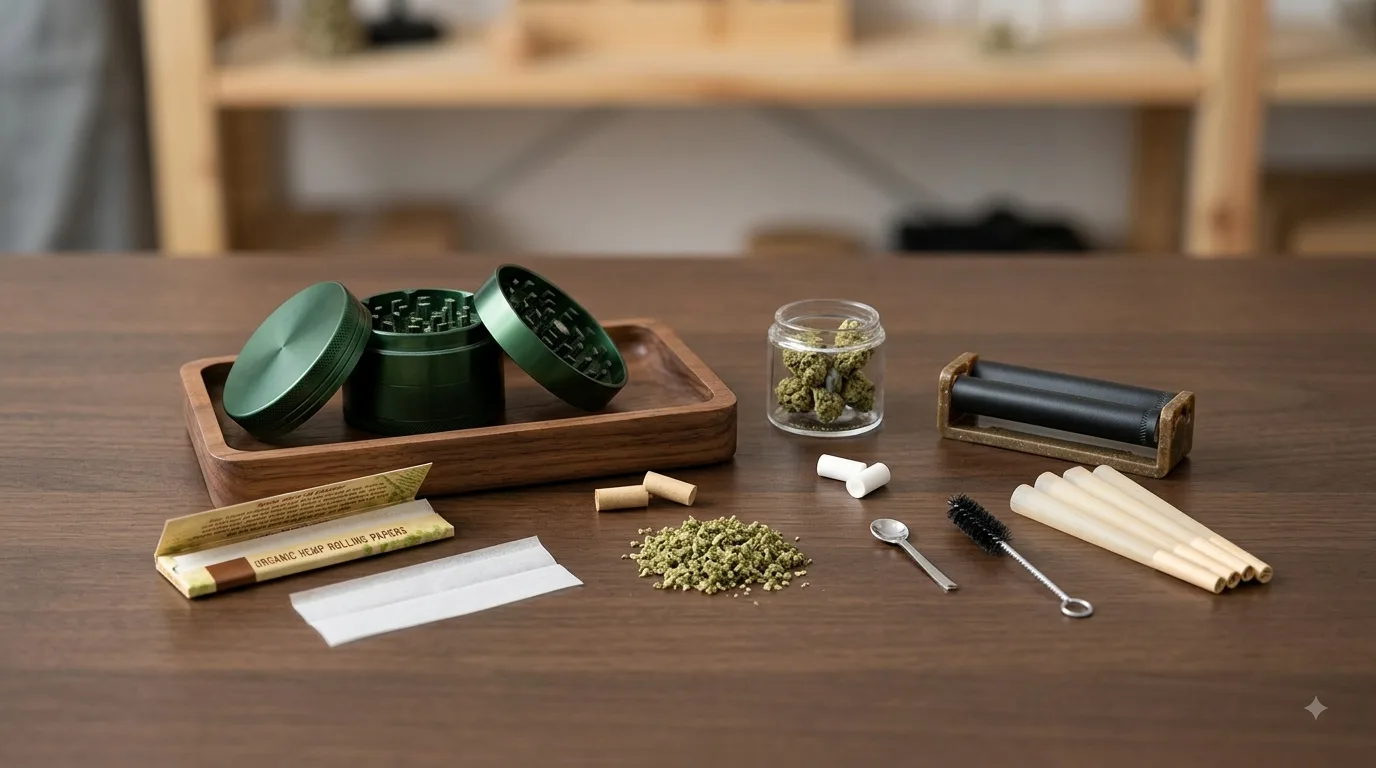
You've picked out the perfect strain, you're ready to roll, and then you realize you're trying to break up sticky buds with your fingers like some kind of amateur hour situation. Your fingers are covered in resin, you're losing precious trichomes, and that perfectly rolled joint you imagined? It looks more like a lumpy burrito. If this sounds familiar, you're not alone. The difference between a frustrating session and a smooth experience often comes down to having the right grinders and rolling accessories in your toolkit.
Whether you're a complete beginner just learning how to roll your first joint or someone who's tired of wrestling with subpar tools, this guide walks you through the essential accessories every cannabis consumer should own. We're not just rattling off brand names here. Instead, we'll explain what actually matters when choosing grinders, papers, rolling machines, and storage solutions, so you can make informed decisions based on how you consume cannabis and what fits your budget.
Why Quality Grinders Matter More Than You Think
A grinder isn't just about convenience. It's about consistency, efficiency, and getting the most out of your cannabis. When you break up flower by hand, you end up with uneven chunks, sticky fingers, and wasted product. A quality grinder gives you evenly ground material that burns consistently, whether you're rolling joints, packing bowls, or loading a vapourizer.
The Anatomy of a Good Grinder
Understanding what makes a grinder effective starts with knowing its basic components. Most grinders come in three main configurations: two-piece, three-piece, and four-piece models. Two-piece grinders are the simplest, with just grinding teeth and a collection chamber. Three-piece grinders add a screen to filter out fine particles. Four-piece grinders include an additional kief catcher chamber below the screen, collecting those potent trichomes that fall off during grinding.
The teeth are where the magic happens. Look for grinders with diamond-shaped or pyramid teeth rather than simple pegs. These shapes do a better job of shredding flower into consistent pieces without pulverizing it into powder. The number of teeth matters too. More teeth generally mean a finer, more consistent grind, though you don't need fifty teeth to get good results. Most quality grinders have between 25 and 50 teeth arranged in a strategic pattern.
Material Matters: Metal vs. Acrylic vs. Wood
Grinder construction material directly impacts durability, grind quality, and price. Aluminum grinders dominate the market for good reason. They're lightweight, durable, and don't absorb odours or flavours. Aircraft-grade aluminum grinders resist threading wear and maintain smooth operation even after thousands of uses. Anodized aluminum adds a protective coating that prevents metal flaking and comes in various colours.
Acrylic grinders represent the budget tier. They work fine for occasional use and cost a fraction of metal grinders, making them perfect for beginners testing the waters. However, the teeth dull quickly, plastic can crack or break, and cheaper acrylics sometimes leave behind tiny plastic particles in your ground flower. If you choose acrylic, inspect your ground material carefully before consuming.
Wooden grinders offer old-school charm and natural aesthetics, but they require more maintenance. Wood absorbs moisture and odours over time, and the teeth often consist of metal nails or pegs driven into the wood. These can loosen with use. They're conversation pieces more than daily drivers.
Size and Portability Considerations
Grinder diameter ranges from pocket-sized 30mm models to substantial 100mm desktop units. For beginners, a 50-63mm grinder hits the sweet spot between capacity and portability. You can grind enough for several joints or a full bowl pack without it taking up your entire pocket. Smaller 30-40mm grinders work great for travel or minimal consumption, but you'll be reloading frequently if you're preparing material for multiple people.
Larger grinders above 75mm make sense for heavy consumers or those who prefer to grind a week's worth of flower at once. Just remember that ground cannabis loses potency faster than whole buds due to increased surface area exposure to air and light. Only grind what you'll use within a few days unless you're storing it properly in airtight containers.
Rolling Papers: More Than Just Something That Burns
Rolling papers might seem like a commodity product where one is as good as another, but the paper you choose affects flavour, burn rate, and overall smoking experience. The wrong papers can overpower the taste of premium flower or canoe terribly no matter how well you roll.
Paper Composition and Thickness
Rolling papers fall into three main material categories: wood pulp, rice, and hemp. Wood pulp papers are the traditional choice, made from processed tree fibre. They're the thickest option, easiest to roll with for beginners, and burn at a moderate pace. The tradeoff is they add more paper taste to your smoke compared to thinner alternatives. Brands using bleached wood pulp should be avoided; look for unbleached varieties instead.
Rice papers offer the thinnest option available, sometimes almost transparent. They burn slowly and evenly with minimal paper flavour, letting your cannabis taste shine through. The downside? They're delicate and require a gentle touch when rolling. New rollers often tear rice papers during construction, leading to frustration. They also tend to go out more easily if you're not taking regular draws.
Hemp papers split the difference between wood pulp and rice. They're thinner than wood pulp but more forgiving than rice papers. Hemp burns clean, doesn't add much flavour, and offers moderate thickness that beginners can work with. As a bonus, hemp papers align with the cannabis culture ethos of plant-based products.
Size Options: From Single to King
Paper sizes range from single wide (the smallest) to king size and beyond. Single wide papers measure roughly 68-70mm long and 34-36mm wide, suitable for thin, personal joints. One-and-a-quarter papers are slightly wider, giving you more room to work with. One-and-a-half papers offer even more width, making them easier to roll for beginners. King-size papers stretch to 100-110mm length, perfect for group sessions or longer smoking sessions.
For someone just learning to roll, one-and-a-half or king-size papers provide more margin for error. You have extra paper to work with while developing proper technique. As your skills improve, you can size down to reduce paper-to-cannabis ratio and get a cleaner taste. Many experienced smokers prefer smaller papers with more flower and less paper burning.
Flavoured vs. Unflavored Papers
Flavoured papers come infused with various tastes from fruit to dessert profiles. They're fun for variety and can mask harsh smoke for beginners still building tolerance. However, flavoured papers generally contain added chemicals and sugars that produce more tar when burned. They also completely override the natural terpene flavours in your cannabis. If you invested in a strain specifically for its grape or citrus notes, flavoured papers defeat the purpose.
Unflavored papers let the cannabis speak for itself. Connoisseurs overwhelmingly prefer unflavored options to experience the full spectrum of terpenes and cannabinoids without interference. For beginners, start with unflavored to understand what pure cannabis tastes like, then experiment with flavoured papers if you're curious.
Rolling Machines and Aids for Beginners
Not everyone has the manual dexterity or patience to hand-roll perfect joints, and that's completely fine. Rolling machines and various aids exist to help you achieve consistent results without years of practice. There's no shame in using tools designed to make your life easier.
Manual Rolling Machines
Manual rolling machines use two rollers and a belt system to shape your joint. You load ground cannabis into the machine, insert a paper, and roll the cylinders together. The machine does the actual shaping work while you control the tightness and final form. Basic plastic roller machines cost a few dollars and work surprisingly well for producing uniform, round joints every single time.
These machines come in different widths matching paper sizes. A 70mm machine handles regular and one-and-a-quarter papers, while 110mm machines accommodate king-size papers. Some premium models use metal construction and adjustable tension systems for precise control over how tight you pack your joints. The main advantage is speed and consistency. Once you get the hang of loading the machine properly, you can crank out perfectly rolled joints in under 30 seconds.
The learning curve is minimal compared to hand rolling. Most beginners can produce smokeable joints on their first try. The downside is you're limited to cylindrical joints of a specific size, and some people find machine-rolled joints lack the personal touch of hand-rolled ones. Still, when you're just getting started with cannabis, having a reliable method to consume your purchase matters more than rolling bragging rights.
Pre-Rolled Cones and Filling Devices
Pre-rolled cones take rolling machines one step further by providing papers already shaped into cone form with a filter tip included. You simply fill the cone with ground cannabis, pack it down, and twist the top closed. No rolling whatsoever required. These represent the ultimate convenience option for beginners or anyone who wants consistent results with zero technique.
Cone sizes range from mini to king-size, and quality varies dramatically. Cheap cones use low-grade paper that canoes or tears easily. Premium cones from reputable brands use quality rice or hemp paper with properly constructed tips. They cost more but provide a better smoking experience that actually showcases your flower rather than fighting against it.
Cone filling devices help you pack cones evenly and efficiently. These simple tools usually consist of a platform that holds multiple cones upright while you fill them. Some include a vibration mechanism to settle the cannabis as you fill, preventing loose spots that cause uneven burning. For anyone preparing multiple joints at once, cone fillers save time and reduce waste from overfilled or poorly packed cones.
Filter Tips and Why They Matter
Filter tips serve multiple purposes beyond just keeping plant material out of your mouth. They provide structural support that prevents the end of your joint from collapsing, give you something cool to hold as you smoke down to the end, and improve airflow for easier draws. You can buy pre-made filter tips in bulk or purchase perforated cardboard books that you tear and roll yourself.
Glass and wood tips offer reusable alternatives to cardboard. Glass tips provide the smoothest airflow and coolest smoke, plus they're easy to clean and last indefinitely. Wood tips bring natural aesthetics and slightly restrict airflow compared to glass, which some smokers prefer. Both options cost more upfront but eliminate the need to buy disposable tips constantly.
Making your own tips from business cards or cardstock works in a pinch, but most cardboard contains inks and coatings you don't want to smoke. Stick with products specifically made for cannabis consumption to avoid inhaling unnecessary chemicals.
Storage Solutions: Protecting Your Investment
Proper storage accessories might not seem as exciting as grinders and papers, but they're crucial for maintaining the quality of your cannabis between sessions. Exposure to light, air, heat, and moisture degrades cannabinoids and terpenes surprisingly quickly. The right storage containers preserve potency, flavour, and freshness for weeks or months instead of days.
Airtight Containers: Glass vs. Plastic vs. Metal
Airtight containers create a sealed environment that prevents air exchange and moisture fluctuation. Glass jars with rubber-sealed lids represent the gold standard for cannabis storage. Glass doesn't absorb or leach odours, maintains consistent internal humidity, and protects against light when you choose amber or UV-resistant glass. Mason jars work perfectly fine, though purpose-built cannabis jars often include humidity pack holders and opaque exteriors.
Plastic containers are lightweight and shatterproof but have drawbacks. Most plastics are slightly porous, allowing some air exchange over time. They also develop microscratches that trap odours and residue. If you choose plastic, look for medical-grade or food-safe options with quality sealing mechanisms. Replace plastic containers every few months as seals degrade.
Metal tins and containers offer portability and discrete storage. Many include odour-proof seals and come in pocket-friendly sizes. The main concern is ensuring the metal doesn't react with cannabis or absorb moisture. Stainless steel works best, while aluminum containers should have food-grade interior coatings.
Humidity Control for Long-Term Storage
Cannabis stays freshest at 55-62% relative humidity. Below that range, buds become brittle and terpenes evaporate. Above it, you risk mold growth. Two-way humidity control packs maintain optimal moisture levels automatically, absorbing excess humidity or releasing moisture as needed. These small packets last several months and make a noticeable difference in preserving flower quality.
Available in various sizes matched to storage container volume, humidity packs are inexpensive insurance for your cannabis investment. For anyone buying in larger quantities to save money, humidity control is essential. Without it, that bulk purchase degrades to harsh, flavourless smoke within weeks, eliminating any cost savings.
Smell-Proof Options for Discretion
Even in cannabis-legal areas, you might want to contain odours for various reasons. Smell-proof bags and cases use activated carbon lining to trap odour molecules before they escape. These range from small pouches for transporting a few grams to backpack-sized cases for travelling with full setups.
Quality smell-proof containers feature multiple sealing layers and thick carbon panels. Cheap versions leak odours despite marketing claims. Before trusting a smell-proof container, test it with particularly pungent flower and ask someone else if they can smell anything from the outside. Your own nose adapts to familiar scents and might not detect leaks you'd otherwise notice.
Additional Accessories That Enhance Your Experience
Beyond the core essentials of grinders, papers, and storage, several accessories can improve convenience, cleanliness, and overall enjoyment of your cannabis sessions. These aren't strictly necessary, but they solve common problems that regular consumers encounter.
Rolling Trays for Organized Sessions
Rolling trays provide a dedicated workspace that contains mess and keeps everything organized. A good tray has raised edges to prevent cannabis from falling off, enough surface area to work comfortably, and a smooth finish for easy cleanup. Many include built-in storage compartments for papers, tips, and lighters.
Material options include metal, wood, and plastic. Metal trays are durable and easy to clean but can be noisy. Wood trays offer aesthetic appeal and quiet operation but require more maintenance. Plastic trays are lightweight and affordable but scratch easily and can develop odours over time. For beginners on a budget, even a simple metal tray from a discount store works better than rolling on random surfaces where you lose ground flower in carpet fibres or table cracks.
Some trays feature magnetic lids that double as rolling surfaces, clever designs that nest grinders and storage containers, or curved edges that make it easier to funnel ground cannabis into papers. These premium features add convenience but aren't necessary for basic functionality. Start with a simple tray and upgrade if you find yourself wanting more features.
Cleaning Tools and Maintenance Supplies
Grinders accumulate sticky resin buildup that eventually affects performance. Small brushes designed for grinder cleaning help remove debris from teeth and threading. Isopropyl alcohol dissolves resin quickly, though it also removes that valuable kief you've been collecting, so save the alcohol for deep cleans when buildup becomes problematic.
For papers and rolling surfaces, keeping things clean is equally important. Sticky fingers transfer oils and residue to papers, making them harder to roll. Baby wipes or hand sanitizer nearby during sessions help maintain clean hands. Some dedicated rollers keep specialized cleaning solutions for their premium glass pieces and metal tools, but beginners can get by with basic household cleaners.
Regular maintenance extends the life of your accessories dramatically. A well-maintained grinder can last decades. Neglected grinders seize up, strip threads, and eventually become unusable. Spending five minutes cleaning your tools after every few uses prevents these problems and ensures everything works smoothly when you need it.
Odour Eliminators and Smoke Management
Smoke odour clings to fabrics, furniture, and walls, which becomes a problem even for cannabis enthusiasts who don't want their entire living space smelling like a dispensary. Odour eliminating sprays designed specifically for cannabis use enzymes or activated compounds to neutralize smoke molecules rather than just masking them with fragrance.
Smoke filters or "sploofs" allow you to exhale through activated carbon filters that trap smoke particles and odours. Commercial versions work better than the old dryer sheet in a paper towel tube trick. Some include replaceable carbon filters that maintain effectiveness over dozens of uses. While these don't eliminate all odour, they significantly reduce smoke smell for indoor sessions.
For anyone living in shared spaces or trying to minimize impact on neighbours, investing in proper smoke management tools shows consideration and helps maintain good relationships. Combined with proper ventilation and smell-proof storage, you can enjoy your cannabis without imposing on others around you.
Building Your Starter Kit: What Beginners Actually Need
Walking into a smoke shop or browsing online accessory sections can overwhelm beginners with hundreds of options. You don't need everything at once. Here's a practical breakdown of what to prioritize and what you can add later as you develop preferences and techniques.
The Bare Minimum Setup
At minimum, you need a grinder, rolling papers or pre-rolled cones, and something to light your cannabis with. A basic four-piece metal grinder in the 50-63mm range handles all grinding needs while collecting kief for later use. Expect to spend $15-30 for a quality grinder that will last years. Cheaper options exist but often false economy, breaking or performing poorly after minimal use.
For papers, buy a variety pack initially to discover what you prefer. Include standard, rice, and hemp papers in a few different sizes. This experimentation costs maybe $10-15 and teaches you more about your preferences than any guide can. Add pre-rolled cones to your starter kit if you're not confident in your rolling abilities yet. No point struggling with technique when you just want to enjoy your cannabis.
A simple metal rolling tray keeps things organized and prevents waste. A basic 7x5 inch tray costs under $10 and makes a huge difference in your rolling experience. That's it for the absolute essentials. With about $50-75 total, you have everything required to grind, roll, and smoke cannabis properly. Everything beyond this point enhances the experience but isn't strictly necessary.
The Comfortable Setup
Once you have basics covered, a few additions make regular use more enjoyable and efficient. Add proper storage containers with humidity control packs to keep your flower fresh. Invest in a rolling machine if hand rolling frustrates you. Pick up a grinder cleaning brush and some isopropyl alcohol for maintenance. Include smell-proof storage if discretion matters in your situation.
This intermediate setup runs another $30-50 but provides everything you need for daily use without hassle. You can order quality flower from an Ottawa weed delivery service and have all the tools to store it properly and consume it efficiently. Most cannabis consumers find this level of equipment perfectly adequate for years of use.
When to Upgrade: Premium Options Worth Considering
Premium grinders with precision machining, exotic materials, and advanced features cost $50-150 or more. They offer smoother operation, finer grind consistency, and longer lifespan, but the practical difference compared to a good $25 grinder isn't dramatic enough to justify the cost for most beginners. Wait until you've used a basic grinder for several months and identified specific features you want improved before spending serious money on upgrades.
The same logic applies to most accessories. Fancy rolling trays with built-in LED lights and built-in storage might look cool, but a basic tray does the job just as well. Electric grinders process flower faster but add complexity and expense for minimal practical benefit. Focus on mastering the fundamentals with good basic equipment before chasing premium gear.
That said, certain upgrades make sense earlier in your journey. If you discover you strongly prefer a specific paper type or rolling method, invest in quality versions of those specific items. If smell control is critical in your living situation, don't cheap out on smell-proof containers. Let your actual usage patterns and needs guide upgrade decisions rather than marketing or product reviews.
Shopping Smart: Where and How to Buy Quality Accessories
Accessories are available from smoke shops, online retailers, dispensaries, and general marketplaces. Each source has advantages and drawbacks worth considering before you buy.
Local Smoke Shops vs. Online Retailers
Local smoke shops let you examine products physically before buying. You can feel grinder quality, compare paper thickness, and get immediate assistance from knowledgeable staff. The tradeoff is limited selection and often higher prices compared to online options. Smoke shops also carry a lot of low-quality tourist trap items alongside quality products, so some product knowledge helps separate good from bad.
Online retailers offer massive selection and competitive pricing but require waiting for shipping and trusting product descriptions. Reading multiple reviews from verified buyers helps identify quality products and avoid junk. Look for retailers specializing in cannabis accessories rather than general marketplaces flooded with cheap knockoffs. Specialty retailers curate their offerings and stand behind product quality.
Many Ottawa cannabis delivery services now carry essential accessories alongside flower, concentrates, and edibles. This one-stop shopping convenience means you can order papers, a grinder, and your favourite strain all together. While accessory selection might be smaller than dedicated retailers, you're getting reliable products that the delivery service trusts enough to sell under their brand.
Avoiding Common Pitfalls and Cheap Junk
The cannabis accessory market includes lots of garbage marketed to unsuspecting beginners. Extremely cheap grinders use soft metals that strip threads, weak plastics that crack, or zinc alloy that flakes metal particles into your cannabis. Ultra-thin papers that tear constantly aren't a good deal at any price. Storage containers with failed seals defeat their entire purpose.
Red flags to watch for include suspiciously low prices, lack of brand information, and reviews mentioning metal flaking, thread stripping, or rapid deterioration. If a grinder costs less than $10 and isn't explicitly labelled as acrylic, it's probably junk. If paper prices seem too good to be true, they probably burn unevenly or taste terrible.
Stick with established brands that have been around for years and maintain consistent quality. Names like Raw, Elements, OCB for papers; Santa Cruz Shredder, Phoenician, or Space Case for grinders; and CVault or Tightpac for storage all represent quality options worth the investment. You don't necessarily need these premium brands, but they serve as benchmarks for quality standards you should expect.
Warranty and Return Policies
Quality accessory manufacturers stand behind their products with warranties covering defects and craftsmanship issues. A grinder manufacturer offering lifetime warranties signals confidence in their product quality. Paper companies with satisfaction guarantees indicate they care about customer experience. Always check return policies before buying, especially for more expensive items like premium grinders or electric rolling machines.
For online purchases, understand whether you're buying from the manufacturer directly or a reseller. Direct purchases usually include better warranty support and customer service. Resellers might offer lower prices but complicate warranty claims. Factor total cost of ownership including potential warranty claims and replacements into your purchasing decisions, not just upfront price.