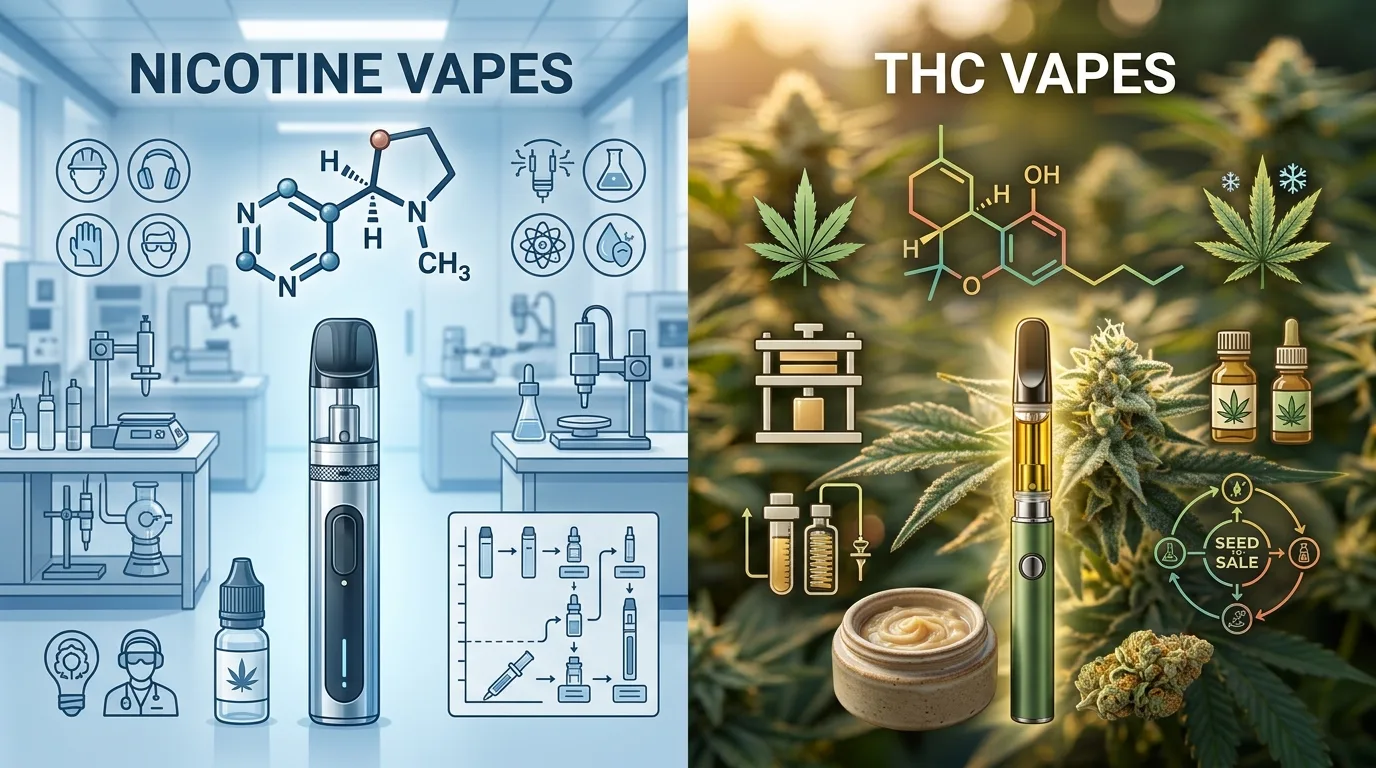
You're browsing an online dispensary and notice two distinct categories: one labelled "Tobacco & Wraps" with nicotine pouches, another called "Vapes" featuring cannabis cartridges. At first glance, both might seem similar,after all, you inhale vapour from both devices. But here's the truth: nicotine vapes and THC vapes are fundamentally different products designed for completely different purposes, containing different substances, and producing entirely different effects on your body and mind.
This confusion is surprisingly common among shoppers transitioning from traditional smoking to vaping, or those exploring cannabis for the first time. Understanding the core differences between nicotine vapes (designed to deliver nicotine, the addictive substance in tobacco) and THC vapes (designed to deliver tetrahydrocannabinol, the psychoactive compound in cannabis) isn't just about making an informed purchase,it's about knowing exactly what you're putting into your body and what effects to expect. Whether you're looking to quit cigarettes, explore cannabis consumption methods, or simply understand what sits on your local dispensary shelves, this comprehensive guide breaks down everything you need to know about these two distinct vaping categories.
What Are Nicotine Vapes? The Tobacco Alternative Explained
Nicotine vapes, sometimes called e-cigarettes or vape pens, are electronic devices designed specifically to deliver nicotine,the same addictive stimulant found in traditional cigarettes, cigars, and chewing tobacco. These devices heat a liquid solution (called e-liquid or vape juice) that typically contains nicotine, propylene glycol, vegetable glycerin, and various flavourings. When heated, this liquid transforms into an inhalable vapour that delivers nicotine to your lungs and bloodstream.
The primary purpose of nicotine vapes is to serve as a harm reduction alternative to combustible tobacco products. Unlike cigarettes that burn tobacco and produce thousands of harmful chemicals through combustion, nicotine vapes operate at lower temperatures and don't involve burning plant material. Many smokers turn to nicotine vaping as a stepping stone toward quitting tobacco entirely, or as a less harmful way to satisfy nicotine cravings without the tar, carbon monoxide, and carcinogens associated with smoking.
Common Types of Nicotine Vaping Products
The nicotine vaping market includes several formats. Disposable nicotine vapes come pre-filled and ready to use, requiring no maintenance or refilling,you simply use them until the liquid runs out, then dispose of the entire unit. Refillable pod systems feature replaceable cartridges or pods that snap into a rechargeable battery, offering more flexibility and often better value for regular users. Then there are advanced mod systems that allow users to customize everything from wattage to temperature, though these are less common among casual users.
In Canada, nicotine vaping products are regulated under the Tobacco and Vaping Products Act, which sets strict standards for manufacturing, labelling, and marketing. Products like ZYN Nicotine Pouches represent an alternative nicotine delivery method that doesn't involve vaping at all, instead using small pouches placed between the gum and lip.
What Effects Do Nicotine Vapes Produce?
When you inhale from a nicotine vape, the nicotine enters your bloodstream through your lungs within seconds, reaching your brain in about 10-20 seconds. Nicotine is a stimulant drug that triggers the release of various neurotransmitters, particularly dopamine, creating feelings of alertness, mild euphoria, and satisfaction of cravings for regular users. The effects are relatively subtle compared to other substances,you won't experience altered perception, impaired coordination, or significant cognitive changes.
For regular nicotine users, vaping primarily serves to prevent withdrawal symptoms like irritability, difficulty concentrating, and intense cravings. The stimulant effects might include slightly increased heart rate, heightened alertness, and temporary appetite suppression. However, nicotine is highly addictive, and regular use creates physical dependence that makes quitting challenging.
What Are THC Vapes? Cannabis Consumption Without Combustion
THC vapes are devices specifically designed to vapourize cannabis concentrates or oils containing tetrahydrocannabinol, the primary psychoactive compound in marijuana. Unlike nicotine vapes that deliver a tobacco-derived stimulant, THC vapes deliver cannabinoids extracted from cannabis plants. These products come in various forms, from disposable vape pens to refillable cartridges designed for 510-thread batteries.
The cannabis oil inside THC vapes is typically produced through extraction processes that isolate cannabinoids and terpenes from plant material, creating a concentrated product that's far more potent than traditional flower. A single cartridge might contain anywhere from 70% to 95% THC, compared to cannabis flower that typically ranges from 15% to 30% THC. This concentration means THC vapes deliver powerful effects from relatively small inhales.
Popular THC Vape Formats and Products
The THC vaping market has exploded with innovation in recent years. Disposable THC vapes like the Drizzle Factory 2G Switch Vape Pen come pre-loaded with cannabis oil and a built-in battery, ready to use straight from the package with no setup required. These are perfect for occasional users or those who want maximum convenience.
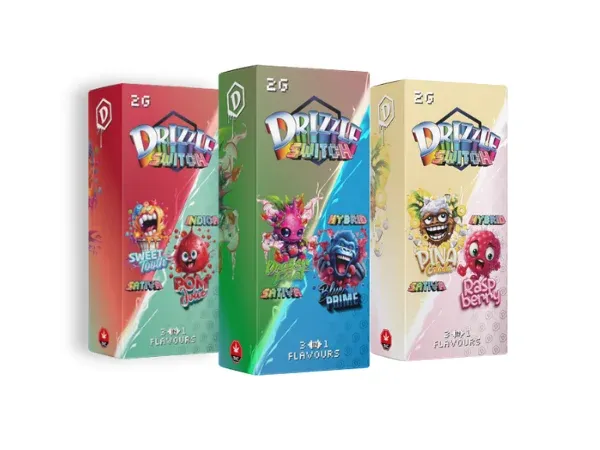
Drizzle Factory 2G Switch Vape Pen
THC: 97–98%Flavor: Varies by strain combination; options include fruity, sweet, and e...
Cartridge-based systems separate the oil from the battery, allowing users to swap different strains and flavours while using the same rechargeable battery. The type of cannabis extract matters significantly,distillate cartridges offer pure THC with minimal flavour, while live resin cartridges preserve the full terpene profile for more authentic strain characteristics and enhanced effects through the entourage effect.
Higher-capacity options like 3g and 6g THC vapes have become increasingly popular for regular consumers who want better value and less frequent replacements. These larger format vapes can last weeks or even months depending on usage patterns, making them economical choices for daily users.
The Effects and Experience of THC Vapes
When you inhale vapour from a THC vape, cannabinoids enter your bloodstream through lung tissue almost immediately, with effects typically noticed within 2-5 minutes. Unlike the subtle stimulation from nicotine, THC produces significant psychoactive effects that alter perception, mood, and cognition. Users commonly report euphoria, relaxation, altered time perception, enhanced sensory experiences, and changes in thought patterns.
The effects vary dramatically based on the strain and terpene profile. Indica-dominant vape oils tend to produce more sedating, body-focused effects ideal for evening relaxation or sleep support. Sativa-dominant options often deliver more energizing, cerebral effects that some users find helpful for creative activities or focus. Hybrid vapes blend characteristics from both categories.
Unlike nicotine that leaves your system relatively quickly, THC effects typically last 2-4 hours when vaping, with peak intensity occurring within the first hour. The concentration in vape oils means it's remarkably easy to consume too much too quickly, especially for inexperienced users. Starting with small inhales and waiting several minutes between puffs prevents uncomfortable experiences.
Key Differences: Active Ingredients and What They Do
The fundamental distinction between nicotine vapes and THC vapes lies in their active ingredients and how those substances interact with your body. This isn't just a technical detail,it's the entire basis for why these products exist and what they're designed to accomplish.
Nicotine: A Stimulant Alkaloid
Nicotine is an alkaloid compound naturally produced by tobacco plants as a defence mechanism against insects. In humans, it acts as a stimulant that binds to nicotinic acetylcholine receptors throughout the brain and body. This interaction triggers a cascade of neurotransmitter releases,dopamine creates pleasure and reward sensations, norepinephrine increases alertness and heart rate, and serotonin influences mood regulation.
The molecule itself is relatively small and crosses the blood-brain barrier rapidly, which explains why nicotine's effects manifest so quickly after inhalation. Pharmacologically, nicotine shares more in common with stimulants like caffeine than with cannabis compounds. Regular use creates physical dependence as your brain adapts to constant nicotine presence by reducing natural acetylcholine receptor sensitivity.
THC: A Psychoactive Cannabinoid
Tetrahydrocannabinol (THC) is a cannabinoid compound unique to cannabis plants. Unlike nicotine that interacts with acetylcholine systems, THC binds primarily to CB1 and CB2 receptors that are part of your body's endocannabinoid system,a complex regulatory network involved in pain perception, appetite, mood, memory, and immune function.
THC's molecular structure allows it to mimic endocannabinoids that your body produces naturally, but with much stronger effects. When THC activates CB1 receptors concentrated in the brain, it disrupts normal neurotransmitter release patterns, creating the characteristic "high" experience. This includes altered sensory perception, changes in time perception, modified thought patterns, and potential euphoria or anxiety depending on dosage and individual brain chemistry.
The differences extend to addiction potential as well. While THC can create psychological dependence in regular heavy users, it doesn't produce the same intense physical withdrawal symptoms as nicotine. Cannabis use disorder is real but affects a smaller percentage of users compared to nicotine's extremely high addiction rates.
Completely Different Drug Classifications
From a regulatory and pharmacological perspective, these substances occupy different legal categories. Nicotine is classified as a stimulant and is legal but age-restricted in Canada. THC is classified as a psychoactive cannabinoid, legal for adult recreational use under federal cannabis regulations but with its own distinct framework. You wouldn't compare alcohol to coffee despite both being legal beverages, and the same logic applies here,nicotine vapes and THC vapes deliver fundamentally different substances with entirely separate effects profiles.
Legal Status, Age Restrictions, and Where to Buy Each Product
Understanding where you can legally purchase nicotine vapes versus THC vapes matters for compliance and knowing what to expect when shopping. These products fall under completely separate regulatory frameworks in Canada, with different rules governing their sale, marketing, and distribution.
Nicotine Vape Regulations in Canada
Nicotine vaping products are regulated federally under the Tobacco and Vaping Products Act (TVPA), which treats them similarly to tobacco products despite not containing tobacco leaf. The legal purchase age varies by province,19 years old in most provinces including Ontario, but 18 in Alberta and Quebec. Retailers selling nicotine vapes must be licenced, and products must meet specific manufacturing standards and carry health warnings.
You can purchase nicotine vapes from specialty vape shops, some convenience stores, and select online retailers (though online sales restrictions vary by province). Marketing and advertising face strict limitations,manufacturers can't make health claims, use youth-appealing packaging, or advertise in ways that might attract non-smokers to start vaping.
THC Vape Regulations Under Cannabis Laws
THC vapes fall under the Cannabis Act and provincial cannabis regulations. The legal purchase age is 19 in Ontario (where UperWeed operates) and most other provinces. Unlike nicotine products that can be sold in various retail environments, THC vapes can only be legally purchased from licenced cannabis retailers,whether government-operated stores, private licenced dispensaries, or authorized delivery services.
Online purchases of THC vapes are fully legal in Canada through licenced operators. Services like UperWeed's same-day cannabis delivery provide convenient access to a wide selection of vape products without leaving home. All THC vape products must comply with strict packaging requirements including child-resistant containers, standardized health warnings, and THC content disclosure.
Never Mix Up Your Shopping Destinations
Here's a critical point: a legitimate cannabis dispensary selling THC vapes won't carry nicotine vaping products, and a vape shop selling nicotine products legally cannot sell THC vapes. If you encounter a retailer offering both, they're operating outside legal frameworks and you should shop elsewhere. This separation ensures proper licensing, quality control, and consumer protection for each distinct product category.
Usage, Dosing, and Safety Considerations for Each Type
Beyond the obvious chemical differences, nicotine vapes and THC vapes require different approaches to safe consumption. Understanding proper usage prevents negative experiences and helps you get the intended benefits from whichever product you choose.
How to Use Nicotine Vapes Safely
Nicotine vapes are designed for frequent, small-dose use throughout the day. Regular smokers transitioning to vaping typically take a few puffs every hour or two to maintain steady nicotine levels and prevent cravings. The devices themselves are usually draw-activated (you simply inhale to activate) or button-activated with straightforward operation.
Dosing with nicotine vapes depends on your previous tobacco use. Heavy smokers might start with higher nicotine concentrations (18-20mg/mL) to adequately replace cigarette nicotine, while lighter smokers might use 3-6mg/mL. The goal is finding a level that satisfies cravings without causing nicotine overload symptoms like nausea, dizziness, or rapid heartbeat.
Safety concerns with nicotine vapes primarily relate to nicotine toxicity from excessive use and potential device malfunctions. Using products from reputable manufacturers, following battery charging instructions, and avoiding bootleg vape liquids minimizes risks. The vapour itself is significantly less harmful than cigarette smoke, though not entirely risk-free,it still delivers an addictive substance to your lungs.
How to Use THC Vapes Responsibly
THC vapes require a completely different consumption approach because you're dealing with a psychoactive substance that produces intoxication. For beginners, the "start low and go slow" principle is essential. Take one small inhale (1-2 seconds), wait 10-15 minutes to assess effects, then decide if you want more. The high concentration of THC in vape oils makes it remarkably easy to overdo it.
Most THC vapes are draw-activated and designed for simplicity, though some feature voltage/temperature controls that affect vapour production and flavour intensity. Lower temperatures (around 2.5-3.0V) preserve terpene flavours and produce smoother hits, while higher settings create more vapour but potentially harsher throat feel.
Unlike nicotine vapes that users might hit dozens of times daily, THC vapes are typically used more sparingly,perhaps a few times in an evening for relaxation, or once before a specific activity. Developing tolerance to THC is common with daily heavy use, requiring increasingly larger doses to achieve the same effects.
Safety considerations include never driving or operating machinery while intoxicated, being aware of how cannabis affects your individual mental health, and storing products securely away from children and pets. The vapour from THC vapes is generally considered safer than smoking cannabis flower (no combustion byproducts), but we're still learning about long-term inhalation effects.
Clearing Up the "Safer" Question
People often ask which type of vape is "safer," but this comparison doesn't make practical sense. If you're a nicotine-dependent smoker, nicotine vapes are safer than continuing to smoke cigarettes. If you're a cannabis consumer, THC vapes eliminate the combustion byproducts from smoking joints. But comparing nicotine vapes to THC vapes directly is like asking whether coffee or wine is safer,they're different substances used for different purposes with different risk profiles.
Can You Use the Same Device for Both? (Spoiler: Definitely Not)
A question that pops up surprisingly often: "Can I use the same vape device for both nicotine and cannabis oils?" The short answer is absolutely not, and attempting to do so would range from ineffective to potentially dangerous depending on the device combination.
Nicotine vape devices are engineered specifically for e-liquids with specific viscosity, formulation, and vapourization requirements. The coils, wattage ranges, and temperature controls are optimized for propylene glycol and vegetable glycerin-based liquids. THC vape cartridges use completely different oil formulations,typically cannabis extract mixed with cutting agents like MCT oil or terpenes,that require different heating elements and temperatures.
The threading and connections differ too. Most THC vapes in the Canadian market use 510-thread universal connections, while nicotine vape systems often use proprietary pod systems, different threading, or entirely unique connection mechanisms. Even if you somehow managed to physically connect incompatible components, the heating characteristics would be wrong,you'd either fail to vapourize the product properly or potentially overheat it, creating harsh hits and wasting product.
Beyond the technical incompatibility, there's the contamination factor. Residual oils and flavours from one substance would contaminate the other, creating unpleasant experiences and potentially unpredictable chemical reactions from mixing incompatible formulations. Each product type requires its own dedicated device,trying to save money by using one device for both would result in poor performance from both products.
Making Your Choice: Which Product Category Suits Your Needs?
Now that we've thoroughly established how different these products are, the decision about which category to explore becomes clearer. Your choice should depend entirely on what you're trying to accomplish, not on superficial similarities between the devices themselves.
Choose Nicotine Vapes If...
You're a current smoker looking to quit or reduce cigarette consumption. Nicotine vapes exist primarily as harm reduction tools for people already dependent on nicotine. They provide the nicotine your body craves without the thousands of combustion chemicals in cigarette smoke. If you've never used tobacco products, there's no compelling reason to start vaping nicotine,you'd only be creating an addiction that doesn't currently exist.
You want something you can use frequently throughout the day without intoxication. Nicotine vapes don't impair your ability to work, drive, or function normally. They're discrete enough for quick use during breaks, and the effects are subtle enough that others won't necessarily notice you've used them.
Choose THC Vapes If...
You're interested in cannabis consumption for recreational enjoyment or therapeutic benefits. THC vapes offer one of the most efficient and controllable ways to consume cannabis, with rapid onset, predictable duration, and no combustion byproducts. They're ideal for both experienced cannabis users who appreciate the convenience and discretion, and beginners who want a measured, controlled introduction to cannabis.
You want the specific effects that cannabis provides,relaxation, euphoria, altered perception, creative enhancement, sleep support, or other cannabinoid-related benefits. Products like the strains optimized for focus and productivity can be enjoyed through vaping for fast-acting effects without the lingering smell of smoking.
You're looking for a more health-conscious alternative to smoking joints or bongs. Vapourization occurs at lower temperatures than combustion, meaning you're not inhaling smoke, tar, or carbon monoxide. For your lungs, vaping represents a meaningful improvement over traditional smoking methods.
You Don't Need to Choose,They Serve Different Purposes
Some adults use both product categories for entirely separate purposes,nicotine vapes to manage tobacco addiction throughout the day, THC vapes for evening relaxation or weekend recreation. There's no conflict here because these products address different needs. What matters is understanding each product's purpose, using them appropriately, and never confusing one for the other.
If you're exploring cannabis for the first time and want guidance beyond just vaping, resources like our first-time buyer's guide provide comprehensive information about different consumption methods, strain selection, and responsible use practices.
Ready to Explore THC Vapes?
UperWeed offers an extensive selection of premium THC vape products with same-day delivery across Ottawa and Gatineau. Browse our curated collection of disposable vapes, cartridges, and high-capacity options from trusted Canadian producers.
Shop THC VapesNo, nicotine vapes cannot produce a high or psychoactive effects. Nicotine is a stimulant that creates alertness and satisfaction for dependent users, but it doesn't alter perception, mood, or consciousness the way THC does. The 'buzz' some people describe from nicotine is mild stimulation, nothing comparable to cannabis intoxication.
This comparison isn't meaningful because they're different substances with different risk profiles. THC vapes pose risks related to intoxication (impaired driving, overconsumption), while nicotine vapes pose risks related to addiction potential and nicotine toxicity. Both are generally safer than their combustion alternatives (smoking cigarettes or cannabis flower), but neither is risk-free. The 'danger' depends entirely on how responsibly you use each product.
Both use battery-powered heating elements to vapourize liquid into inhalable vapour, which explains the superficial similarity. However, the internal components, oil formulations, and device specifications differ significantly. The similar appearance is purely because vapourization technology follows certain practical design constraints,compact batteries, heating chambers, and mouthpieces,regardless of what substance is being vapourized.
No, not legally in Canada. Licenced cannabis retailers can only sell cannabis products including THC vapes, while tobacco/vape shops can only sell nicotine products. This regulatory separation ensures proper licensing, age verification, and consumer protection for each product category. If you find a retailer selling both, they're operating illegally and should be avoided.