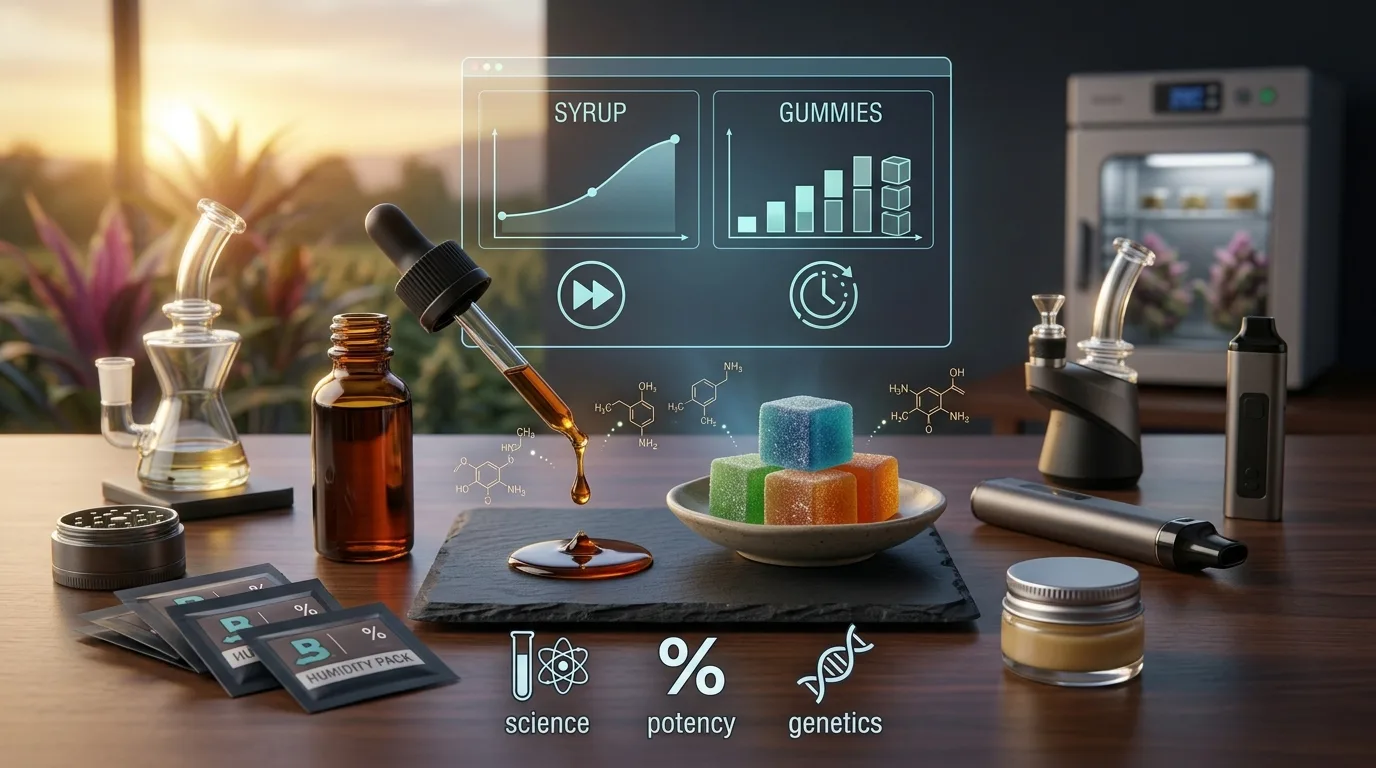
If you've been shopping for THC edibles in Ottawa, you've probably noticed a new player entering the scene alongside your favourite gummies: THC syrup. While products like Stoner Patch THC Syrup are gaining serious traction across Canada, many cannabis consumers still aren't sure how to use liquid edibles or why they'd choose syrup over traditional gummy formats. The difference isn't just about texture,it's about control, versatility, and how you want your THC experience to unfold.
THC syrup represents a fundamental shift in how edibles work. Unlike gummies that come pre-dosed in fixed amounts (usually 10mg or 25mg pieces), cannabis syrup puts precise dosing control directly in your hands. You're not choosing between eating one gummy or two,you're measuring exactly 5mg, 12mg, or whatever dose works for your tolerance and desired effects. This guide breaks down everything you need to know about Stoner Patch THC Syrup, from basic usage to advanced mixing techniques that regular gummies simply can't match.
What Makes THC Syrup Different from Gummies
The cannabis edibles market has exploded beyond brownies and cookies. Today's consumers face choices between high-potency gummies, chocolates, beverages, and now liquid syrups. Understanding what sets THC syrup apart helps you choose the right format for your lifestyle and consumption preferences.
The Science Behind Liquid Edibles
Cannabis syrup uses a sugar or glycerin base infused with THC distillate or extract. The thick, viscous consistency allows the cannabinoids to remain suspended in solution, creating a stable product with consistent potency throughout the bottle. When you consume THC syrup, the cannabinoids are absorbed through your digestive system just like gummies,but the liquid format offers some unique advantages.
Most commercial THC syrups contain between 500mg and 1000mg total THC per bottle, with serving sizes clearly marked on the packaging or included dropper. A typical serving ranges from 10mg to 25mg, though experienced users often adjust based on tolerance. The liquid form allows for sublingual absorption if held under the tongue, potentially leading to faster onset times compared to gummies that must be fully digested.
Gummies vs Syrup: The Fundamental Differences
The most obvious difference is physical form, but the implications run deeper. THC gummies come pre-portioned,each piece contains a fixed dose, usually 10mg in Canada's legal market or higher in grey-market products. You consume them whole, and adjusting your dose means eating multiple pieces or cutting gummies with a knife (messy and imprecise).
THC syrup flips this script entirely. You're working with a concentrated liquid that you measure out in precise amounts. Want exactly 7.5mg? Easy with syrup, nearly impossible with gummies. Need 30mg? Measure once instead of unwrapping three separate gummies. This precision matters enormously for medical users titrating their dose or recreational users fine-tuning their experience.
The flavour delivery differs too. Gummies mask cannabis taste with fruit flavours and gelatin texture, but you still get some plant undertones. Quality THC syrups like Stoner Patch completely eliminate cannabis taste through distillate purification and flavouring systems, creating products that taste like fruit punch or cola with zero hemp notes.
How to Use Stoner Patch THC Syrup: Step-by-Step Guide
Using THC syrup correctly ensures consistent effects and helps you avoid the number one edible mistake: taking too much because you didn't feel anything after 30 minutes. Liquid edibles follow the same digestion timeline as solid edibles,patience remains essential.
Proper Dosing and Measurement
Start by checking your bottle's concentration. If your Stoner Patch THC Syrup contains 1000mg total in a 100ml bottle, that's 10mg per milliliter. Most syrup bottles include a graduated dropper or measuring cap marked in milliliters. For beginners, 5-10mg is the recommended starting dose, regardless of what format you're using.
Measure your desired dose using the included dropper or a measuring spoon. Kitchen measuring spoons work fine: 1ml equals approximately ¼ teaspoon, 5ml equals 1 teaspoon. If you're trying syrup for the first time and have experience with gummies, start with the equivalent dose you'd normally take in gummy form. If two 10mg gummies works for you, measure out 20mg of syrup (2ml of a 10mg/ml concentration).
Direct Consumption Method
The simplest approach: measure your dose and consume it directly. Squirt the syrup under your tongue and hold it there for 30-60 seconds before swallowing. This sublingual method allows some THC absorption through the mucous membranes under your tongue, potentially reducing onset time from the typical 60-90 minutes to 30-45 minutes for partial effects.
After sublingual holding, swallow the syrup. The remaining THC will absorb through your digestive system normally. Direct consumption works great when you want effects without the calories or sugar from mixer beverages, and it's the most precise method since you're not diluting or transferring the measured dose.
Mixing THC Syrup into Beverages
This is where syrup truly shines compared to gummies. You can't dissolve a gummy into your morning coffee or evening cocktail, but THC syrup mixes seamlessly into virtually any beverage. The versatility transforms ordinary drinks into custom THC experiences.
For hot beverages like coffee or tea, add your measured syrup dose after the drink cools slightly below boiling. Extreme heat (above 350°F) can degrade THC, but typical drinking temperatures (150-180°F) are perfectly safe. Stir thoroughly and enjoy. The syrup sweetens your drink while delivering your dose,no additional sugar needed in many cases.
Cold beverages offer even more options. Add Stoner Patch THC Syrup to soda, juice, smoothies, or alcoholic cocktails. The syrup's density means it sinks initially, so stir well before drinking. Some users make THC lemonade, cannabis-infused iced tea, or spiked slushies. Unlike gummies that you eat separately from your drink, syrup integrates into the entire beverage experience.
Creative Culinary Applications
Advanced users drizzle THC syrup over desserts, mix it into yogurt, or incorporate it into homemade edibles. Pour it over pancakes or ice cream. Mix it into frosting for cakes. Use it as a sweetener in homemade salad dressings (for those really adventurous in the kitchen). The liquid format opens culinary doors that solid gummies can't access.
One important note: unlike storing flower, THC syrup doesn't require special humidity control. Keep it in a cool, dark place with the cap tightly sealed. Refrigeration extends shelf life but isn't required for properly manufactured syrup. Most products remain stable for 6-12 months when stored correctly.
Understanding Onset Time and Duration Differences
Many first-time syrup users assume liquid equals faster effects. The reality is more nuanced. How you consume the syrup dramatically impacts when effects begin and how long they last.
Sublingual Absorption vs Digestive Absorption
When you hold THC syrup under your tongue (sublingual method), cannabinoids can absorb directly into your bloodstream through the thin mucous membranes. This bypasses the digestive system and liver metabolism, creating a shorter path to your endocannabinoid receptors. Users report feeling initial effects within 15-30 minutes via this method, compared to 45-90 minutes for swallowed edibles.
However, the sublingual route doesn't replace digestion entirely. Unless you hold the syrup under your tongue for several minutes without swallowing (difficult and unpleasant), most of the dose still gets digested normally. Think of sublingual as adding a "preview" of effects 20-30 minutes in, with the full experience building over the next hour as the swallowed portion metabolizes.
Gummies offer no sublingual option,they must be chewed and swallowed, meaning 100% digestive processing. This is why some users perceive syrup as "faster," even though the bulk of the dose follows the same metabolic pathway.
What Affects Your Experience Timeline
Several factors influence how quickly you feel THC syrup effects. Metabolism speed varies person to person,some users metabolize edibles in 30 minutes, others need two hours. Body weight, tolerance, and whether you've eaten recently all play roles.
Consuming syrup on an empty stomach typically produces faster onset but potentially more intense effects. Taking it with or after food slows absorption but creates a gentler, more gradual experience. This differs slightly from gummies, which introduce fibre and gelatin that further slow digestion. Pure syrup (especially in liquid form already) may absorb marginally faster than gummy gelatin that needs to break down first.
Duration remains similar across edible formats: 4-8 hours for most users, with peak effects around 2-3 hours post-consumption. Higher doses extend duration. The advantage of syrup isn't shorter duration but more predictable dosing,you know exactly how many milligrams you consumed, unlike splitting gummies imprecisely.
Why Choose Syrup Over Gummies: The Real-World Advantages
Beyond novelty, THC syrup offers practical benefits that make it the superior choice for certain users and situations. Understanding these advantages helps you decide when to reach for syrup versus sticking with traditional edible formats.
Precise Dose Control for Medical Users
Medical cannabis patients often need specific doses: 12mg for pain relief, 8mg for anxiety, 15mg for sleep. Gummies make this precision impossible without cutting pieces and guessing. Syrup turns dosing into a simple measurement task. Patients can titrate up slowly (8mg to 9mg to 10mg) to find their minimum effective dose without wasting product or experiencing effects that are too strong.
This precision extends to microdosing protocols. Users targeting 2-5mg doses for functional daytime relief can measure tiny amounts of syrup accurately. Try that with a 10mg gummy,you'd need to cut it into quarters or fifths, creating inconsistent pieces and sticky messes.
Discretion and Convenience in Social Settings
Adding syrup to your drink at a party, concert, or restaurant is far more discreet than pulling out a package of THC gummies. Your beverage looks identical to everyone else's. No one knows your soda contains 15mg THC unless you tell them. This social camouflage matters in settings where you prefer privacy around cannabis use.
The convenience factor shines during activities. Hiking? Add syrup to your water bottle before the trail. Beach day? Mix it into a smoothie. Dinner party? Spike your own mocktail while others drink alcohol. Gummies require separate consumption,you eat them, then drink something else. Syrup integrates seamlessly into what you're already drinking.
Better Taste and Zero Texture Issues
Quality THC gummies have come far, but texture remains divisive. Some are too hard, others too soft and sticky. Gelatin creates a chew that not everyone enjoys, and plant material sometimes adds grittiness. Syrup eliminates texture entirely,it's liquid that disappears into whatever you're drinking.
Flavour-wise, top-shelf syrups like Stoner Patch use distillate (pure THC with terpenes removed) and professional flavouring, creating products that taste like premium fruit syrups with zero cannabis notes. Compare this to even the best gummies, which often retain subtle hemp undertones that some users dislike. When mixed into beverages, syrup's flavour disperses and blends rather than concentrating in chewy pieces.
Longer Shelf Life and Better Storage
Gummies can dry out, get sticky, or develop sugar crystallization over time. They're sensitive to heat (they'll melt in a hot car) and humidity changes. THC syrup, when properly sealed, remains stable for months without texture degradation because there's no texture to degrade. The liquid consistency doesn't change whether it's been open three days or three months.
Storage is simpler too. A bottle of syrup takes up less space than multiple packages of gummies offering the same total THC. If you're buying bulk like you would with Cali Bricks for flower, syrup's concentrated format makes more economic sense for regular users.
Common Mistakes and How to Avoid Them
THC syrup's flexibility comes with potential pitfalls, especially for users transitioning from gummies or other solid edibles. Learning from common mistakes saves you from uncomfortable experiences and wasted product.
The Impatience Problem: Taking More Before Effects Hit
This is the number one edible mistake, whether you're using syrup or gummies. You consume your dose, wait 30 minutes, feel nothing, and decide to take more. Then both doses hit simultaneously 20 minutes later, and you're far more intoxicated than intended. Edibles take 45-90 minutes for full effects, and syrup is no exception despite being liquid.
The solution: set a timer for 90 minutes after consuming your dose. Don't take additional syrup until that timer goes off, even if you're convinced it's not working. If you still feel nothing after 90 minutes, your dose was too low or you have high tolerance,but at least you've given the first dose time to work before adding more.
This discipline is actually harder with syrup than gummies. Measuring another dose takes seconds, while eating another gummy requires unwrapping and chewing, creating natural pause points. Keep your syrup bottle closed and stored after dosing to create similar friction against impulsive redosing.
Imprecise Measurement Leading to Inconsistent Doses
The precision advantage of syrup only works if you actually measure precisely. Eyeballing "about a teaspoon" or pouring carelessly creates the same inconsistency you were trying to avoid with gummies. Some days you'll get 8mg, other days 15mg, and you'll wonder why effects vary so much.
Invest in a proper measuring tool: the included dropper, a graduated oral syringe from a pharmacy, or a set of measuring spoons. Always measure over a small cup or bowl rather than directly over your drink,if you pour too much, you can return the excess to the bottle instead of ending up with an unexpectedly strong beverage.
Mixing Syrup with Alcohol Without Considering Interactions
Cannabis and alcohol interact synergistically,the combined effects are stronger than either substance alone. This crossfading can be enjoyable at controlled levels but quickly becomes overwhelming if you're not careful. Users who regularly handle three beers and 10mg THC separately may find one beer plus 10mg THC uncomfortably intense.
If you're mixing THC syrup into alcoholic cocktails, reduce both your THC dose and alcohol consumption from your normal amounts. Start with half your usual THC dose and limit yourself to one drink initially. Wait at least 90 minutes before considering more of either substance. Many experienced users prefer to keep cannabis and alcohol separate entirely to avoid unpredictable interactions.
Forgetting to Stir Mixed Beverages
THC syrup is denser than most liquids. When you add it to a drink, it sinks to the bottom. If you don't stir thoroughly, your first sips contain minimal THC while the last quarter of your drink holds the majority of your dose. This creates uneven effects,you might feel nothing for an hour, then get hit hard when you drain the cup.
Always stir mixed beverages well, and if you're sipping slowly over time, give your drink a quick stir every 10-15 minutes. For carbonated mixers like soda, stir gently to preserve fizz while still distributing the syrup. With thick drinks like smoothies, blend the syrup in rather than just stirring.
Storage, Safety, and Responsible Use
Liquid edibles require the same responsible approach as any cannabis product, with a few format-specific considerations. Proper storage protects both product quality and household safety.
How to Store THC Syrup Properly
Keep your Stoner Patch THC Syrup in its original bottle with the cap tightly sealed. Store it in a cool, dark location,a cupboard away from the stove works perfectly. While refrigeration isn't necessary for properly manufactured syrup, it can extend shelf life, especially after opening. Cold temperatures slightly thicken the syrup, so let refrigerated bottles warm to room temperature before measuring for easier pouring.
Avoid heat and direct sunlight, which can degrade THC over time. Never leave syrup bottles in hot cars or sunny windowsills. Unlike flower that requires humidity control, syrup maintains stability through its sugar or glycerin base, but heat remains the enemy of cannabinoid preservation.
Most commercial THC syrups remain potent for 6-12 months when stored correctly. Check for separation (normal,shake before use), crystallization (less common but not harmful), or off smells (sign of spoilage,discard the product). Quality syrups include preservatives that prevent bacterial growth, but once opened, consume within a few months for best quality.
Childproofing and Household Safety
This cannot be overstated: THC syrup looks exactly like regular pancake syrup or flavoured drink additive. Children, houseguests, or anyone unfamiliar might consume it accidentally if not stored properly. Always keep cannabis products locked away and clearly labelled.
Use a lockbox, high cabinet with a childproof latch, or dedicated cannabis storage area that others cannot access. Never transfer syrup to unmarked containers. Keep it in the original packaging that indicates it contains THC. If you have kids, roommates, or frequent visitors, treat your syrup with the same security you'd give prescription medication.
The liquid format makes accidental overconsumption easier than with gummies. A child might eat one gummy and stop, but could drink a full bottle of syrup thinking it's regular candy syrup. This scenario, while rare, has led to emergency room visits. Prevention through proper storage is essential.
Driving, Operating Machinery, and Legal Considerations
This should be obvious, but it bears repeating: never drive or operate machinery after consuming THC syrup. Edibles produce long-lasting impairment (4-8 hours or more), and because effects build gradually, you may not realize how intoxicated you are until you're in a dangerous situation.
Plan your consumption around being at home or in a safe location for the entire duration. If you dose at 6pm, don't plan to drive anywhere until the next morning. The gradual onset of edibles creates a false sense of sobriety,you might feel fine 30 minutes after consuming, then be too impaired to drive safely an hour later.
Legal considerations vary by province. While THC syrup is legal across Canada, carrying it in public, consuming in public spaces, or providing it to minors remains illegal. Keep syrup at home or transport it in a sealed, child-resistant container if taking it to a friend's house. Never share with anyone under 19 (18 in Alberta and Quebec), and respect public consumption laws that restrict cannabis to private residences in most jurisdictions.
Choosing the Right Product: What to Look For
Not all THC syrups are created equal. Quality varies enormously across brands, and understanding what separates premium products from questionable ones helps you shop smarter. When exploring options from services like UperWeed's cannabis delivery in Ottawa, keep these factors in mind.
Distillate vs Full-Spectrum Syrups
Most commercial THC syrups use distillate,highly refined THC that's been purified to remove plant material, chlorophyll, and most terpenes. This creates a nearly flavourless base that manufacturers add terpenes and flavouring to. The advantage: clean taste, precise dosing, and no hemp flavour. The drawback: you lose the entourage effect of minor cannabinoids and natural terpenes working together.
Full-spectrum syrups preserve more of the original plant compounds, including CBD, CBG, and natural terpene profiles. These products often have more complex flavours and may provide broader therapeutic benefits, but they also carry more cannabis taste that flavouring can't completely mask. Choose distillate syrups for flavour and discretion, full-spectrum for those seeking maximum entourage effects.
Concentration and Value
THC syrups typically range from 500mg to 1000mg total per bottle, though some brands offer higher concentrations. Calculate cost per milligram to compare value: a $40 bottle with 1000mg costs $0.04/mg, while a $25 bottle with 500mg costs $0.05/mg. The larger concentration offers better value despite higher upfront cost.
Higher concentration also means more servings per bottle. A 1000mg bottle provides one hundred 10mg doses, versus fifty doses from a 500mg bottle. If you're a regular user, buying higher concentration reduces packaging waste and trips to restock.
Ingredient Quality and Lab Testing
Premium syrups use quality sweeteners (cane sugar or organic alternatives rather than high-fructose corn syrup), natural flavours, and clean extraction processes. Check for lab testing,reputable brands provide certificates of analysis showing exact THC content, absence of pesticides, and verification of heavy metals testing.
Beware of syrups with ingredient lists full of artificial colours, excessive preservatives, or vague "natural flavouring" without specifics. Quality brands are transparent about what goes into their products. If a brand won't provide lab results or ingredient specifics, consider it a red flag.
Frequently Asked Questions About THC Syrup