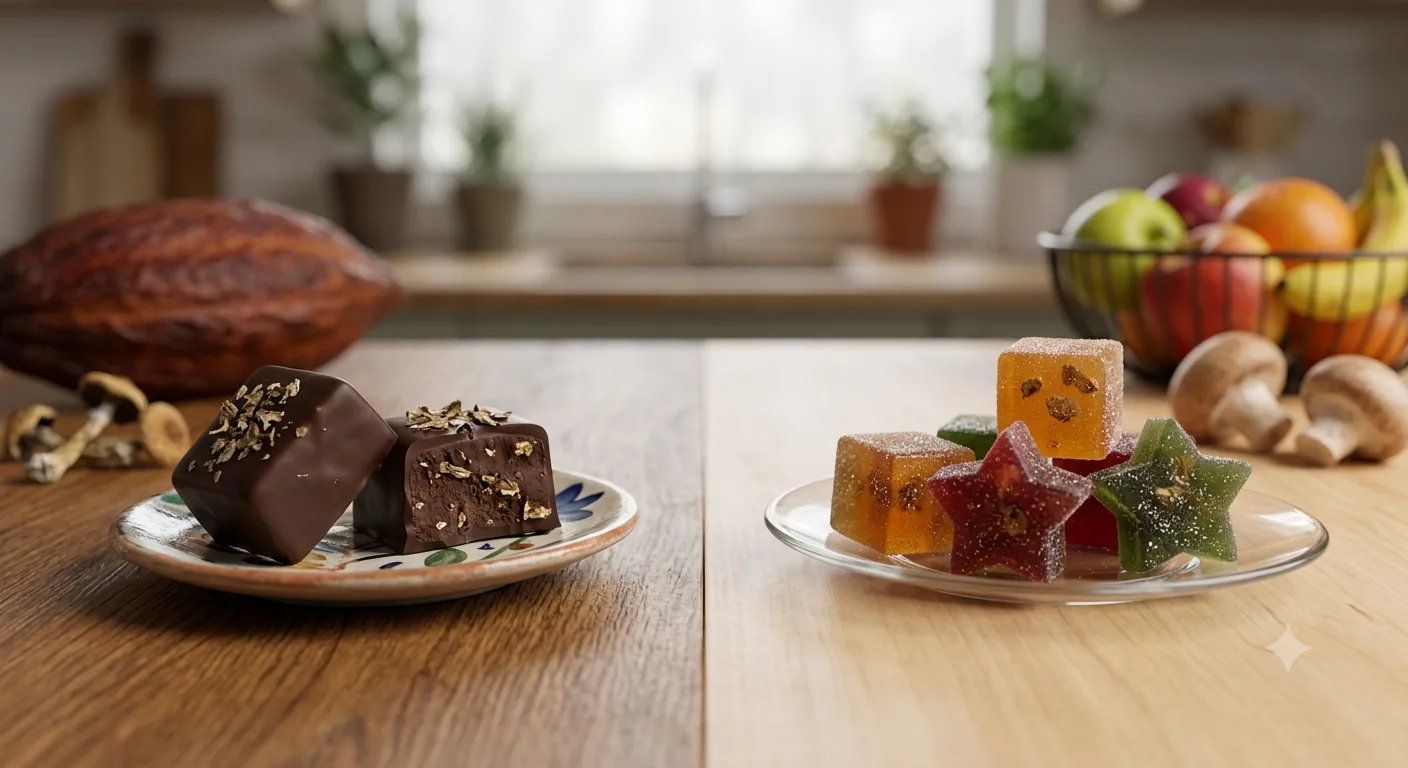
Standing in front of your screen trying to decide between mushroom chocolates and mushroom gummies isn't just about picking a flavour. It's about choosing how you want your psilocybin experience to unfold, how precisely you want to dose, and whether you care more about masking that earthy mushroom taste or enjoying a treat that feels indulgent. Both delivery methods work, both get you where you're going, but they take different routes to get there.
If you've browsed the Utopia Mushrooms product lines available through same-day delivery in Ottawa and Gatineau, you've likely noticed two distinct categories: rich, melt-in-your-mouth chocolates and chewy, fruit-flavoured gummies. The question isn't which one is "better" in some absolute sense. The question is which one fits your goals, your metabolism, and your personal preferences. This guide breaks down the real differences in onset time, dosing precision, taste experience, and practical considerations so you can make an informed choice before your next psilocybin journey.
How Psilocybin Edibles Work in Your Body
Before diving into chocolates versus gummies, it helps to understand what happens when you consume psilocybin in edible form. Unlike smoking or vaping cannabis, where active compounds enter your bloodstream through lung tissue almost instantly, psilocybin edibles must pass through your digestive system first. Your stomach breaks down the chocolate or gummy matrix, releasing the psilocybin mushroom extract. From there, your liver metabolizes psilocybin into psilocin, the compound responsible for the psychoactive effects.
This digestive pathway is why edibles take longer to kick in than other consumption methods, but it's also why the experience tends to feel smoother and last longer. The gradual absorption creates a gentler climb and a more sustained plateau. Both chocolates and gummies follow this same metabolic route, but the specific formulation of each product can influence how quickly your body breaks them down and absorbs the active compounds.
Fat-Soluble Compounds and Chocolate
Chocolate has a unique advantage when it comes to delivering psilocybin: cocoa butter is a fat, and while psilocybin itself is water-soluble, the fat content in chocolate can enhance overall absorption of the mushroom extract. The emulsification process that occurs as chocolate melts in your mouth and stomach may allow for slightly faster and more efficient uptake compared to gelatin-based products. This doesn't mean chocolates hit you like a freight train, but some users report a marginally quicker onset compared to gummies made with the same dose.
High-quality mushroom chocolates often use Belgian or couverture chocolate, which contains higher percentages of cocoa butter. This not only improves taste and texture but may also contribute to better bioavailability of the psilocybin content.
Gelatin, Pectin, and Gummy Absorption
Mushroom gummies are typically made with gelatin or pectin as the base, creating that familiar chewy texture. These ingredients dissolve more slowly in stomach acid compared to chocolate, which can lead to a slightly delayed onset. However, this isn't necessarily a drawback. Many experienced users prefer the gradual climb that gummies provide, as it reduces the chance of feeling overwhelmed during the come-up phase.
Pectin-based gummies (often marketed as vegan options) may behave differently than gelatin-based ones. Pectin breaks down more predictably in acidic environments, potentially offering more consistent timing between doses and between different users.
Onset Time: When Will You Feel It?
One of the most common questions from first-time psilocybin users is, "How long until it kicks in?" The answer depends on several factors including your metabolism, whether you've eaten recently, and yes, whether you chose chocolates or gummies.
On average, mushroom chocolates tend to produce noticeable effects within 20 to 45 minutes on an empty stomach. The fat content allows for relatively quick emulsification and absorption once the chocolate begins melting. If you've eaten a full meal beforehand, expect the onset window to stretch to 45 to 75 minutes as your digestive system processes everything in queue.
Mushroom gummies, by contrast, typically take 30 to 60 minutes to kick in under fasting conditions, extending to 60 to 90 minutes if consumed after a meal. The gelatin or pectin matrix takes slightly longer to break down completely, releasing the psilocybin more gradually. This creates a smoother entry into the experience but requires a bit more patience.
Why Onset Time Matters for Your Experience
If you're planning a structured psilocybin journey with a specific timeline, knowing your onset window helps you schedule the experience appropriately. Chocolates suit users who want to begin their session sooner and who have a clear block of time set aside. Gummies work better for those who prefer a leisurely build-up and aren't in a rush to reach peak effects. For therapeutic or creative sessions that might last four to six hours total, a 15-minute difference in onset isn't dramatic, but it can influence how you plan your environment and activities.
Dosing Precision: Micrograms Matter
Precision matters when working with psilocybin. Unlike cannabis, where dosing can be forgiving and recreational, psilocybin experiences are dose-dependent in ways that dramatically alter the journey. A microdose (100-300mg of mushroom material) produces subtle cognitive shifts. A moderate dose (1-2 grams) creates noticeable perceptual changes. A heroic dose (5+ grams) launches you into profound psychedelic territory. Getting your dose right isn't optional, it's essential.
Both mushroom chocolates and gummies offer pre-measured doses, but the format affects how easily you can fine-tune your intake. Understanding these differences helps you avoid taking too much or too little for your intended experience.
How Chocolates Are Dosed
Quality mushroom chocolates are typically manufactured in bar format with scored sections. Each square represents a specific dose, clearly marked on the packaging. A common format is a chocolate bar divided into 15 or 20 pieces, with each piece containing between 200mg and 500mg of psilocybin mushroom extract. This allows for flexible dosing. Want to microdose? Take one square. Planning a moderate journey? Take three or four squares. Need something in between? Break a square in half.
The challenge with chocolate is that not all bars are manufactured with pharmaceutical-grade precision. Homogenization (evenly distributing mushroom powder throughout the melted chocolate) can be inconsistent in lower-quality products, meaning one square might contain 400mg while the next has 250mg from the same bar. Premium Utopia chocolate products use industrial mixers and quality control testing to minimize this variability, but it's worth being aware of as a potential issue.
How Gummies Are Dosed
Mushroom gummies typically come as individual pieces, each containing a pre-measured dose. A standard format is 10 gummies per package, with each gummy containing 300mg to 500mg of mushroom extract. Because gummies are manufactured using molds and measured liquid suspension, the dose consistency between individual gummies tends to be more reliable than with chocolates. Each gummy is its own discrete unit, formed separately, which reduces the risk of uneven distribution.
The trade-off is less flexibility. Breaking a gummy in half is messier and less precise than snapping a chocolate square along a scored line. If you want to fine-tune your dose in 100mg increments, chocolates offer easier adjustments. If you want reliable, repeatable dosing without thinking too hard about math, gummies deliver that convenience.
For those new to psilocybin or exploring therapeutic microdosing protocols, the predictable dosing of gummies makes them an excellent starting point. You can establish your baseline response with confidence, knowing each gummy delivers the same amount. As you gain experience and want more control over subtle dose adjustments, chocolates provide that additional precision.
Taste and Palatability: Making Medicine Enjoyable
Let's be direct about psilocybin mushrooms: they taste like dirt, mold, and regret when consumed raw. That earthy, bitter, slightly sour flavour is one of the main reasons edible formats became popular in the first place. Both chocolates and gummies attempt to mask that taste, but they take different approaches and achieve different levels of success.
Why Chocolate Works So Well
Chocolate is arguably the gold standard for masking mushroom flavour, and there's food science behind why it works. The rich cocoa content in quality dark chocolate has its own strong, complex flavour profile that includes bitter notes, which harmonize with and overwhelm the bitterness of psilocybin mushrooms. High-fat content coats your palate, creating a physical barrier between your taste buds and the mushroom particles. Sugar content balances bitterness. The melting sensation provides a luxurious mouthfeel that distracts from any underlying earthiness.
Premium mushroom chocolates often incorporate additional flavourings like sea salt, vanilla, or espresso powder that add aromatic complexity. Some manufacturers use white chocolate or milk chocolate for a sweeter, creamier experience, though dark chocolate (60-75% cocoa) remains most popular for its superior masking properties. When made correctly, a mushroom chocolate tastes first and foremost like good chocolate, with perhaps a faint herbal note on the finish that most users find negligible or even pleasant.
The Gummy Advantage
Mushroom gummies take a different approach: they go sweet, fruity, and aggressively flavoured. Imagine childhood candy like Swedish Fish or Haribo bears, but infused with psilocybin extract. Manufacturers use concentrated fruit flavours, citric acid, and sweeteners to create an intensely sweet-and-sour taste experience that essentially drowns out mushroom flavour through sheer intensity.
The chewy texture helps too. Unlike chocolate that melts quickly, gummies require chewing, which mixes the product thoroughly with saliva and dilutes any concentrated pockets of mushroom flavour. The fruit flavours, which commonly include cherry, blue raspberry, strawberry, mango, and watermelon, are familiar and nostalgic, making the consumption experience feel more like eating candy than taking medicine.
Some users find gummies too sweet, especially if they're watching sugar intake or prefer less cloying flavours. For these individuals, the sophisticated bitterness of dark chocolate feels more appropriate. It's a matter of personal preference: do you want dessert or candy?
Aftertaste Considerations
Both formats occasionally leave a mild earthy aftertaste, particularly in products with higher mushroom concentrations (1 gram+ per piece). Chocolates tend to have a cocoa-bitter finish that mingles with any residual mushroom flavour. Gummies leave a sweet-fruit coating on your tongue that can linger for 10 to 15 minutes. Neither is unpleasant, but it's worth noting if you're sensitive to aftertastes. Drinking water, tea, or juice after consumption helps clear your palate with either format.
Practical Considerations: Storage, Portability, and Shelf Life
Beyond the experience itself, practical factors influence which format suits your lifestyle. How you store your psilocybin edibles, whether you need to take them on the go, and how long they'll stay fresh all matter when choosing between chocolates and gummies. Similar considerations apply when choosing between cannabis edible formats, where storage and potency retention play crucial roles in product selection.
Temperature Sensitivity
Chocolate's biggest practical weakness is its melting point. At around 30-32°C (86-90°F), chocolate begins to soften and lose its structure. Leave a mushroom chocolate bar in a hot car, warm backpack, or sunny spot, and you'll end up with a melted mess. The psilocybin content remains intact (psilocybin degrades at much higher temperatures), but the product becomes difficult to dose and consume. If you live in a warm climate or don't have consistent climate control, this is a legitimate concern.
Gummies are far more temperature-stable. They can withstand heat up to about 48°C (118°F) before they start getting sticky and deforming. Even if they do get warm and slightly melty, they'll typically return to their original shape and texture once cooled. This makes gummies the better choice for travel, outdoor experiences, or storage in less-than-ideal conditions.
Portability and Discretion
Both formats are reasonably portable, but gummies edge ahead slightly. A small container of mushroom gummies fits easily in a pocket, bag, or glove compartment without special considerations. They don't crumble, don't melt (easily), and individual pieces are discrete units you can take on the go. If you're planning a hiking trip, camping adventure, or music festival experience, gummies travel better.
Mushroom chocolates require a bit more care. You'll want to keep them in their original packaging or a protective container to prevent breaking. If it's warm outside, consider a small insulated pouch or cooler bag. The upside is that chocolate looks completely innocuous. A wrapped chocolate bar draws zero attention, whereas brightly coloured gummies in a package might invite questions (though they're just as legal).
Shelf Life and Degradation
Psilocybin is relatively stable when stored properly, but the edible matrix can affect longevity. Chocolate has excellent shelf life when kept in a cool, dry, dark place. Properly stored mushroom chocolates can maintain full potency for 12 to 18 months or longer. The main risk is cocoa butter bloom (white spots that appear on the surface), which affects appearance but not potency or safety.
Gummies typically have a shelf life of 6 to 12 months. The gelatin or pectin can harden over time, making them chewier and tougher. Sugar content can crystallize. While still safe to consume, old gummies become less pleasant texturally. Both formats should be stored in airtight containers away from light and heat. Refrigeration extends shelf life for both, though it's more critical for gummies than chocolates.
For occasional users who might keep a product for months between uses, chocolates offer better long-term stability. For regular consumers who'll finish a package within weeks, gummies are perfectly fine and may even be preferable given their other advantages.
Price, Value, and Availability in Ottawa and Gatineau
Cost is always a factor when choosing between product formats. In the Ottawa and Gatineau psilocybin market, mushroom chocolates and gummies typically fall in similar price ranges, but there are nuances worth examining. Both formats are available through same-day delivery services that have expanded beyond cannabis into other plant medicines, offering convenient access without the need to visit physical locations.
Typical Pricing Structures
Mushroom chocolates generally retail between $30 and $60 per bar, depending on total psilocybin content, chocolate quality, and brand reputation. A standard bar might contain 3 to 4 grams of psilocybin mushroom material divided into 12 to 20 pieces. This works out to roughly $10 to $15 per gram-equivalent, which is competitive with dried mushroom pricing while offering the convenience and palatability of the chocolate format.
Mushroom gummies typically range from $25 to $50 per package, with each package containing 10 to 20 individual gummies and a total of 3 to 5 grams of mushroom material. The per-gram cost is often slightly lower than chocolates, making gummies the more economical choice for budget-conscious consumers. The price difference isn't dramatic, usually $2 to $5 per package, but it exists consistently across most brands.
Quality Versus Price
As with any edible product, you get what you pay for. Premium chocolates made with Belgian couverture and organically grown psilocybin mushrooms cost more than basic products made with compound chocolate and standard cultivation mushrooms. The experience differs accordingly. Higher-quality ingredients produce better taste, more consistent dosing, and often a smoother overall experience.
The same principle applies to gummies. Budget options may use artificial flavours and colours, low-grade gelatin, and less precise extraction methods. Premium gummies use natural fruit extracts, pectin bases, and labouratory-tested potency verification. If you're serious about your psilocybin practice, investing in quality products pays dividends in reliability and experience quality.
Which Format Fits Your Psilocybin Goals?
The choice between mushroom chocolates and gummies ultimately comes down to your specific situation and priorities. Neither format is objectively superior. They excel in different contexts and appeal to different preferences. Here's how to think through your decision based on common use cases.
For First-Time Users
If you're new to psilocybin, gummies offer advantages in consistency and dosing predictability. Each gummy is a discrete unit with reliable potency, making it easier to follow recommended starter doses without overthinking the math. The familiar candy format reduces anxiety some people feel around trying a new psychoactive substance. Start with a single 300-500mg gummy to establish your baseline sensitivity, then adjust from there in future sessions.
For Microdosing Protocols
Microdosing typically involves sub-perceptual doses taken on a schedule (common protocols include one day on, two days off, or weekday dosing with weekend breaks). This requires precise, repeatable dosing in the 100-300mg range. Chocolates with clearly scored sections allow you to break off exactly the amount you need, making dose adjustments easy as you dial in your optimal microdose. The ability to take half a square one day and a full square the next gives you flexibility that pre-formed gummies don't offer.
For Therapeutic or Spiritual Sessions
When planning a deeper psilocybin journey for therapeutic processing, creative insight, or spiritual exploration, the format matters less than getting the dose right and creating appropriate set and setting. Both chocolates and gummies work perfectly well. Choose based on taste preference and onset timing. If you want to reach the experience slightly faster, go with chocolate. If you prefer a gentler climb, choose gummies. For context around different consumption methods and their effects, you might find value in understanding how different delivery methods affect the body, as similar principles apply across various plant medicines.
For Social or Recreational Use
Planning a psilocybin experience with friends at a concert, art gallery, or nature setting? Gummies are more practical for group settings. They're easier to share, portion, and consume without making a mess. The candy format feels less medicinal and more festive, which suits the recreational context. Plus, the temperature stability means you won't end up with melted chocolate all over your hands or bag.
For Temperature-Challenged Environments
If you live in a warm climate, don't have air conditioning, or plan to carry your psilocybin edibles during summer activities, gummies are the obvious choice. They won't melt, deform, or become difficult to handle in heat. Chocolate requires climate control you might not always have access to.
For Taste-Sensitive Individuals
If you're particularly sensitive to mushroom flavour or have struggled with the taste of dried mushrooms in the past, high-quality dark chocolate offers superior masking. The fat content, cocoa bitterness, and melting texture combine to hide earthiness more effectively than gummies. Some people genuinely enjoy the taste of mushroom chocolates as a dessert, which isn't something you can say about raw mushrooms.
Can You Combine Both Formats?
There's no rule that says you must commit exclusively to chocolates or gummies. Many experienced psilocybin users keep both formats on hand and select based on the specific situation. Use chocolates for at-home microdosing when you want precision and don't need to worry about temperature. Keep gummies for portable situations, social settings, or times when you want that candy nostalgia.
Some users even combine formats within a single session, though this is advanced territory. You might take a chocolate to initiate the experience (faster onset) and follow up with a gummy an hour later to extend or deepen the journey (stacking doses). This requires careful calculation and experience with how your body responds to psilocybin, but it demonstrates the flexibility available when you understand how different formats behave.
Safety and Responsible Use
Regardless of whether you choose mushroom chocolates or gummies, responsible use practices remain essential. Psilocybin is a powerful psychoactive compound that deserves respect and appropriate safety protocols. Both formats make it easy to consume psilocybin, which is both their greatest advantage and a potential risk for those who don't approach the experience thoughtfully.
Always start with a low dose if you're new or trying a new product. Wait at least 90 minutes before considering taking more, as the full effects may not manifest until then. Avoid mixing psilocybin with alcohol or other substances. Have a trusted person available if you're taking a dose large enough to significantly alter your perception. Create a safe, comfortable environment where you won't be disturbed and don't have responsibilities for at least 6 hours.
Store all psilocybin products securely away from children and pets. Both chocolates and gummies can look like regular treats, making proper labelling and storage critical. Consider a lockbox or high shelf in a cool, dark location. The same principles that apply to storing premium cannabis products apply here: protect from light, heat, moisture, and unauthorized access.
What the Research Says About Edible Psilocybin
While most clinical research on psilocybin uses pure, measured doses of psilocybin rather than edible products, the existing studies offer insights relevant to chocolate versus gummy consumption. Research consistently shows that oral administration of psilocybin produces reliable, dose-dependent effects with a predictable time course. Studies typically report onset at 20-60 minutes, peak effects at 2-3 hours, and total duration of 4-6 hours.
Food intake significantly affects pharmacokinetics. Studies where subjects consumed psilocybin on empty stomachs showed faster onset and slightly higher peak plasma concentrations compared to fed conditions. This aligns with user reports that taking mushroom edibles (whether chocolate or gummies) without food produces quicker, more intense effects. The fat content in chocolate may partially offset this by enhancing absorption, though no direct comparative studies exist yet.
Importantly, research demonstrates that psilocybin's safety profile remains consistent across different delivery methods. The compound itself determines the effects and risks, not the edible matrix. Both chocolates and gummies deliver psilocybin safely when manufactured to proper standards and consumed at appropriate doses. The format you choose affects onset time and experience texture, but not fundamental safety