 %
%
 %
%
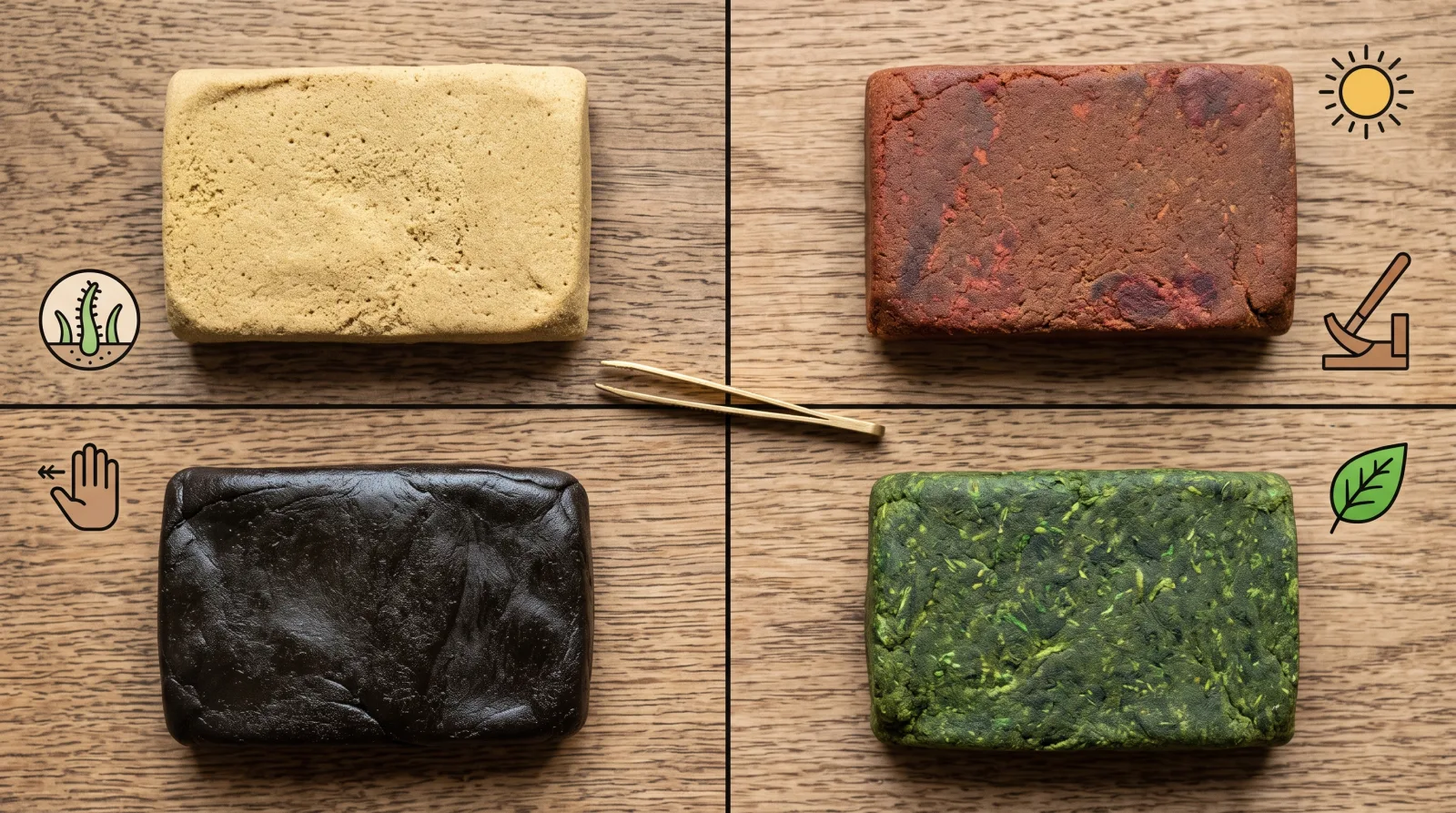
Scroll through a hash menu and the photos run across an entire colour range. Pale blonde Moroccan that looks almost like fudge. Red-brown slabs of Lebanese. Near-black Afghan that shines like it's been polished. Occasionally something distinctly green.
The natural assumption is that colour tracks quality in a straight line: lighter is purer and better, darker is rougher and worse, or the reverse depending on who you ask.
Neither version holds up.
Hash colour is the combined result of at least five separate factors, and a couple of them pull in opposite directions.
What colour does tell you, reliably, is something about how the hash was made. Once you know how to read that, the menu stops being a colour chart and starts being a description of production methods, which is far more useful when you're deciding what to buy.
What Hash Is Made Of
Every type of hash is made from the same starting material: trichome heads, the resin glands that carry nearly all of cannabis's cannabinoids and terpenes.
Production methods differ mainly in how those heads are separated from the plant and how they're consolidated afterward.
Our hash 101 guide covers the category broadly. Here, the focus is narrower: why the same starting material can end up looking so different.
The Five Things That Set the Colour
1. Purity
The most important factor is purity.
Pure trichome heads are pale: cream, tan or light gold. Every bit of plant material that makes it through separation darkens the result and pushes it toward green or brown.
That's why the palest hash tends to come from methods that achieve very high separation, such as multi-stage dry sifting through progressively finer screens or ice water extraction. Both remove most plant matter before consolidation.
Our M.M.S hash guide covers how that sieving works.
It's also why grinder kief tends to look greenish compared to commercial sift. A single grinder screen lets more plant material through. Our kief guide explains the difference.
2. Pressing and Working
When trichome heads are pressed, particularly with heat, the resin glands rupture and the contents fuse together.
That process can darken the material noticeably.
Hash that's been heavily worked, kneaded or heat-pressed can end up considerably darker than the same resin that was only lightly pressed.
This is the factor that breaks the assumption that darker means dirtier.
Very pure resin, worked heavily, can end up nearly black.
3. Oxidation
Exposed resin darkens with exposure to air and light over time.
This is visible on the surface of many types of hash. Break a piece open and the interior is frequently lighter than the exterior.
That colour difference is normal.
The outside of a slab has been exposed while the inside hasn't. That's why it's more useful to judge colour from a fresh break rather than only looking at the surface.
4. Origin and Traditional Method
Traditional hash-producing regions developed distinct methods over centuries, and those methods produce characteristic colours.
Moroccan hash is traditionally made by dry-sifting cured plants over fabric screens and then pressing. It tends to range from light brown to golden, with better grades often appearing paler.
Lebanese hash is also dry-sifted and has historically been sold in two broad colour categories: a lighter "blonde" and a reddish "red." The difference is generally attributed to when the plants were harvested and how long they were left to cure, with the red variety allowed to mature and oxidise further.
Afghan hash is traditionally produced by hand-kneading sifted resin, often with a little heat or water, for extended periods. The intensive working produces a very dark, often near-black, soft and pliable result.
Charas, from the Himalayan regions of India and Nepal, is hand-rubbed from living plants rather than sifted from dried ones. It's typically dark, sticky and very aromatic.
5. Genetics
Different cultivars produce resin of slightly different colours before any processing happens.
Some trichome heads are clearer, while others are more amber. It's a smaller effect than the other four factors, but it still contributes to the final appearance.
Reading the Colour
| Colour | Most Likely Indicates | What It Doesn't Prove |
|---|---|---|
| Pale blonde, cream | High-purity separation, light pressing | Higher potency |
| Golden to light brown | Good sift, moderate pressing; typical Moroccan appearance | Any specific origin |
| Red-brown | Extended cure or oxidation; typical of red Lebanese | Age problems |
| Dark brown to black | Heavy working, kneading or heat pressing | Low purity |
| Green | Plant material in the mix, lower separation | Anything good |
| Darker outside, lighter inside | Normal surface oxidation | Staleness |
| Grey or white fuzz | Mould | Anything salvageable; discard |
The key column is the third one.
Colour can narrow down the list of possible production methods, but it says very little about potency on its own.
Colour Is Not Potency
It's worth being explicit: blonde hash is not automatically stronger than black hash, and black hash is not automatically weaker.
A very pure dry sift can be pale and potent. A heavily kneaded Afghan-style hash can be dark and every bit as potent.
Green hash is the colour that most clearly suggests lower purity because of the amount of plant material that may have made it through separation. Even then, potency depends on what actually went into the final product.
This is similar to the trap of reading THC percentage in flower, which our article on what THC percentage actually measures covers.
Any single visible characteristic, whether it's colour or a number on a menu, can tell you less than it appears to.
Better Checks Than Colour
Colour is useful, but there are other characteristics worth looking at when assessing hash.
Pliability
Good hash usually softens and becomes workable with gentle warmth from your hands.
Very hard, brittle hash that won't soften at all can indicate age, over-drying or significant plant matter content.
Aroma From a Fresh Break
Break a small piece and smell the interior.
It should be rich and complex, with possible notes of spice, incense, earth or fruit.
Musty, damp or chemical smells are warning signs.
The Bubble Test
Apply a small flame to a small piece and observe what happens.
High-quality resin tends to bubble and melt as the trichome contents heat. Material that chars and blackens without bubbling can contain a lot of plant material.
There is an important limitation, though: bubbling indicates resin content, not the absence of additives.
Treat it as one indicator rather than definitive proof of quality.
Surface Consistency
A uniform interior is generally a useful sign.
Visible specks of plant material, sand-like grit or layers of distinctly different texture are worth paying attention to.
Storing Hash
Hash is among the more stable cannabis products because pressed resin has very little exposed surface compared with flower or loose kief.
Keep it in an airtight container away from light and heat, and it can hold up well for a year or more.
Wrapping it in parchment inside the container can prevent it from sticking and reduce surface oxidation.
Expect the outside to darken gradually. The inside should stay closer to its original colour.
Temperature also affects texture.
Very cold hash becomes hard and brittle, while very warm hash becomes soft and sticky. Neither necessarily damages it, but cold hash should be allowed to warm up in your hand before trying to crumble or work it.
Our Ottawa winter cannabis storage guide covers why temperature and dry indoor air matter during an Ottawa January.
Our hash selection lists origin and production method alongside each product, so you can read colour in context rather than guessing.
For weed delivery in Ottawa, Uper Weed offers access to the full range of available products. If you're weighing hash against extracts, our comparison of live resin, live rosin and cured resin explains where solventless and solvent categories sit.
Frequently Asked Questions
Not inherently. Blonde hash usually indicates high-purity separation with light pressing, while black hash usually indicates heavy kneading or heat pressing, which darkens even very pure resin. Either can be high quality or poor. Pliability, aroma from a fresh break and consistency tell you more than colour alone.
Surface oxidation. Resin exposed to air and light darkens over time, while the interior of a piece stays protected. This is normal and doesn't automatically indicate staleness. Judge hash colour from a freshly broken interior surface rather than only the outside.
Green usually indicates that a significant amount of plant material made it through separation, since pure trichome heads are pale rather than green. It typically indicates lower purity than tan, brown or blonde hash.
Both are traditionally dry-sifted, and the difference is generally attributed to harvest timing and curing duration. Red Lebanese is allowed to mature and oxidise further, producing a reddish colour and a different flavour profile. Blonde Lebanese stays lighter in colour.
Traditional Afghan hash is produced by hand-kneading sifted resin, often with a small amount of heat or water, for extended periods. That intensive working ruptures trichome heads and fuses the resin, darkening it substantially. The result is typically soft, pliable and near-black, and the colour reflects the method rather than automatically indicating low purity.
Warm a small piece in your hand to check whether it softens, break it and smell the fresh interior, and inspect the inside for specks or grit. Some people also use the bubble test: high-resin hash bubbles and melts when heated, while plant-heavy material can char. None of these checks is definitive alone, but together they provide more information than colour alone.
The Short Version
Hash colour reflects purity, how hard the resin was worked, exposure to air, where and how it was made, and, to a smaller degree, genetics.
Pale usually means high separation and light pressing. Dark usually means heavier working. Green usually means more plant material made it through separation.
What colour doesn't tell you is potency.
For a better assessment, look at a fresh break: warm it, smell it and inspect the interior. Those checks can tell you more than a colour chart alone.
Explore Hash in Ottawa
Browse Uper Weed's hash selection and explore different styles, origins and production methods.
Shop Hash