
 %
%
 %
%
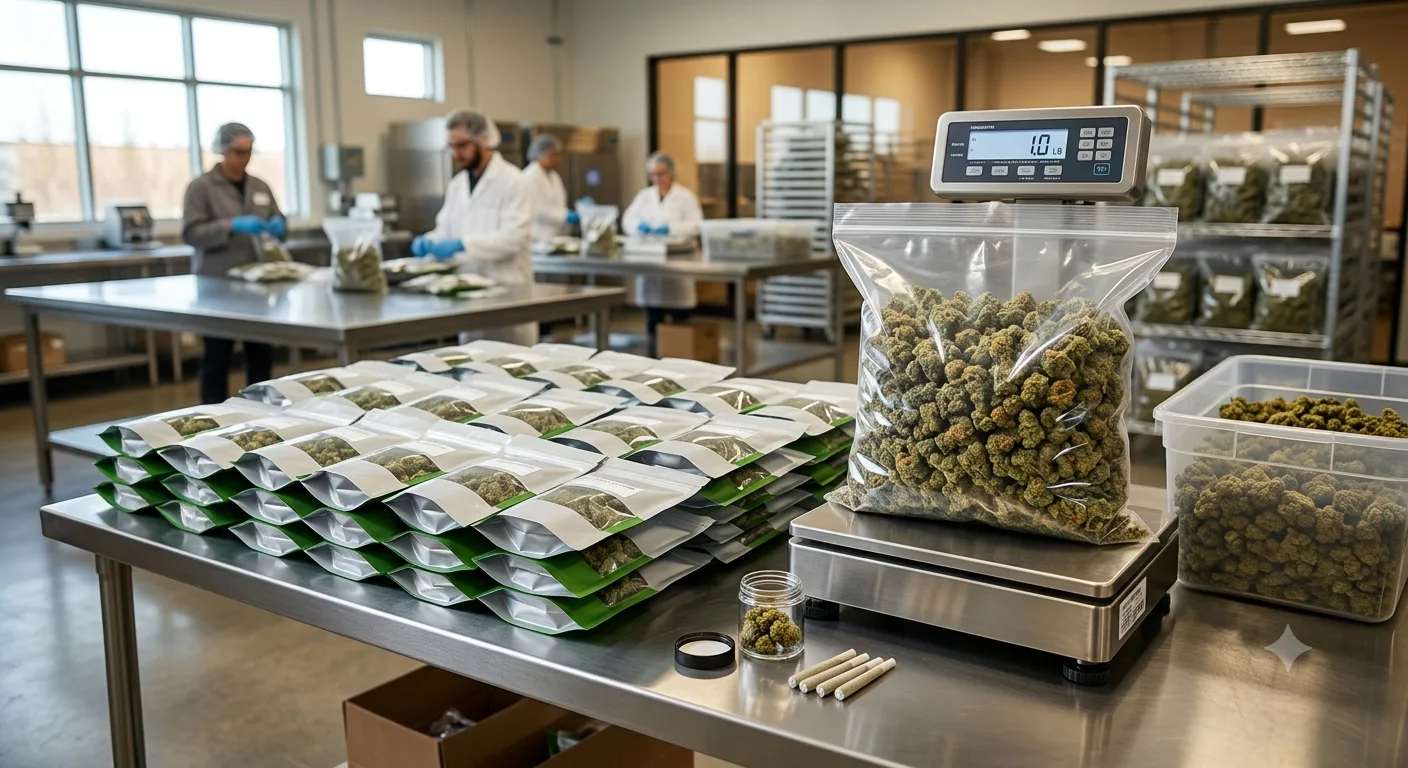
You've probably noticed that buying a full ounce costs less per gram than buying eighths. That same logic extends to larger quantities,quarter pounds, half pounds, and full pounds,but here's the catch: bulk pricing only saves you money if you understand the math, store your flower correctly, and actually consume what you buy before it loses potency. Most Canadian cannabis consumers assume bigger automatically means better value, but the reality is more nuanced. Let's break down how bulk weed pricing actually works, when it makes financial sense, and what you need to know before dropping serious cash on a QP or more.
Whether you're a medical user who needs consistent monthly supply, a social consumer splitting costs with friends, or simply someone tired of reordering every week, this guide will walk you through the real economics of bulk cannabis purchasing. We'll examine the pricing tiers, calculate the actual savings, and explain the hidden costs that most buyers overlook until they're left with dry, degraded flower six months later.
Understanding Cannabis Weight Tiers and Industry Pricing Structure
Before diving into pound-level pricing, you need to understand how cannabis retailers structure their pricing tiers. The industry follows a predictable pattern: smaller quantities carry higher per-gram costs because of packaging, handling, and the simple economics of retail convenience. When you buy an eighth (3.5 grams), you're paying a premium for portability and instant gratification. As quantities increase, that premium shrinks, but not always at the rate you'd expect.
Here's how the standard weight progression works in Canada: grams (1-7g), eighths (3.5g), quarters (7g), half ounces (14g), full ounces (28g), quarter pounds (112g or 4oz), half pounds (224g or 8oz), and full pounds (448g or 16oz). Each tier typically offers a discount over the previous one, but the discount percentage isn't linear. You might save 15-20% jumping from eighths to quarters, but only 5-10% more moving from ounces to quarter pounds.
The Psychology Behind Bulk Pricing
Retailers use bulk pricing to move inventory quickly, reward loyal customers, and compete on value perception. But they also know most consumers can't accurately calculate per-gram costs in their heads at the counter. A quarter pound listed at $400 sounds expensive until you realize that's $3.57 per gram,potentially half what you'd pay buying the same strain in eighth increments. The psychological barrier of a three-digit price tag protects retailers from cannibalizing their higher-margin smaller sales while still capturing the bulk buyer market.
Regional Price Variations Across Canada
Bulk pricing varies significantly depending on where you live in Canada. British Columbia historically offers the most competitive bulk rates because of established legacy market infrastructure and proximity to major cultivation zones. Ontario and Quebec follow close behind, while Atlantic provinces and remote areas often see 20-30% higher costs on quarter pounds and up. If you're in Ottawa or Gatineau, you're in a relatively competitive market where multiple delivery services push bulk prices down through competition.
Provincial regulations also impact pricing. Some provinces allow larger package sizes through legal channels, while others restrict maximum purchase amounts, creating artificial scarcity that keeps bulk prices elevated. Understanding your local market helps you recognize when you're actually getting a deal versus paying inflated "bulk" prices that don't save meaningful money.
Quarter Pound Economics: The Entry Point for Serious Bulk Buying
A quarter pound represents the sweet spot where bulk discounts become substantial enough to justify the larger upfront investment for most consumers. At 112 grams (4 ounces), it's enough to last a moderate daily user 1-3 months while still being manageable to store properly. This is where you start seeing the real math work in your favour,if you approach it correctly.
Let's run realistic numbers. If you normally buy ounces at $140 each, you'd spend $560 for four ounces purchased separately. A quarter pound of the same quality flower typically runs $380-$450, depending on strain and market. At $420, that's a $140 savings,or 25% off your total. However, this assumes you're comparing truly equivalent products. Many bulk offerings feature different strains or quality grades than what's available in smaller amounts, making direct comparison difficult.
When a QP Makes Financial Sense
Quarter pounds are cost-effective if you consume at least 1 gram daily, have proper storage equipment (airtight containers, humidity control), and prefer consistency over variety. They're also ideal for social buyers splitting costs,four people each contributing $105-$112 for an ounce is significantly cheaper than individual ounce purchases. Medical users with documented higher consumption needs find QPs particularly economical, though storage and freshness become critical considerations.
The math breaks down if you're a light consumer who only smokes weekends or shares occasionally. Buying 112 grams when you consume 7-14 grams monthly means your flower sits for 8-16 months. Even with perfect storage, terpenes degrade, THC converts to CBN (making it more sedative), and you'll end up with harsh, less potent flower that defeats the cost savings. For light users, buying smaller amounts more frequently actually provides better value per session because the flower stays fresh.
Quality Variations in Bulk Quarter Pounds
Not all quarter pounds are created equal. Some dispensaries offer premium craft flower in bulk, maintaining the same quality you'd get in smaller amounts. Others designate specific "bulk strains" that are perfectly smokable but lack the bag appeal, terpene profiles, or potency of their top-shelf offerings. Ask explicitly whether the bulk option is the same batch as smaller sizes or a different tier.
Many delivery services in Ottawa feature bulk-specific strains that offer excellent value without compromising quality. The key is reading descriptions carefully and asking about harvest dates, testing results if available, and whether the bulk product matches what's shown in promotional photos. A quarter pound of mediocre flower at $350 delivers worse value than an ounce of premium at $180 if the quality gap is significant enough.
Half Pound and Full Pound Dynamics: When Volume Discounts Plateau
As you move into half pound (8oz/224g) and full pound (16oz/448g) territory, the discount curve starts flattening. While you'll still save compared to buying ounces, the incremental savings from a half to a full pound are often minimal,sometimes just 5-8%. This pricing structure reflects the reality that pounds are primarily wholesale territory, not retail, and most legal Canadian services aren't set up to move that much volume to individual consumers.
Half pounds typically range from $650-$900 depending on quality and market, while full pounds run $1,200-$1,600 for decent quality. Do the math: $800 for a half pound equals $3.57/gram, while $1,400 for a full pound equals $3.13/gram. That's only a 12% additional discount for doubling your purchase. Compare this to the 30-40% savings you might see moving from quarters to ounces, and the value proposition becomes less compelling.
The Wholesale vs Retail Pricing Gap
Here's what most consumers don't understand: legitimate wholesale pounds (the kind licenced producers sell to dispensaries) cost $800-$1,200 depending on quality. When a delivery service offers retail customers a pound for $1,400, their margin is significantly smaller than on ounces or smaller amounts. They're essentially extending near-wholesale pricing to capture a different customer segment,commercial users, compassion clubs, or serious medical patients who genuinely need that volume.
This is why you'll sometimes find suspiciously cheap pounds listed at $600-$800 direct to consumer. These often come from unregulated sources, may be older stock, or represent quality grades that wholesale buyers rejected. That doesn't automatically mean they're bad,plenty of legacy market pounds offer solid quality at those prices,but you need to understand you're not getting the same product that retails by the ounce at premium prices.
Storage Challenges at Pound Scale
The practical reality of storing a full pound properly is often overlooked. You need multiple large airtight containers, humidity control for each (Boveda or Integra packs), cool dark storage, and ideally vacuum sealing for portions you won't access for months. Without this setup, even premium flower degrades noticeably after 60-90 days. Factor in $50-$100 for proper storage supplies when calculating your true cost per gram on bulk purchases.
Smart bulk buyers portion their pounds into monthly or bi-weekly amounts, vacuum seal what they're not using immediately, and rotate stock carefully. This requires planning, space, and discipline. If you're going to leave a half-sealed bag in a drawer for six months, you're litreally watching your savings evaporate as terpenes oxidize and cannabinoids degrade. The $200 you saved buying bulk becomes meaningless when half the flower is too harsh to enjoy by the time you reach it.
Calculating Real Per-Gram Value: Beyond the Sticker Price
Effective bulk pricing analysis requires calculating your true cost per gram after accounting for all variables. Start with the base price, then factor in storage costs, estimated degradation (reduced potency equals requiring more consumption for the same effect), and what economists call "opportunity cost",the value of tying up $1,000+ in cannabis inventory versus buying smaller amounts as needed.
Here's a practical framework: Calculate the per-gram cost of your bulk purchase, then add approximately $0.10-$0.20 per gram for storage supplies, factor in an estimated 10-15% potency loss on flower stored beyond 90 days, and compare that to the per-gram cost of buying ounces or smaller amounts of fresh flower. For many consumers, the calculation reveals that "bulk savings" are actually minimal once real-world factors are considered.
The Freshness Depreciation Curve
Cannabis flower begins degrading the moment it's harvested. Proper curing and storage slow this process, but they don't stop it. THC degrades to CBN at roughly 1-2% monthly under ideal conditions, faster with exposure to light, heat, or air. Terpenes,the compounds responsible for flavour, aroma, and much of the entourage effect,are even more volatile. After six months, even perfectly stored flower has noticeably less aroma and altered effects compared to fresh.
This creates a depreciation curve that bulk buyers must account for. If you buy a pound that takes 12 months to consume, the last quarter pound has significantly less value than the first quarter. One way to quantify this: assign full value to flower consumed in the first 90 days, 90% value to months 4-6, 80% value to months 7-9, and 70% value to anything beyond that. Run your bulk pricing through this model, and you'll often find that buying smaller amounts more frequently delivers better practical value despite higher per-gram sticker prices.
Hidden Costs in Bulk Cannabis Purchasing
Beyond storage and degradation, several hidden costs impact bulk value. Upfront capital requirements mean you can't take advantage of sales, new strain drops, or better deals that emerge during your consumption period. Variety fatigue is real,smoking the same strain for months can lead to tolerance buildup and diminished enjoyment, causing you to consume more to achieve the same satisfaction. And there's the risk of simply not liking the product as much as you thought you would after the first few sessions.
Returns and exchanges are rarely possible with bulk purchases, especially in the grey market or through delivery services. Once you've committed to that quarter pound, you're stuck with it regardless of quality issues, preference changes, or unexpected circumstances that reduce your consumption. This risk carries a cost that's difficult to quantify but absolutely real.
Smart Bulk Buying Strategies for Maximum Value
If you've determined that bulk purchasing makes sense for your consumption patterns and budget, several strategies maximize your return. First, test before committing. Never buy a quarter pound or more of a strain you haven't tried. Purchase a gram or eighth first, evaluate quality, effects, and whether you actually enjoy it enough to smoke for months. This small upfront investment prevents expensive mistakes.
Second, coordinate group purchases to split bulk amounts among multiple people. Four friends each contributing $100-$120 for a quarter pound split into ounces gets everyone bulk pricing without the storage challenges or variety fatigue of solo bulk buying. This works particularly well for social consumers who smoke together regularly anyway.
Third, diversify your bulk purchases when possible. Instead of a full pound of one strain, buy two half pounds or four quarter pounds of different varieties. This costs slightly more but provides variety while still capturing most of the bulk discount. Alternate between indica and sativa, or between different terpene profiles, to prevent tolerance buildup and maintain consumption enjoyment.
Seasonal Timing and Market Dynamics
Like any agricultural market, cannabis has seasonal patterns that affect bulk pricing. Outdoor harvests in October-November flood markets with supply, typically driving prices down 15-25% for 6-8 weeks. If you're going to buy bulk, late fall often offers the best combination of fresh flower and competitive pricing. Conversely, spring and early summer often see tighter supply and higher prices as last year's outdoor crops run low and indoor cultivation cycles haven't caught up.
Pay attention to strain popularity cycles too. When a particular strain trends heavily (celebrity endorsements, viral social media, etc.), bulk prices tend to spike. Wait a month or two for the hype to settle, and you'll often find the same genetics at significantly better bulk rates. Patient buyers who avoid FOMO save substantially over those who chase trends.
Building Relationships with Reliable Suppliers
Consistent bulk buyers who establish relationships with quality suppliers often access better pricing, first access to new inventory, and flexible payment or delivery terms. Whether you're working with a local delivery service or another provider, being a reliable customer who orders regularly, pays promptly, and doesn't create problems creates value for both parties.
Don't be afraid to negotiate on bulk purchases, especially if you're buying quarter pounds or more regularly. Many services have flexibility to discount further for reliable volume customers, throw in free pre-rolls or edibles, or offer loyalty programs that effectively reduce per-gram costs over time. The worst they can say is no, and you're often surprised what's available just for asking.
When Bulk Buying Actually Costs You Money
Despite the appealing per-gram math, several scenarios exist where bulk purchasing actually costs more than buying smaller amounts. Understanding these helps you avoid false economy traps that leave you with degraded product or wasted money. The most common trap is buying bulk when you're a light or inconsistent consumer. If you smoke 1-2 grams weekly, a quarter pound represents 1-2 years of supply. No amount of careful storage maintains quality that long in practical home conditions.
Another trap is buying bulk of untested products or new strains just because the price looks good. Maybe you normally buy premium craft flower at $240/oz, and you see a bulk special offering a QP for $300. That's only $2.68/gram,incredible value, right? Except if the quality is mediocre, you'll be disappointed from the first session, struggle to finish it, and waste most of the purchase. You effectively paid $300 for maybe 30-40 grams of actually enjoyable consumption. Better to spend $240 on an ounce you'll love.
The Tolerance Build-Up Factor
Consuming the same strain continuously for months builds cannabinoid tolerance faster than rotating varieties. Your endocannabinoid system adjusts to the specific THC levels and terpene profile, requiring larger doses to achieve the same effects. This means you end up consuming more total cannabis, potentially erasing your bulk savings through increased consumption rates. Variety isn't just the spice of life,it's a tolerance management strategy that improves both your experience and your economics.
Medical users with specific conditions often need consistent cannabinoid profiles, making single-strain bulk purchases more practical. But recreational users typically benefit more from variety, both for enjoyment and to maintain cannabinoid sensitivity. Before committing to pounds of one strain, honestly assess whether you have the discipline and medical need for that consistency, or whether you'll end up with tolerance issues and boredom that drive up consumption.
Opportunity Cost of Capital Tied Up
When you drop $1,400 on a pound of cannabis, that's $1,400 you can't spend on other things, can't save, and can't use to take advantage of better deals that emerge later. If an amazing sale appears two weeks after your bulk purchase,50% off your favourite strain,you can't access it because your budget is locked into slowly consuming your existing inventory. This opportunity cost is real, even if it's hard to quantify.
From a pure financial perspective, buying smaller amounts more frequently gives you flexibility to optimize purchasing decisions continuously, take advantage of sales and promotions, and adjust spending based on changing circumstances. Bulk buying creates inventory risk,the risk that you've purchased more of something than you actually need or can consume before quality deteriorates. In business, excess inventory is recognized as a liability, not an asset. The same principle applies to personal cannabis purchasing.
Provincial and Legal Considerations for Bulk Cannabis Purchases
Canada's federal Cannabis Act establishes a 30-gram public possession limit (roughly 1 ounce), but this applies to possession in public spaces, not what you can store at home. Provincial regulations vary on purchase limits at legal dispensaries, though most cap single transactions at 30 grams. This means legally purchasing quarter pounds or more requires multiple transactions or using delivery services that may operate in regulatory grey areas.
In Ontario, legal delivery services can bring larger amounts to your home, as the possession limit applies to public spaces. However, you'll want documentation of legal purchase in case of any questions. Keep receipts, understand your provincial limits, and recognize that while home storage of larger amounts is generally legal, transporting a pound in your vehicle could create complications if you're stopped without proper documentation proving legal purchase.
The reality is that most bulk cannabis in Canada still flows through legacy market channels where regulatory compliance varies. This isn't inherently risky, but it means you're operating without the consumer protections, product testing, and regulatory oversight that legal channels provide. Make informed decisions about your comfort level with this reality, and understand that bulk pricing often reflects this regulatory ambiguity.
Practical Example: Breaking Down Real Ottawa Bulk Pricing
Let's examine actual bulk pricing from a typical Ottawa delivery service to illustrate these principles. Say you're looking at an indica strain available at several price points: $35/3.5g eighth ($10/g), $90/7g quarter ($12.86/g), $150/14g half ounce ($10.71/g), $240/28g ounce ($8.57/g), $420/112g QP ($3.75/g), $750/224g HP ($3.35/g), and $1,350/448g pound ($3.01/g).
If you're a daily consumer using 1g daily, an ounce lasts 28 days and costs $240. That's $8.57 per day. A quarter pound lasts 112 days and costs $420, or $3.75 per day,a 56% savings on paper. But add $20 for Boveda packs and proper containers, and factor in 12% potency degradation by day 90-112. Your effective per-day cost rises to approximately $4.15, still a 52% savings. That's meaningful.
But if you're a weekend consumer using 2g weekly, a quarter pound lasts nearly 2 years. Even with perfect storage, you're looking at significantly degraded flower by the end. Your effective cost per enjoyable session actually increases, despite the lower per-gram price, because you're consuming more degraded material to achieve desired effects. In this scenario, buying ounces every few months delivers better practical value.
When the Math Says Yes to Bulk
Bulk purchasing makes clear economic sense when: you consume 1g+ daily consistently, you have proper storage equipment, you've tested the product and confirmed you enjoy it, you understand the storage commitment, and the bulk discount exceeds 30% compared to your normal purchasing pattern. Medical users with higher dosage requirements often hit all these criteria, making quarter pounds or more genuinely cost-effective.
Social buyers splitting costs among multiple people also benefit substantially, as each person gets bulk pricing without the storage challenges. Four friends each contributing $100-$120 for ounces from a QP purchase saves everyone significant money without anyone facing year-long storage requirements. This is perhaps the most practical bulk buying approach for recreational consumers.
Alternative Approaches to Bulk Economics
If you're attracted to bulk pricing but concerned about the commitment or storage challenges, several alternative approaches capture value without the downsides. Loyalty programs and volume discounts spread across multiple purchases offer cumulative savings without requiring single large purchases. Many delivery services provide points, rewards, or tiered discounts that effectively reduce your per-gram cost over time while maintaining purchase flexibility.
Another approach is strategic ounce buying during sales. Watch for seasonal promotions, new strain launches with introductory pricing, or clearance deals on quality flower. Buying 3-4 ounces during a good sale, even if you consume them over several months, often delivers comparable per-gram savings to bulk purchases while maintaining freshness through staggered consumption. You get variety, you get value, and you avoid long-term storage concerns.
Subscription or regular delivery services sometimes offer bulk-equivalent pricing through commitment rather than single large purchases. Agree to monthly ounce deliveries at a locked-in price, and you might access per-gram rates similar to quarter pound pricing without the upfront capital requirement or storage challenges. This approach trades commitment for savings, which works well for consistent consumers.
Quality vs Quantity: The Premium Bulk Decision
One final consideration that bulk buyers must address: whether to buy larger quantities of mid-tier flower or smaller amounts of premium craft cannabis. A quarter pound of solid B+ quality indica at $380 delivers good value and consistent effects. But a single ounce of exceptional AAAA craft flower at $240 might provide more genuine satisfaction and better per-session value, even at a higher per-gram cost.
This comes down to personal priorities. If cannabis is primarily utilitarian for you,you want reliable effects at the best price,bulk purchasing of good quality flower makes perfect sense. But if you're a connoisseur who values terpene complexity, specific effects, and the experience of exceptional flower, buying smaller amounts of premium cannabis often delivers better subjective value despite worse objective per-gram math.
Many experienced consumers find a middle ground: bulk purchase one or two reliable strains for daily use, while buying smaller amounts of premium flower for special occasions or variety. This hybrid approach captures bulk savings where they matter most while maintaining access to exceptional cannabis experiences. You're not locked into mediocrity, but you're not paying premium prices for every single session either.
Frequently Asked Questions