You're breaking up a bud over a rolling tray and something small and hard rolls out. Then another one. It's round, brown or striped, about the size of a peppercorn, and it definitely isn't supposed to be there.
For anyone who remembers the cannabis of thirty years ago, seeds were just part of the product. Modern flower is grown specifically to avoid them, so finding one now raises a fair question: is this batch compromised, or is it nothing?
The answer depends almost entirely on how many you find. A single seed in an eighth and a seed in every bud are different situations with different causes, and they say very different things about the flower you're holding. Here's how to read it.
Why Seedless Is the Standard
Cannabis plants are usually either male or female. Only female plants produce the resin-heavy flowers people consume. Male plants produce pollen.
When a female plant is pollinated, it redirects a large share of its energy into producing seeds. Resin production drops, the buds develop around seeds rather than dense calyx tissue, and the result is flower that's less potent, less aromatic and full of hard material.
Unpollinated females, by contrast, keep pushing resin in what is essentially an attempt to catch pollen that never arrives. That's the flower everyone wants, and it's why growers go to considerable lengths to keep male plants and stray pollen out of flowering rooms entirely.
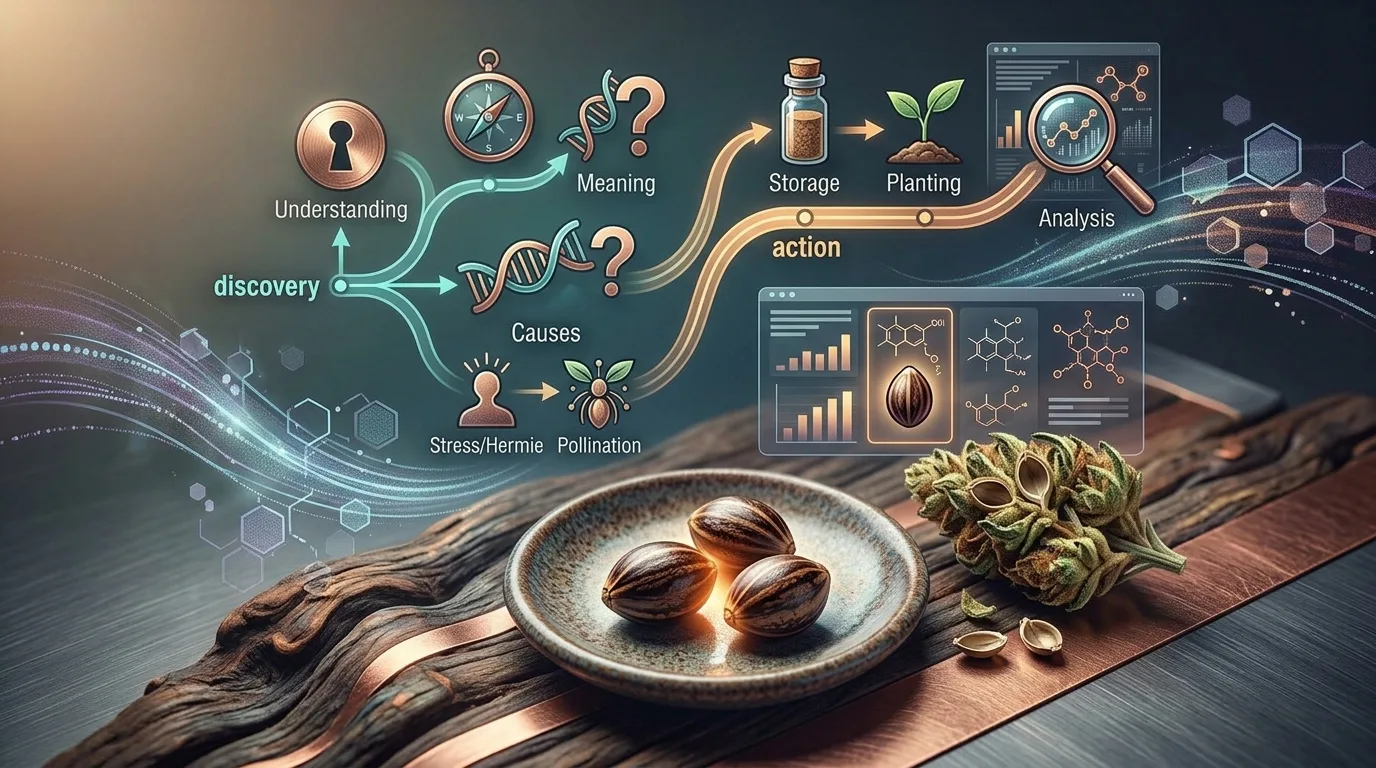
So a seed in your flower means one thing with certainty: pollen reached that plant at some point during flowering. The question is where it came from.
How Seeds Get There
Stray Pollen
The simplest explanation. Pollen is extremely light and travels long distances on air currents. In outdoor and greenhouse grows, pollen from wild or neighbouring plants can drift in. Indoor grows can pick it up on clothing, equipment or through ventilation.
Stray pollination usually affects a limited part of a plant, often the side facing an air intake or an open door, which produces scattered seeds rather than a fully seeded crop.
Hermaphroditism
The more common cause in indoor flower, and the one worth understanding.
Female cannabis plants under stress can develop male reproductive structures and pollinate themselves. Growers call this "hermying." It's a survival response: a plant that senses its life is threatened tries to guarantee some offspring by producing its own pollen.
Common triggers include:
-
Light leaks during the dark period, which disrupt the flowering cycle
-
Heat stress from poorly controlled rooms
-
Irregular light schedules
-
Physical damage or pest pressure
-
Genetic predisposition, since some lines hermy far more readily than others
-
Going too long past optimal harvest
A plant that has hermied often shows small banana-shaped structures, called nanners, emerging from the buds. These are exposed pollen sacs, and you'll occasionally spot dried remnants of them in finished flower as small yellowish curled shapes.
Genetic Instability
Some cultivars, particularly new or poorly stabilised crosses, carry a tendency toward hermaphroditism. That links back to how strain names work, which our guide on why the same strain is different everywhere covers. A grower running seeds rather than a proven cut takes on more of this risk.
One Seed Versus Many
|
What you find |
Likely cause |
What it means for quality |
|
One or two seeds per eighth |
Stray pollen, late hermy on one branch |
Negligible; remove and carry on |
|
A seed in several buds |
Localised pollination of part of the plant |
Moderate; some resin diverted |
|
Seeds in most buds |
Full pollination or early hermy |
Significant; noticeably weaker, harsher |
|
Visible nanners in the bud |
Hermaphroditism |
Grow stress; check cure quality too |
|
Many crushed or cracked seeds |
Seeded flower that was handled roughly |
Poor handling on top of poor grow |
The rule of thumb: a stray seed is a minor event and says little about the flower. Consistent seeds throughout a batch indicate a grow problem, and that problem usually shows up elsewhere as well.
What Seeds Say About the Rest of the Batch
A seeded batch is worth looking at more closely, because the conditions that cause heavy seeding often cause other issues.
Lower resin content. Energy that went into seeds didn't go into trichomes. Expect less aroma and less potency than an unseeded batch of the same cultivar.
Airier structure. Buds develop around seeds, which can leave them less dense.
Stress indicators. If the plant hermied due to heat, light leaks or poor environmental control, the same grow may have cut corners on drying and curing. Run the checks in our guide on how to tell if flower was cured properly.
Weight. Seeds count toward the weight of what you bought, and they're material you can't use. A heavily seeded eighth delivers noticeably less usable flower than the scale says.
Our cannabis grading guide explains why visible seeds typically exclude flower from the upper grade tiers entirely.
Don't Smoke the Seeds
Worth stating directly. Seeds do not contain meaningful cannabinoid content, and burning them is unpleasant. They pop and crackle as moisture inside them heats rapidly, and they produce a harsh, acrid smoke that tastes nothing like the flower around them.
Pick them out before grinding. A grinder will crack seeds rather than pass them, spreading fragments through the grind. A rolling tray and thirty seconds of attention solves it.
Hard fragments in a joint also create voids and airflow problems, which contribute to uneven burning. Our guide on why joint canoe covers the mechanics.
Can You Plant Them?
In Ontario, adults can legally grow up to four cannabis plants per residence from legally obtained seeds. Quebec prohibits home cultivation. Rules vary by province, so check yours.
Whether you should plant seeds found in flower is a different question, and the honest answer is that the odds aren't great.
Hermaphrodite parentage. If the seed came from a plant that pollinated itself, the offspring carry that tendency. You may find your own plants doing the same thing under minimal stress.
Unknown genetics. Stray pollen could have come from anywhere. The father is unknown, and the resulting plant could express almost anything.
Uncertain viability. Seeds that were immature, cracked in handling, or dried along with the flower may not germinate at all. Mature seeds tend to be dark with striping or mottling and feel hard; pale green or white seeds usually weren't fully developed.
No feminisation. Seeds from pollinated flower can grow into male plants, which produce no usable flower.
Planting a found seed is a reasonable experiment if you want one, as long as expectations stay low. Purchased seeds from a known breeder are a far more reliable route to a plant worth growing.
What to Do if You Get a Seeded Batch
A stray seed or two: remove them and carry on. This isn't a quality problem worth raising.
Consistent seeds through most of the order: raise it with whoever sold it to you. A seller who reviews batches before listing them should catch heavily seeded flower, and a reasonable one will want to know.
Seeds plus other red flags: grassy smell, stems that bend rather than snap, harsh smoke. That combination points to a poor grow and a poor cure together.
We inspect batches before they're listed, and heavily seeded flower doesn't make it onto our flower menu. Same-day weed delivery Ottawa orders are easy to raise with us directly if something arrives that doesn't look right.
Frequently Asked Questions
Why is there a seed in my weed?
Pollen reached the plant during flowering. That's either stray pollen drifting in from another plant, or the plant becoming a hermaphrodite under stress and pollinating itself. A single seed usually indicates limited, localised pollination and says little about the overall quality of the flower.
Is weed with seeds bad quality?
It depends on quantity. One or two seeds in an eighth is negligible. Seeds throughout a batch mean the plant diverted significant energy away from resin production, so expect lower potency and aroma, airier buds, and possibly other signs of a stressed or poorly managed grow.
What does it mean when cannabis hermies?
A hermaphrodite plant is a female that develops male pollen sacs under stress and pollinates itself. Common triggers include light leaks during the dark period, heat stress, irregular light schedules and genetic predisposition. The pollen sacs look like small bananas and are called nanners.
Can you smoke weed seeds?
You shouldn't. Seeds contain no meaningful cannabinoid content, and they pop and crackle when heated, producing a harsh, acrid smoke that ruins the taste of everything around them. Remove seeds before grinding, since a grinder will crack them and spread fragments through the material.
Can I grow the seeds I found in my weed?
Ontario permits up to four plants per residence from legally obtained seeds; Quebec prohibits home growing entirely. Found seeds carry real drawbacks: unknown genetics, possible hermaphrodite tendencies, uncertain viability and no guarantee of a female plant. Seeds from a known breeder are far more reliable.
How do I tell if a seed is mature?
Mature seeds are generally dark brown or grey, often with tiger striping or mottled markings, and feel hard when pressed. Pale green or white seeds were usually harvested before they finished developing and are unlikely to germinate. Cracked or crushed seeds won't germinate either.
The Short Version
One seed is a stray event. Seeds throughout a batch are a grow problem, and grow problems rarely travel alone.
Pick seeds out before grinding, never smoke them, and if an entire order arrives seeded, raise it rather than living with it. If you're tempted to plant one, go ahead as an experiment, but know you're rolling dice on genetics nobody can describe to you.