 %
%
 %
%
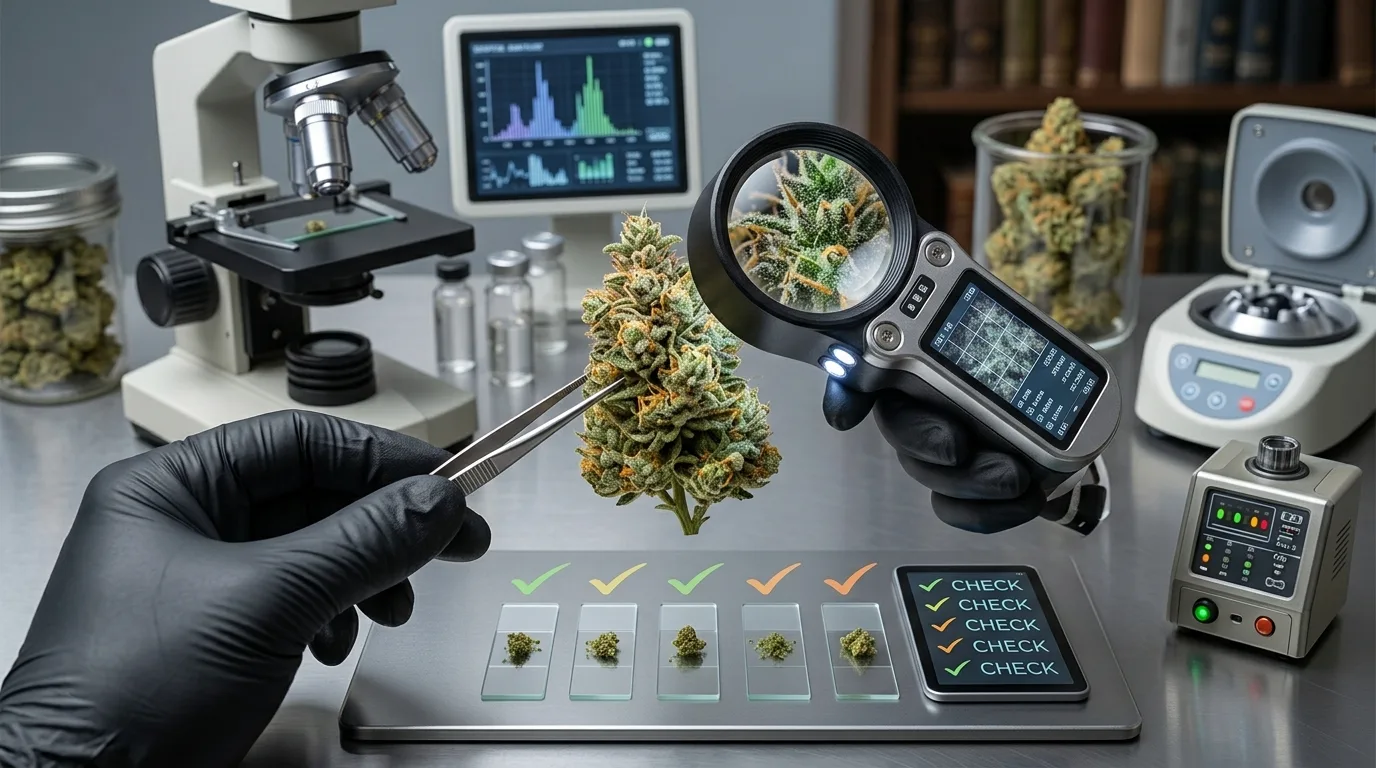
There's a specific kind of suspicion that comes up occasionally. The flower looks almost too frosty. It feels slightly gritty between your fingers. It left a residue on the tray that doesn't look like kief, or it burned in a way that didn't seem right.
Adulteration is uncommon in the Canadian market, and it's rarer still from established sellers with reputations to protect and repeat customers to keep. This isn't a widespread problem and the article isn't meant to suggest otherwise.
But it does happen, it's happened at scale in other markets, and the checks that catch it take under two minutes and require nothing you don't already own. Knowing them is worth the small effort, in the same way that knowing how to read a cure is worth it: not because you expect a problem, but because the alternative is having no way to tell.
Why Anyone Adulterates Flower
Three motives, and they produce different signatures.
Weight. Adding dense material increases what the scale reads. Historically this has meant sand, fine glass particles, or other granular matter applied to sticky flower. The UK saw significant problems with what was called "grit weed" in the late 2000s.
Appearance. Flower coated in something crystalline looks frostier and reads as higher quality to a buyer judging by photos. Sugar water sprays and various powders have been used for this.
Apparent potency. The most serious category. Low-grade flower sprayed with synthetic cannabinoids to produce a strong effect it wouldn't otherwise have. Synthetic cannabinoids are chemically unrelated to THC, act far more aggressively at the same receptors, and have been associated with severe adverse reactions.
The third is the one worth genuinely caring about. The first two cost you money and taste bad. The third is a health matter.
The Five Checks
1. The Rub Test
The simplest and most informative. Rub a small bud between your thumb and forefinger for a few seconds.
Normal flower feels tacky. Resin transfers to your fingers and feels slightly sticky. Trichomes crush and smear rather than scratching.
Adulterated flower feels gritty or sandy. Granular particles stay granular under pressure instead of crushing. If your fingertips feel like they've been in fine sand rather than resin, that's a signal.
Afterwards, rub your fingertips together. Resin gets stickier. Grit keeps feeling like grit.
2. The Hard Surface Test
Rub a bud firmly against a hard, smooth surface: a mirror, a glass tabletop, the back of a phone screen.
Resin leaves a sticky, oily smear. Hard particulate leaves fine scratches. Scratches on glass from cannabis mean something harder than resin is present.
Do this on something you don't mind marking.
3. Magnification
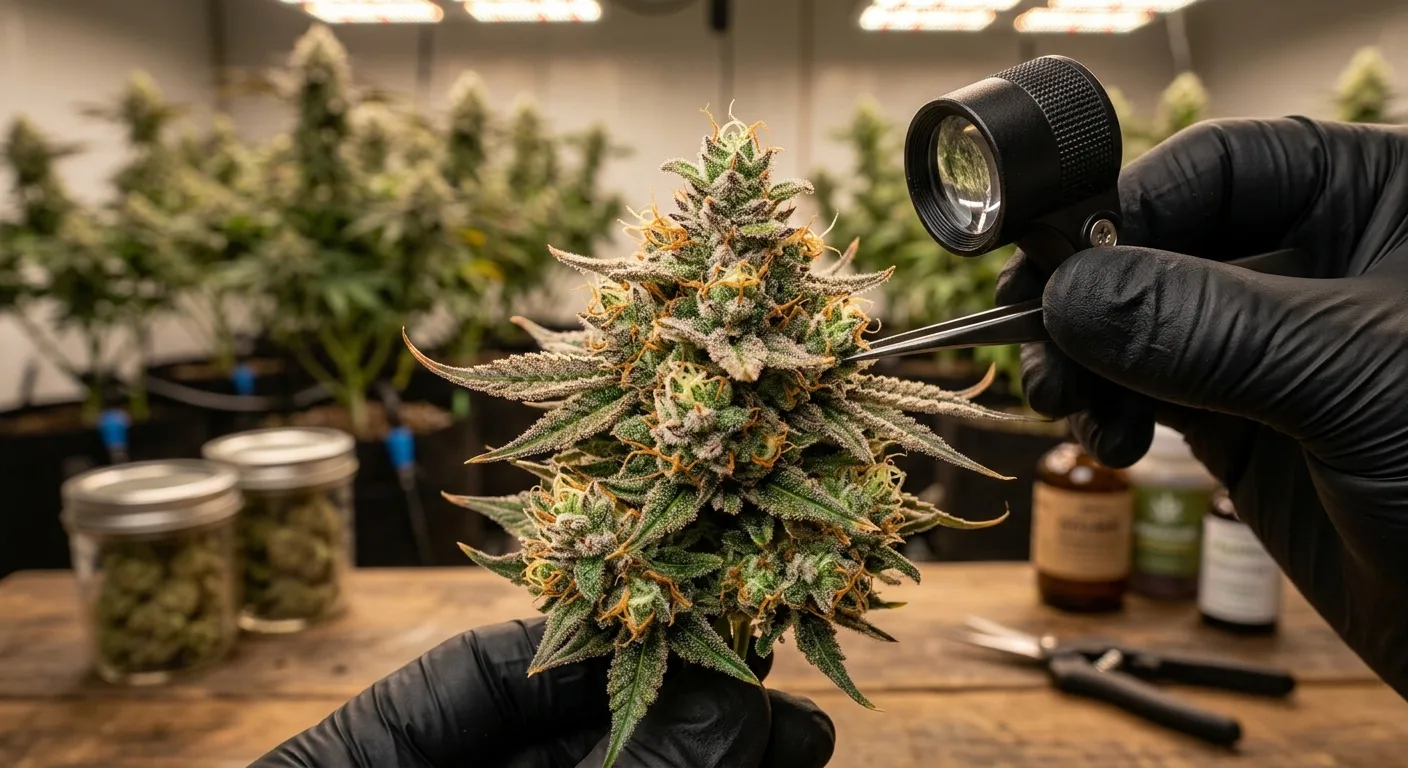
The most definitive check, and your phone camera at maximum zoom usually does it.
Real trichomes are mushroom-shaped: a thin stalk with a bulbous, translucent head on top. They're irregularly distributed, they catch light softly, and they look organic.
Added crystals look wrong immediately. Sugar and salt crystals are angular and geometric. Sand is rounded and opaque. Glass fragments are sharp-edged and reflect light harshly rather than glowing. Anything with straight edges and flat faces did not grow there.
Coating also tends to be unnaturally even. Trichome coverage varies across a bud; a sprayed coating doesn't.
4. The Burn
Light a small amount in a bowl or on a flat surface and watch.
Normal flower burns to a grey or pale ash that holds some structure.
Mineral adulterants don't burn. Sand and glass glow briefly, crackle or pop, and leave behind a hard residue that doesn't look like ash. Running a finger through cold ash and finding grit is a clear indicator.
Sugar coatings caramelise. They produce a distinctly sweet, burnt-caramel smell and leave sticky residue in the bowl rather than ash.
5. Smell
Trust your nose before anything else.
Adulterated flower often smells wrong in a way that's hard to articulate: chemical, solvent-like, perfumed, artificially sweet, or oddly flat for how it looks. A flower that looks extremely frosty but smells weak is a specific red flag, because real trichome density and real aroma go together.
Our guide on how to tell if flower was cured properly covers what a healthy aroma should be like.
Signature Table
| Adulterant | Why added | How to spot it |
|---|---|---|
| Sand, fine grit | Weight | Gritty rub, scratches glass, grit in cold ash |
| Glass particles | Weight and sparkle | Sharp reflections under zoom, scratches, crackles when burned |
| Sugar or syrup spray | Appearance, weight | Sticky not tacky, caramel smell when burned, sticky bowl residue |
| Powders, talc | Appearance | Even white coating, dusty rather than resinous, no aroma increase |
| Hairspray or fixatives | Appearance, stiffness | Chemical smell, unnaturally rigid buds, harsh chemical taste |
| Synthetic cannabinoids | Apparent potency | Effect out of proportion to appearance, chemical smell, unusual symptoms |
The Serious One: Sprayed Flower
Worth treating separately, because the stakes are different.
Synthetic cannabinoids are not THC. They're a broad family of lab-made compounds that bind far more strongly at the same receptors, with no ceiling on effect in the way cannabis has, and they've been associated with severe reactions including rapid heart rate, extreme anxiety and agitation, vomiting, seizures and loss of consciousness.
Warning signs before consuming: an unusual chemical or solvent smell, flower that looks poor but is claimed to be extremely strong, an unnaturally uniform coating, or a harsh chemical taste on the first pull.
Warning signs during: an onset that's much faster and sharper than cannabis, effects wildly out of proportion to the amount consumed, physical symptoms that don't fit a cannabis experience, or a qualitatively different feeling that doesn't resemble any cannabis you've had.
If you suspect it: stop immediately. Don't consume more trying to assess it. If symptoms are severe, including chest pain, difficulty breathing, seizures, persistent vomiting or loss of consciousness, seek medical help and tell them what was consumed. Being straightforward about it helps them treat it.
It's worth saying that this is overwhelmingly a problem of anonymous, unaccountable supply. Sellers with ongoing customer relationships have essentially no incentive to do this, and every incentive not to.
How to Reduce the Risk
Buy from somewhere accountable. A seller with a public presence, a consistent inventory, reviews and a reason to care about repeat business is a different proposition from an anonymous one-time source.
Expect consistency. If flower from a regular source suddenly looks, smells or feels different, that's worth asking about rather than ignoring.
Be sceptical of impossible claims. Flower doesn't exceed roughly 35% THC. Listings claiming far more are either errors or fiction, as our article on what THC percentage actually measures covers.
Be sceptical of impossible prices. Premium-looking flower at a fraction of the market rate is a reason to look closer, not a bargain.
Learn what good looks like. The more familiar you are with genuine trichome structure, aroma and texture, the faster anything unusual registers. Our cannabis grading guide covers the quality tiers and what separates them.
We inspect every batch before listing rather than relying on supplier descriptions, and our flower listings note what we can verify. Same-day weed delivery Ottawa orders come from inventory our team has physically handled, and anything that arrives looking wrong is worth raising with us directly.
What to Do if You Suspect a Problem
Stop using it. Don't finish the bag to see.
Document it. Photos under good light, including a zoomed shot of the bud surface. Keep the packaging.
Contact the seller. A legitimate one will want to know, because a bad batch affects their whole inventory. How they respond tells you a great deal.
Don't pass it on. Giving questionable flower to someone else moves the risk rather than removing it.
Frequently Asked Questions
Start with smell and touch. Chemical, solvent or perfumed smells are a warning, as is flower that looks very frosty but smells weak. Rub a bud between your fingers: resin feels tacky, adulterants feel gritty. Under phone-camera zoom, real trichomes are mushroom-shaped and translucent, while added crystals look angular or geometric.
Flower that's had fine granular material such as sand or glass particles applied to it to increase weight and create a frosty appearance. It became a significant problem in the UK market in the late 2000s. It feels gritty rather than tacky, scratches glass, crackles when burned, and leaves hard residue in cold ash.
Adulteration with weighting agents and appearance enhancers is documented and has occurred at scale in some markets. Flower sprayed with synthetic cannabinoids is also documented and is the genuinely dangerous version. Both are uncommon in Canada and rarer from accountable sellers, but neither is a myth.
Typically a faster, sharper onset than cannabis and effects out of proportion to the amount consumed, often with physical symptoms that don't fit a cannabis experience such as rapid heart rate, severe agitation or vomiting. If that happens, stop immediately and seek medical help if symptoms are severe, telling them what was consumed.
Not definitively, but the practical checks catch most of it: the rub test, rubbing a bud against glass to see whether it smears or scratches, examining the surface under phone-camera zoom, burning a small amount and checking the cold ash for grit, and smelling for anything chemical. Laboratory testing is the only conclusive answer.
It's uncommon, particularly from sellers with an ongoing customer base and a reputation at stake, who have strong incentives against it. The risk concentrates in anonymous, one-time and unaccountable supply. Running the basic checks is still worth the two minutes it takes.
The Short Version
Rub it, scratch glass with it, zoom in on it, burn a bit and check the cold ash, and smell it. Five checks, two minutes, no equipment.
Resin is tacky and smears. Grit stays gritty and scratches. Real trichomes are mushroom-shaped and irregular; added crystals have straight edges. And very frosty flower that smells of almost nothing is the combination worth looking at hardest, because in real cannabis those two things travel together.
Most of all, buy from somewhere accountable. That removes more risk than any test.
Shop Quality Flower in Ottawa
Browse our current flower selection from inventory our team has physically handled and inspected.
Shop Flower