
 %
%
 %
%
Almost every piece of cannabis storage advice ends the same way: put a humidity pack in the jar.
Including, repeatedly, our own.
What almost nobody explains is which pack, what percentage, what size, how long it lasts, or what happens if you get it wrong.
That gap matters in Ottawa, where heated indoor air can become extremely dry during winter. Properly cured flower needs controlled moisture to maintain its texture, aroma, and smoking characteristics.
A two-way humidity pack can help maintain that environment when used correctly. Here's how they work and how to use them properly.
What a Two-Way Humidity Pack Actually Does
The "two-way" part is the whole point.
Inside the pack is a humidity-control medium designed to maintain a specific equilibrium relative humidity. When the surrounding air is below that target, moisture can move out through the membrane. When the environment is above the target, moisture can move back into the pack.
The goal is to bring the sealed environment toward the pack's target humidity rather than continuously adding moisture.
That's what makes a two-way pack different from simply putting something damp inside your jar.
Why the Old Methods Are Bad
Citrus peel, lettuce, bread, damp paper towel: These are uncontrolled sources of moisture. They can push flower beyond your intended humidity level and introduce organic material into a sealed environment, increasing contamination and mould concerns.
Nothing at all: In a naturally humid environment, properly stored flower may remain in good condition without additional humidity control. In a very dry heated apartment, however, flower can lose moisture much faster.
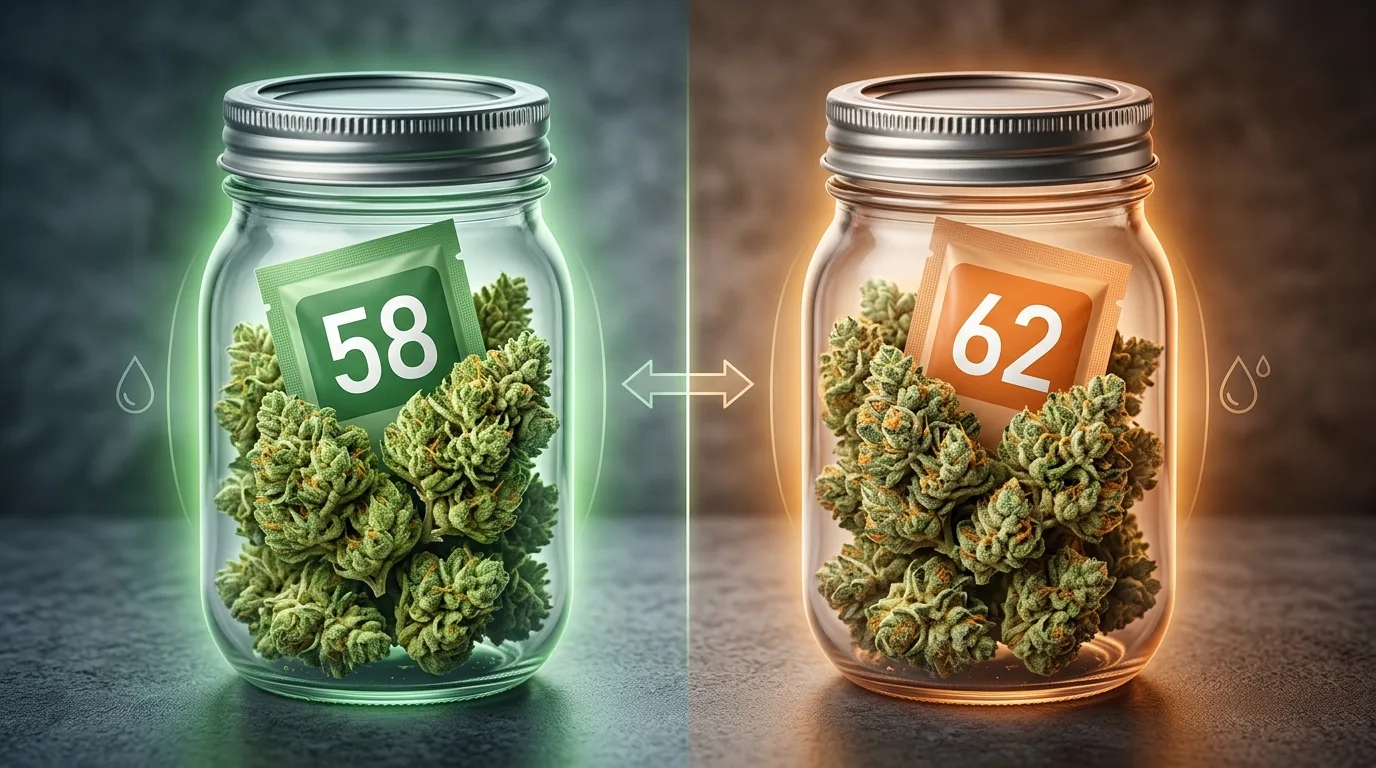
58% or 62%?
These are two common humidity targets for cannabis flower, and the choice is less dramatic than the debate around it suggests.
62% Humidity Packs
62% is a popular default for cannabis flower.
It keeps flower relatively pliable and can help maintain moisture and aroma during storage.
If you're unsure which to choose, 62% is a reasonable starting point for many flower-storage setups.
58% Humidity Packs
58% suits people who prefer slightly drier flower.
It can also make sense in environments that already have higher ambient humidity or for people who prefer how flower behaves at a lower moisture level.
The best choice ultimately depends on your storage environment and personal preference.
| Feature | 58% | 62% |
|---|---|---|
| Texture | Slightly firmer, drier | More pliable |
| Burn | Generally faster | Generally slower |
| Aroma preservation | Good | Good |
| Humidity margin | More conservative | Higher moisture level |
| Best for | Drier preference, humid environments | Most typical dry-storage setups |
A third option exists at 69% and above, but these products are commonly associated with cigar storage rather than cannabis flower. Using a higher humidity target increases the moisture level of the storage environment, so cannabis should not automatically be treated like cigar tobacco.
For Hash and Concentrates
Generally, don't use flower humidity packs with hash, rosin, or most concentrates.
Concentrates have different storage requirements, and added humidity isn't generally necessary. Keep them appropriately sealed, cool, and away from excessive light according to the product's storage recommendations.
Our guides on hash colour and full melt grades cover different types of concentrates and hash in more detail.
Size Matters More Than People Think
An undersized humidity pack in a large container is one of the most common mistakes.
Humidity packs are sold in different sizes, and the appropriate size depends on the quantity of flower being stored.
| Pack Size | Typical Capacity | Example Use |
|---|---|---|
| 4g | Up to about 7g of flower | Small jar |
| 8g | Up to about 28g | Standard larger jar |
| 67g | Several ounces | Large storage container |
| 320g+ | Bulk quantities | Large sealed storage systems |
Always follow the specific manufacturer's capacity recommendations because pack sizes and performance can vary between products.
If you're storing larger quantities such as Cali Bricks or larger amounts of shake, size the humidity-control solution accordingly.
Shake can dry faster than larger intact buds because more surface area is exposed to the surrounding air.
The Container Is Half the System
A humidity pack can't compensate for a container that constantly exchanges air with the room.
Use an Airtight Container
Airtight glass is a strong option.
Glass jars with properly sealing lids or gaskets help maintain a stable internal environment and prevent unnecessary moisture exchange.
Avoid Poorly Sealed Bags
Plastic bags are generally less effective for long-term flower storage because they don't provide the same reliable airtight seal as a proper storage jar.
They can also create more opportunities for trichomes to be lost through handling and movement.
Don't Leave Excessive Headspace
A reasonably full container gives the humidity pack less air to condition.
If you're storing a large quantity, consider using a properly sized container rather than placing a small amount of flower in a very large jar.
Open the Jar Less
Every time you open the container, conditioned air escapes and outside air enters.
If you're working through a larger quantity over time, keeping a smaller daily-use jar and a sealed reserve can reduce how often the entire supply is exposed to room air.
When to Replace a Humidity Pack
Humidity packs have a finite capacity.
They gradually become less effective as they exchange moisture with their surrounding environment.
The Feel Test
A working pack generally remains soft and pliable.
A spent pack may become noticeably harder or stiffer.
Typical Lifespan
The lifespan varies based on the pack, container size, seal quality, environmental conditions, and how frequently the container is opened.
A commonly stated range is several months, but a dry environment or poorly sealed container can shorten that considerably.
Don't rely only on a calendar. Check the condition of the pack and follow the manufacturer's replacement guidance.
Don't Rehydrate Spent Packs
Avoid soaking a spent humidity pack in water unless the manufacturer specifically says it can be safely reconditioned.
The humidity target depends on the formulation inside the pack. Adding plain water can change its behaviour and create an unpredictable storage environment.
Replacing the pack is the safer approach.
Can the Pack Touch the Flower?
Many humidity packs are designed to be placed inside the same storage container as the flower.
However, using a small holder or keeping the pack against the side or lid can help avoid unnecessary direct contact with individual buds.
What Correct Humidity Actually Gets You
Maintaining an appropriate storage environment can help preserve several characteristics of cannabis flower.
Smoother Smoke
Overly dry flower can burn more quickly and harshly.
Our guide on why cannabis makes you cough covers some of the factors that can contribute to coughing while consuming cannabis.
More Even Burning
Uneven moisture can contribute to inconsistent burning.
Our guide on why joints canoe covers uneven burns in more detail.
Better Aroma Preservation
Dry conditions can accelerate the loss of volatile aromatic compounds.
Keeping flower in a controlled environment can help preserve its aroma for longer.
Fewer Broken Trichomes
Extremely dry flower becomes brittle, making trichomes more vulnerable to being knocked off during handling.
More Consistent Weight
Flower can lose weight as moisture leaves it. Maintaining a stable storage environment helps reduce unnecessary moisture loss.
Protection Against Excess Moisture
Two-way humidity-control products are designed to exchange moisture in either direction. That means they can also help moderate a slightly overly dry or moist environment when used correctly.
They are not a substitute for rejecting visibly mouldy or contaminated flower, however.
Common Humidity Pack Mistakes
-
Using a non-airtight container: The pack can't maintain a stable environment if air constantly escapes.
-
Using a pack that's too small: An undersized pack may become exhausted faster.
-
Using an unnecessarily high humidity target: Higher humidity isn't automatically better for cannabis flower.
-
Rehydrating spent packs with water: This can make the target humidity unpredictable.
-
Adding citrus peel or damp materials: Uncontrolled moisture can create storage problems and contamination risks.
-
Using an oversized container: Excessive headspace gives the pack more air to condition.
-
Using flower humidity packs with concentrates: Hash and concentrates generally have different storage requirements.
For an Ottawa Winter Specifically
Ottawa's heated indoor air can become particularly dry during winter.
If you're storing cannabis flower during the colder months:
-
Consider a 62% humidity pack for a typical dry-storage setup.
-
Use an appropriately sized pack.
-
Keep flower in a properly sealed glass container.
-
Keep the container away from direct heat sources.
-
Avoid repeatedly opening the main storage jar.
-
Check the pack periodically and replace it according to its condition and manufacturer's guidance.
Our cold-weather cannabis guide covers the broader effects of winter conditions on flower, vape carts, and edibles.
You can find storage products and other cannabis accessories, and browse weed delivery in Ottawa for current flower options.
Frequently Asked Questions
What humidity should cannabis be stored at?
Many cannabis-storage setups aim for roughly 55–62% relative humidity. Lower humidity can make flower increasingly brittle and dry, while excessive moisture can increase mould risk. A two-way humidity pack can help maintain a selected target inside a properly sealed container.
Should I use a 58% or 62% humidity pack?
62% is a common choice for people who want flower to remain relatively pliable. Choose 58% if you prefer a slightly drier texture or have a storage environment that already has relatively high humidity. Follow the specific pack manufacturer's recommendations.
How long does a humidity pack last?
It depends on the pack size, amount of flower, container seal, environmental conditions, and how often the container is opened. Several months is common, but dry environments and leaky containers can shorten the lifespan. Replace the pack when it becomes noticeably hard or when the manufacturer recommends replacement.
Can I rehydrate a humidity pack with water?
Generally, you should not unless the manufacturer specifically provides instructions for doing so. The formulation inside the pack determines its target humidity, and adding plain water can make its performance unpredictable.
Can a humidity pack touch my weed directly?
Many packs are designed to be stored in the same container as cannabis flower. However, keeping the pack against the side or lid can help avoid unnecessary direct contact with individual buds.
Do I need a humidity pack for hash or concentrates?
Generally, no. Hash, rosin, and most concentrates don't require the same humidity control as flower. They should instead be stored according to their specific storage requirements, typically in an appropriate airtight container and away from excessive heat and light.
The Short Version
A two-way humidity pack helps maintain a target humidity inside a properly sealed storage container by exchanging moisture with the surrounding air.
For most cannabis flower storage setups, 58% and 62% are the main options to consider. Choose based on your preferred texture, storage environment, and the manufacturer's recommendations.
Use the right pack size for the amount of flower, keep it in an airtight container, minimize unnecessary opening, and replace the pack when it becomes spent.
For dry Canadian winters, proper humidity control can make a noticeable difference in how well your flower maintains its texture and aroma over time.