 %
%
 %
%
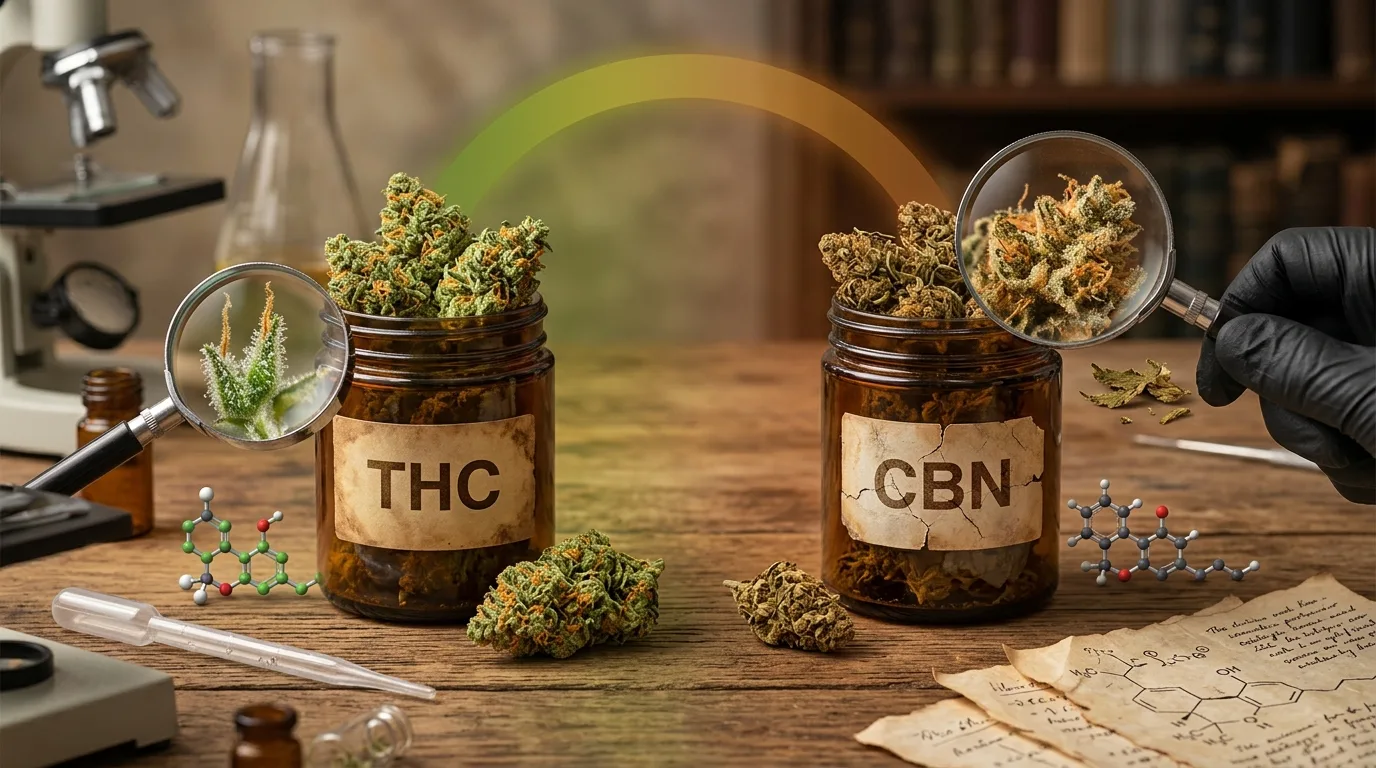
A jar turns up at the back of a cupboard. You're not sure how long it's been there, it still smells faintly of something, and it looks fine.
You smoke it, and the experience is noticeably off. Heavier. Flatter. Less of the bright, clear quality you remember and more of a dull, sleepy weight.
Ask almost anyone why and you'll get the same answer: THC degrades into CBN, and CBN is sedating.
It's one of the most widely repeated explanations in cannabis, and a large product category has been built on top of it.
The first half of that explanation is chemistry and it's correct. The second half is marketing, and the published research does not support it.
Which leaves an interesting question: if CBN isn't producing the sleepy, heavy feeling of aged cannabis, what is?
What Actually Degrades, and How Fast
Three separate things happen to flower over time, on three different timescales.
Volatile Sulfur Compounds Go First
The loud, skunky, gassy character disappears fastest.
Research has found that the sulfur compounds responsible for it peak during curing and then drop substantially within roughly ten days of storage.
Terpenes Go Next
Terpenes are volatile organic compounds, which means they evaporate.
Over weeks and months, a jar steadily loses the citrus, pine, pepper and floral notes that gave it character.
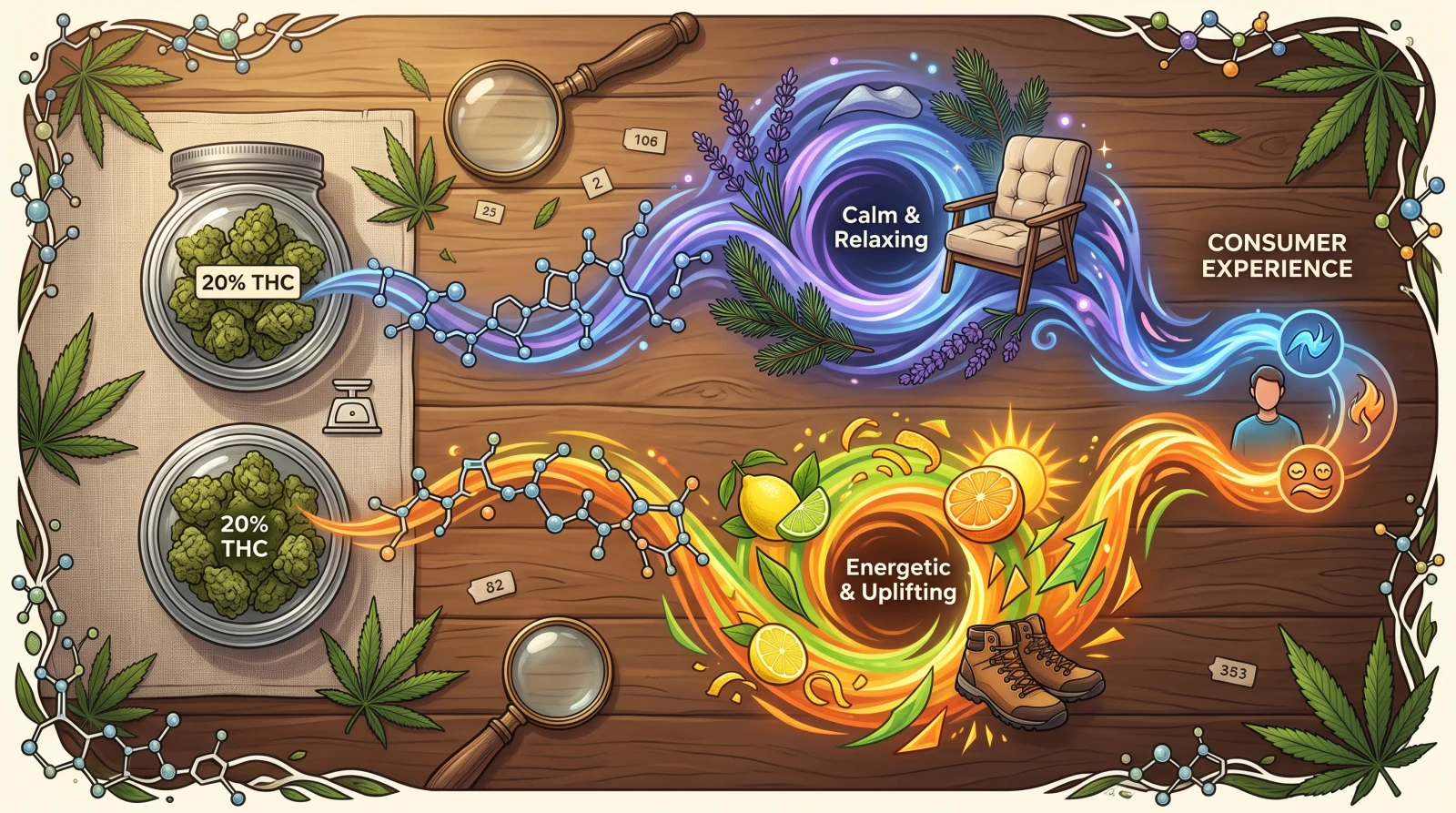
This change is one of the most noticeable reasons aged cannabis feels different, and it's badly underrated. Terpenes contribute to the character of an effect, not just the smell.
Strip the terpenes and what's left is the cannabinoid content without much of the texture around it: flatter, less distinctive and less bright.
THC Degrades Last, and Slowly
THC oxidises into CBN, or cannabinol.
This is real, well-documented chemistry, and it's driven primarily by exposure to oxygen, light and heat.
The important part is the rate.
THC degradation is slow, typically a few percent of the original content per year under reasonable storage conditions, and faster under poor ones.
Flower that's a year old has lost some potency. Flower that's three years old has lost considerably more.
What it has not done is turn into a substantial quantity of CBN. The conversion is gradual, and CBN levels in aged flower remain very low compared with the THC that was there to begin with.
The CBN Sedation Claim
Here's where the common explanation falls apart.
A narrative review published in Cannabis and Cannabinoid Research examined the published evidence for CBN having sleep-promoting effects.
The conclusion was that there isn't sufficient published evidence to support those claims.
The review found that research into CBN is dated and limited, with most human studies conducted in the 1970s and 1980s on small samples lacking demographic diversity.
Studies specifically assessing sedation or fatigue are rare. The evidence that CBN produces cannabis-like effects in humans at all is also mixed, with much of the available evidence showing a lack of such an effect.
The review's author advised that people seeking cannabis-derived sleep aids should be sceptical of manufacturers' claims.
What Newer Research Shows
More recent preclinical work has found CBN affecting sleep architecture in rats measured by polysomnography, with increased total sleep time and a biphasic pattern.
That's genuinely interesting and worth watching.
It's also a rat study.
Preclinical findings frequently fail to translate to humans, and nothing published so far establishes that the small quantities of CBN present in aged flower produce a sedative effect in a person.
The Quantity Problem
Even setting the pharmacology aside, there's an arithmetic problem.
The CBN present in aged flower is a small fraction of what was originally THC.
Commercial CBN sleep products typically contain quantities that researchers have noted may themselves be too low to produce measurable effects, and aged flower contains considerably less than that.
So the most-repeated explanation for why old cannabis feels sedating relies on a compound present in small amounts, with weak evidence that it's sedating at all.
What's Actually Going On?
There are several better explanations, none of which require CBN.
Terpene Loss
The compounds that made a flower feel bright, clear or energetic have evaporated.
What remains feels comparatively flat and heavy.
This is likely one of the largest factors.
Lower Potency Changes How You Consume
Degraded flower is weaker, so people may smoke more of it to compensate.
More smoke, more volume, harsher intake and the physical heaviness that can come with that can all contribute to the experience.
Harsher Smoke
Old, dried-out flower can burn hotter and rougher.
That can produce more coughing and a more physically taxing session, contributing to feeling worn out rather than elevated.
Expectation
If you believe old cannabis is sedating, you may interpret an ambiguous experience through that frame.
Expectation effects in cannabis can be substantial.
Cannabis Degradation Timeline
| What Changes | Timescale | What You Notice |
|---|---|---|
| Volatile sulfur compounds | Days to ~2 weeks | Loud, gassy smell fades |
| Terpenes | Weeks to months | Flavour flattens, character dulls |
| Moisture | Days to weeks in dry air | Crumbly texture, harsh burn |
| THC to CBN | Months to years | Gradual potency loss |
| Mould risk | Any time if stored damp | Musty smell, visible growth |
Storage conditions can move every line in this table.
Airtight glass, cool temperatures, darkness and controlled humidity slow degradation. A bag left in a warm, sunny room accelerates it.
Is Old Cannabis Safe?
Generally, yes, with one important exception.
Degraded cannabis is weaker and less flavourful, not inherently harmful simply because it has aged. The compounds don't automatically become dangerous as they oxidise.
Mould Is the Exception
Flower stored damp or in a humid environment can develop mould that isn't safe to inhale.
Look for:
- Fuzzy white or grey growth
- Powdery patches that don't brush off like trichomes
- Musty or damp-basement smells
- Ammonia-like odours
If you find any of these signs, discard the flower.
Our guide on how to tell if flower was cured properly covers the sensory checks in more detail.
What to Do With Old Flower
Rehydrate It
An airtight jar with a 62% two-way humidity pack over two to three days can restore moisture and improve the burn substantially.
It won't bring lost terpenes back, however.
Use It for Edibles
This can be a practical use for flower that's past its best as a smoking product.
Infusion and decarboxylation don't depend on terpene content or bag appeal in the same way smoking does, and the cannabinoids that remain can still be used as extraction input.
Our decarboxylation guide covers temperatures, while our guide to reading THC labels on Canadian edibles explains why dosing homemade edibles from unknown-potency material requires care.
Store the Rest Better
For remaining flower, use airtight glass, keep the container reasonably full, store it somewhere cool and dark, control humidity and open it as little as possible.
Our Ottawa winter cannabis storage guide explains why heated Ottawa apartments can accelerate moisture loss.
Buy Smaller Quantities More Often
One of the simplest ways to avoid long-term degradation is to buy smaller quantities more frequently.
Same-day weed delivery Ottawa makes it practical to keep a working jar rather than a large stockpile, while our flower selection provides batch information where available.
Frequently Asked Questions
Yes. THC oxidises into CBN over time, driven by exposure to oxygen, light and heat. The process is slow, typically costing a few percent of THC content per year under reasonable storage conditions. The CBN that results remains a small fraction of the original THC content.
The evidence is weak. A narrative review in Cannabis and Cannabinoid Research concluded there isn't sufficient published evidence to support sleep-promoting claims for CBN. Human research is dated, small-scale and mixed on whether CBN produces cannabis-like effects at all. Recent animal research is more suggestive but hasn't been replicated in humans.
Terpene loss is one likely explanation. The volatile compounds that gave flower its brighter, more distinctive character evaporate well before THC degrades, leaving something flatter and heavier. Lower potency can also lead people to consume more, while old dry flower can burn harsher and contribute to feeling physically worn out.
Stored airtight, cool, dark and with controlled humidity, flower can remain enjoyable for six to twelve months and remain usable beyond that. Skunky pungency fades within weeks, terpenes decline over months and potency changes over years. Poor storage can accelerate these timelines.
Generally, yes, unless it's mouldy. Degradation makes cannabis weaker and less flavourful. Mould is the important exception. Look for fuzzy white or grey growth, powdery patches that don't brush off and musty or ammonia-like smells. If any are present, discard the flower.
Edibles can be a practical use for older flower because infusion and decarboxylation don't depend on terpene content or appearance in the same way smoking does. Start with very small test doses because the remaining potency may be difficult to estimate.
The Short Version
THC does become CBN, but it happens slowly.
CBN almost certainly isn't the main reason old cannabis feels the way it does because the evidence that CBN is sedating in humans is limited and the amounts found in aged flower are small.
The bigger factor is terpene loss.
Those compounds leave first, taking much of the character of the flower with them and leaving the cannabinoids behind without the same aromatic and sensory profile.
Add harsher smoke, weaker material and the expectation that old weed is sleepy, and you have much of the experience without needing CBN to explain it.
Store cannabis properly and buy smaller quantities at a time. That can do more to preserve the original experience than relying on the idea that THC simply turns into a sleep-inducing compound.
Browse Uper Weed's flower selection and keep your cannabis supply fresh with smaller, more frequent orders.Explore Fresh Cannabis Flower