Walk into any cannabis shop in Ottawa or browse through an online delivery menu, and you'll face a fundamental choice: How do you actually want to smoke your weed? Whether you're a first-timer trying to figure out which method won't leave you coughing for ten minutes or a seasoned consumer looking to switch things up, understanding the real differences between bongs, pipes, and joints can transform your entire cannabis experience.
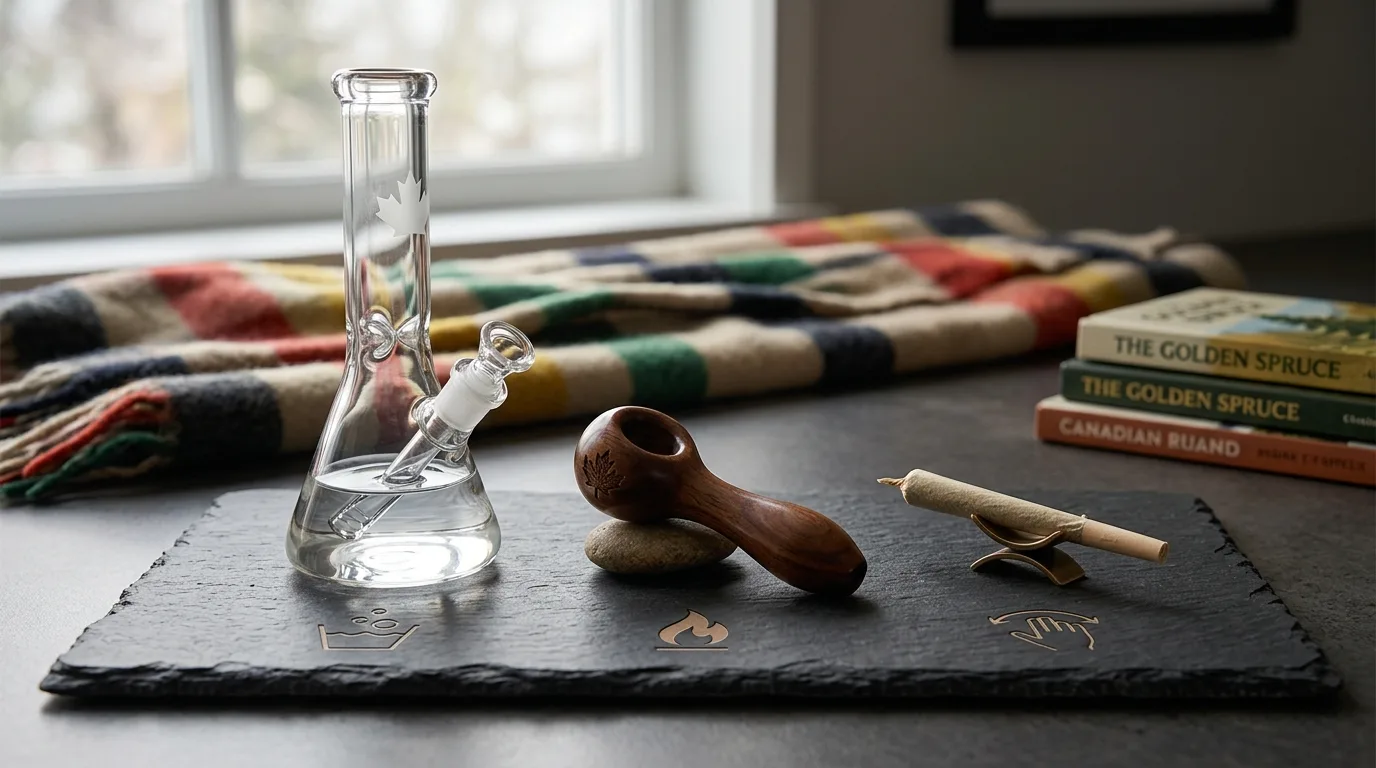
The truth is, each smoking method delivers the same THC to your system, but the journey there varies wildly. Bongs offer water-cooled smoothness but demand table space and cleaning commitment. Pipes provide portability and simplicity but can hit harsh. Joints deliver the classic ritual and social sharing but waste more product and require rolling skills. In this comprehensive guide, we'll break down smoothness, portability, and cleanup requirements across all three methods so you can choose the right tool for your lifestyle, lung capacity, and living situation.
Smoothness Showdown: How Each Method Hits Your Throat and Lungs
Smoothness matters more than most people realize when choosing a smoking method. A harsh hit doesn't just make you cough; it can ruin the entire experience, trigger headaches, and even keep newcomers from giving cannabis a second chance. The smoothness of your smoke depends on three factors: how much the smoke cools before hitting your lungs, how much particulate matter gets filtered out, and how concentrated the cannabinoid delivery is per inhalation.
Why Bongs Deliver the Smoothest Experience
Bongs take the crown for smoothness, and the science backs this up. When smoke bubbles through water, it cools dramatically and loses some of its harshness-causing compounds. The water acts as both a cooling system and a basic filtration device, trapping ash particles, plant matter, and some water-soluble irritants before they reach your respiratory system. Ice catchers in premium bongs cool the smoke even further, creating an almost menthol-like sensation that lets you take massive hits without the typical throat burn.
The downside? Some cannabinoids and terpenes dissolve slightly in water, meaning you might lose a tiny percentage of flavour and potency compared to dry methods. But for most users, the trade-off is worth it. Bongs let you consume more cannabis in fewer hits, making them efficient for high-tolerance users or those using premium exotic strains where smoothness enhances the terpene profile experience.
Pipes: The Middle Ground Between Harsh and Smooth
Glass pipes, metal one-hitters, and ceramic bowls occupy the middle territory. Without water filtration, the smoke travels directly from the burning cannabis to your mouth, staying hot and carrying all the plant particulates with it. This creates a notably harsher hit than a bong, especially if you're smoking quickly or taking large draws. However, quality glass pipes with longer stems give smoke more distance to cool, and some designs incorporate small air chambers that help reduce harshness.
The key to smooth pipe hits is technique: smaller bowls, slower draws, and covering the carb hole strategically all help. Many experienced pipe smokers develop a "sipping" technique where they draw gently and mix in fresh air to cool the smoke in their mouth before inhaling. This works, but it requires practice that beginners often lack.
Joints: Raw and Unfiltered Cannabis Delivery
Joints deliver smoke in its most natural, unfiltered state. There's no water cooling, no distance for heat dissipation, and unless you add a filter tip, no barrier between burning plant matter and your lungs. This makes joints objectively the harshest option of the three, especially in the last third of the smoke when the cherry gets closer to your lips and the accumulated resin makes the smoke denser and hotter.
That said, harshness varies dramatically based on rolling technique and paper quality. Thin rice papers burn cooler than thick pulp papers. Adding a proper glass or cardboard filter tip keeps plant matter out of your mouth. Rolling a tighter joint creates better airflow and even burning. And mixing cannabis with grabba leaf or other tobacco alternatives changes the burn characteristics entirely, though it adds nicotine into the equation.
Portability and Convenience: Which Method Fits Your Lifestyle?
Smoothness means nothing if you can't actually use your preferred method when and where you need it. Portability isn't just about size; it's about setup time, discretion, durability during transport, and whether you can use the method in various environments without drawing attention or risking breakage.
Joints Win the Portability Contest
Nothing beats a pre-rolled joint for grab-and-go convenience. Slip a few into a smell-proof tube, toss them in your pocket or bag, and you're ready for a concert, camping trip, or casual walk. Joints require no additional equipment beyond a lighter, produce no fragile glass to worry about, and if you lose or break one, you're out maybe five dollars worth of cannabis rather than a hundred-dollar bong.
The social portability factor also matters. Passing a joint at a gathering feels natural and familiar. You don't need to explain how to use it or worry about guests breaking your expensive piece. And when it's done, there's nothing to pack up, no water to dump, no still-hot bowl to worry about. You simply extinguish it and toss the roach. For outdoor adventures, festivals, and spontaneous sessions, joints deliver unmatched convenience.
Pipes: The Compact Compromise
Quality glass pipes strike a balance between portability and durability concerns. A small spoon pipe fits in your palm, slips into a protective case, and takes up less space than a pack of gum. Metal one-hitters and dugouts offer even more portability, designed specifically for discreet, on-the-go use. You can pre-pack a pipe bowl, carry it carefully, and have a quick session anywhere you can safely light up.
The catch is fragility. Glass pipes shatter when dropped, and even "shatter-resistant" borosilicate glass won't survive a five-foot fall onto concrete. This makes pipes less ideal for active situations like hiking or skiing. You also need to carry your cannabis separately, usually in a smell-proof container, and you'll want a pick or poker tool for clearing the bowl. Setup isn't complex, but it's not as seamless as lighting a joint either.
Bongs: Designed for Home Sessions
Let's be honest: bongs aren't portable. Sure, you can find small travel bongs or silicone pieces designed for camping, but they still require water, careful transport to avoid spills, and a stable surface to use. Standard glass bongs with percolators, ice catchers, and wider bases belong on a coffee table, not in a backpack. They're fragile, bulky, and impractical for anything beyond home use or perhaps a vehicle camping trip where you're setting up a full camp kitchen anyway.
The trade-off is that bongs excel in their intended environment. When you're settling in for an evening session at home, the ritual of filling the bong, packing a fresh bowl, and taking smooth, satisfying hits becomes part of the experience. You're not worried about portability because you don't need to move. The question isn't whether bongs travel well but whether you value the at-home experience enough to dedicate counter or shelf space to proper glassware.
Cleanup and Maintenance: The Hidden Time Cost
Nobody talks enough about maintenance when comparing smoking methods, but it's a daily reality that affects your long-term satisfaction. A method that requires fifteen minutes of scrubbing after every session will get annoying fast, while low-maintenance options let you focus on enjoyment rather than janitorial duties.
Joints: Zero Cleanup, Maximum Convenience
Joints win the maintenance category by default: there is no cleanup. Smoke it, extinguish it properly, dispose of the roach responsibly, and you're done. No resin buildup, no water to change, no isopropyl alcohol needed. This zero-maintenance approach is a huge selling point for people who want cannabis to be as simple as possible. Your only ongoing "maintenance" is keeping your rolling skills sharp and restocking papers, but those take minutes per month, not minutes per session.
The environmental consideration matters here. Joints create more waste than reusable methods, especially if you're a daily smoker going through multiple joints per day. Roaches pile up, and even hemp papers take time to decompose. Some users save roaches to create "generation joints" from the leftover concentrated cannabis, but that's more about thriftiness than environmental consciousness.
Pipes: Moderate Maintenance for Optimal Performance
Pipes fall in the middle of the maintenance spectrum. After each session, you should clear the bowl of ash using a poker or pipe tool, which takes about thirty seconds. Most smokers do this immediately after smoking while the ash is still loose. That's your bare minimum maintenance, and honestly, many pipe users stop there for days at a time.
However, resin builds up inside the pipe with every use, gradually restricting airflow and affecting flavour. Every week or two, depending on usage frequency, you'll need to deep clean your pipe. The standard method involves soaking the pipe in isopropyl alcohol (90% or higher works best) mixed with coarse salt, then shaking vigourously to scrub away resin. Rinse thoroughly, let it dry completely, and you're back to fresh-tasting hits. The whole process takes maybe ten minutes, but it's a chore some users procrastinate on until their pipe barely draws air.
Bongs: High Maintenance for Premium Smoothness
Bongs demand the most maintenance by far, and this is where many bong enthusiasts' commitment wavers. After every session, you should dump the dirty water. Leaving water sitting in your bong overnight creates a bacterial breeding ground and produces a smell that permeates your entire space. Even if you don't deep clean after each use, changing the water takes two minutes and prevents your next session from tasting like stale swamp water.
Deep cleaning should happen at least weekly for regular users. This involves disassembling any removable parts, filling the bong with isopropyl alcohol and coarse salt, covering all openings, and shaking vigourously for several minutes. Percolators and intricate designs make this harder because resin gets trapped in hard-to-reach spots. Some users resort to specialized cleaning solutions or brushes designed for bong maintenance. Neglect this cleaning routine, and your smooth, clean hits become harsh, foul-tasting pulls through blackened water.
The reward for this maintenance is a consistently pleasant experience. A clean bong performs like new every time, delivering the smooth hits that made you buy it in the first place. But if you're someone who barely has time to do dishes, be honest about whether you'll keep up with bong maintenance before investing in expensive glass.
Cost Analysis: Initial Investment vs Long-Term Value
Your smoking method represents an ongoing investment, not just a one-time purchase. Understanding the full cost picture helps you choose the method that fits your budget both now and over the months and years of regular use.
The True Cost of Joint Smoking
Joints have the lowest barrier to entry: a five-dollar pack of papers, a lighter, and your cannabis. That's it. No glass to buy, no accessories to collect. However, joints consume more cannabis per session than other methods because some smoke escapes between hits and burning continues even when you're not drawing. If you smoke daily, that inefficiency adds up to significantly higher cannabis costs over time.
Consider this math: if a pipe or bong user gets ten sessions from an eighth of cannabis, a joint smoker might only get six or seven sessions from the same amount due to waste. Over a year of daily use, that's the difference between buying 36 eighths versus 50+ eighths. At typical prices, we're talking hundreds of dollars in additional annual spending just due to the less efficient delivery method. For budget-conscious consumers, this matters more than the pennies spent on papers.
Pipes: Moderate Initial Cost, Excellent Long-Term Value
Quality glass pipes range from twenty dollars for basic spoon pipes to several hundred for artisan heady pieces with intricate designs. Most users land somewhere in the thirty to seventy dollar range for a functional, durable pipe that will last years with proper care. This one-time investment pays for itself quickly through more efficient cannabis consumption compared to joints.
Ongoing costs are minimal: replacement screens if you use them (pennies per screen), isopropyl alcohol for cleaning (a few dollars per bottle that lasts months), and eventually a replacement pipe if you break yours. Many smokers use the same pipe for years without additional spending. The efficiency factor is significant too; pipes let you take smaller, controlled hits and fully extinguish the bowl between uses, wasting far less cannabis than a continuously burning joint.
Bongs: Higher Investment, Maximum Efficiency
Bongs represent the biggest upfront investment, starting around forty dollars for basic acrylic pieces and ranging into hundreds or even thousands for premium scientific glass with multiple percolators. Most functional glass bongs sit in the seventy to two-hundred dollar range. You'll also want to budget for accessories: cleaning supplies, replacement bowls or downstems (because these break), and possibly ash catchers or other add-ons.
Despite the higher entry cost, bongs offer the most efficient cannabis consumption. You can pack smaller bowls, control exactly how much you burn, and clear the entire chamber in one hit so nothing goes to waste. Heavy users often find that bongs save them enough cannabis to justify the initial investment within a few months. The catch is durability: drop your hundred-dollar bong and you're buying another one, whereas a twenty-dollar pipe breaking hurts less financially.
For those exploring different cannabis grades and wanting to maximize flavour profiles, bongs provide the cleanest tasting experience that lets you appreciate the differences between AAAA craft flower and budget options.
Health Considerations: What Research Shows About Smoking Methods
All smoking involves inhaling combusted plant matter, which carries inherent health risks regardless of method. However, the three methods we're comparing do differ in some health-relevant ways worth understanding.
Filtration and Particulate Matter
Water filtration in bongs does remove some particulates and tar from smoke before it reaches your lungs. Studies show that water filters trap ash and some water-soluble compounds, which theoretically reduces respiratory irritation. However, water doesn't filter out all harmful substances, and some research suggests it may actually filter out a small percentage of THC along with the tar, meaning you might inhale more smoke to achieve the same effect.
Pipes and joints offer no filtration beyond what a paper filter tip provides (which is minimal, mainly stopping plant matter from entering your mouth). This means you're inhaling the full spectrum of combustion byproducts. For occasional users, this probably doesn't make a dramatic difference. For daily, heavy smokers, the cumulative effect of unfiltered smoke may contribute to chronic bronchitis symptoms or other respiratory issues over time.
Temperature and Lung Irritation
Smoke temperature significantly affects lung irritation. Bong hits, especially from pieces with ice catchers, deliver substantially cooler smoke that causes less immediate irritation. This lets users take larger hits without coughing, which seems beneficial but may actually expose lungs to more smoke volume per inhalation. The cooler temperature feels smoother, but you're still inhaling smoke.
Joints and pipes deliver hotter smoke that triggers more immediate coughing and discomfort. While this feels harsher, it naturally limits hit size. Some harm reduction advocates suggest that this built-in limiting mechanism might actually protect lungs by preventing massive smoke inhalation. The research here isn't conclusive either way.
Consumption Patterns and Tolerance
The efficiency and smoothness of bongs can lead to consuming more cannabis than intended, especially for those using high-potency concentrates or premium flower. Taking three massive bong rips in quick succession delivers far more THC than three joint puffs, potentially contributing to faster tolerance buildup and higher consumption patterns. Joints and pipes naturally pace consumption through harsher hits and the time it takes to smoke them.
From a purely pragmatic health perspective, the best method is whichever one you'll use in moderation. The difference in harm between methods is likely smaller than the difference in harm between moderate and excessive use of any single method.
Social and Cultural Factors: The Ritual Matters
Cannabis consumption isn't just about THC delivery; it's a social activity and personal ritual. The method you choose affects how you share cannabis, how others perceive you, and how the act fits into your daily routine.
Joint Culture: Passing and Sharing
Joints carry deep cultural significance in cannabis communities. The ritual of rolling, the act of passing in a circle, the "puff puff pass" etiquette,these social elements are baked into joint culture. Joints facilitate sharing in a way that feels inclusive and communal. Everyone touches the same object, there's an implicit equality (unless someone breaks rotation), and the shared experience creates bonding.
For newcomers entering cannabis culture, understanding joint etiquette helps with social integration. Don't "Bogart" (hold onto the joint too long). Pass to the left. Corner the bowl if it's a large joint. These unwritten rules create a shared language that joints facilitate better than other methods.
Bongs: The Session Centrepiece
Bongs transform cannabis consumption into a more deliberate, ritualistic activity. Setting up the bong, carefully packing the bowl, the sound of bubbling water,these elements create an experience that feels more substantial than a quick joint. Bongs naturally become conversation pieces, especially artistic or uniquely designed pieces that guests comment on and admire.
However, bongs also create a hosting dynamic where one person (the owner) controls the piece, packs bowls, and maintains the equipment. This shifts the social dynamic from the egalitarian circle-passing of joints to something more hierarchical. Some people love this; others find it less appealing than the democracy of joint rotation.
Pipes: Personal and Individual
Pipes occupy a middle ground socially. They're easy to share,pack a bowl, pass it around,but they're also very personal. Many pipe users develop attachments to their specific piece and prefer not to share it, especially with strangers. The smaller bowl size means more frequent repacking in group settings, which can disrupt conversation flow compared to a continuously burning joint.
Pipes excel for solo sessions or intimate gatherings of two or three people. They feel more personal and contemplative than the party atmosphere joints sometimes create. For medical users or those who consume cannabis as a daily ritual similar to morning coffee, pipes provide a quick, efficient, personal experience without the ceremony of bongs or the social expectations of joints.
Making Your Choice: Which Method Suits Your Needs?
After comparing smoothness, portability, maintenance, costs, health factors, and social dynamics, how do you actually choose? The answer depends on your specific circumstances and priorities.
Choose Bongs If You Value Smoothness Above All
Bongs make sense for home-focused users who prioritize smooth, filtered hits and don't mind the maintenance commitment. If you have dedicated space for cannabis accessories, enjoy the ritual of setting up a proper session, and want to maximize the flavour of premium flower, invest in quality glass. Bongs particularly suit evening users who consume at home after work, medical patients who need quick, effective relief without harsh coughing, and experienced consumers with higher tolerance who appreciate efficiency.
Bongs are less ideal if you move frequently, have limited space, prioritize portability, hate cleaning chores, or worry about breaking expensive glass. If you're still developing your relationship with cannabis and aren't sure about long-term consumption patterns, starting with a bong might be premature.
Choose Pipes for Balanced Practicality
Pipes represent the sweet spot for many users: more portable than bongs, smoother than joints, requiring moderate maintenance, and affordable to replace if broken. They suit users who want personal, efficient consumption without ceremony or complication. Pipes work well for both solo and small group sessions, fit easily into travel plans, and don't demand constant care.
Consider pipes if you're still exploring cannabis and want flexibility, if you consume in various locations (home, friends' places, outdoor settings), or if you want something simple that doesn't require water or extensive cleaning. Pipes also excel for micro-dosing users who want precise control over small amounts.
Choose Joints for Maximum Convenience and Social Situations
Joints remain the default choice for good reasons: zero cleanup, ultimate portability, easy sharing, no equipment beyond papers, and universal recognition. If you attend concerts, go camping, visit friends who don't smoke (and don't want to store your gear), or simply value convenience over all other factors, joints deliver. The higher cannabis consumption and harsher hits are trade-offs you accept for unmatched practicality.
Joints especially suit social smokers who consume occasionally rather than daily, outdoor enthusiasts who can't risk breaking glass equipment, and people who haven't yet committed to cannabis as a regular practice worth investing equipment dollars into. They're also ideal for trying new strains from local dispensaries without committing to larger amounts, since you can roll single-strain joints to compare effects and flavours.
The Hybrid Approach: Why Not All Three?
Many experienced cannabis users don't limit themselves to one method. Instead, they choose tools appropriate to situations: joints for social gatherings and outdoor activities, a pipe for quick solo sessions and moderate portability, and a bong at home for smooth evening sessions with premium flower. This approach maximizes the strengths of each method while minimizing their weaknesses.
Starting with one method and gradually expanding your toolkit as you understand your consumption patterns makes more sense than buying everything at once. A reasonable progression might be: start with joints to learn how cannabis affects you, add a basic pipe once you're consuming regularly, then invest in a quality bong once you've established a home consumption routine worth enhancing.
Premium Flower for Any Method
Whether you prefer smooth bong hits, convenient joints, or portable pipe sessions, UperWeed delivers premium cannabis to your door in Ottawa and Canada-wide. Browse our weekly fresh arrivals and find the perfect strain for your preferred smoking method.
Shop Premium CannabisFrequently Asked Questions About Bongs, Pipes, and Joints
Bongs don't increase THC content, but they do allow you to inhale more smoke in a single hit due to smoother, cooler delivery. This can create a more intense, faster-onset high compared to the gradual buildup from smoking a joint. However, you're not getting more cannabinoids from the same amount of flower; you're just consuming it faster. Over a full session with the same quantity of cannabis, all three methods deliver approximately the same total THC to your system.